

ANGOLA’S PERSPECTIVE ON HAIR AND FASHION
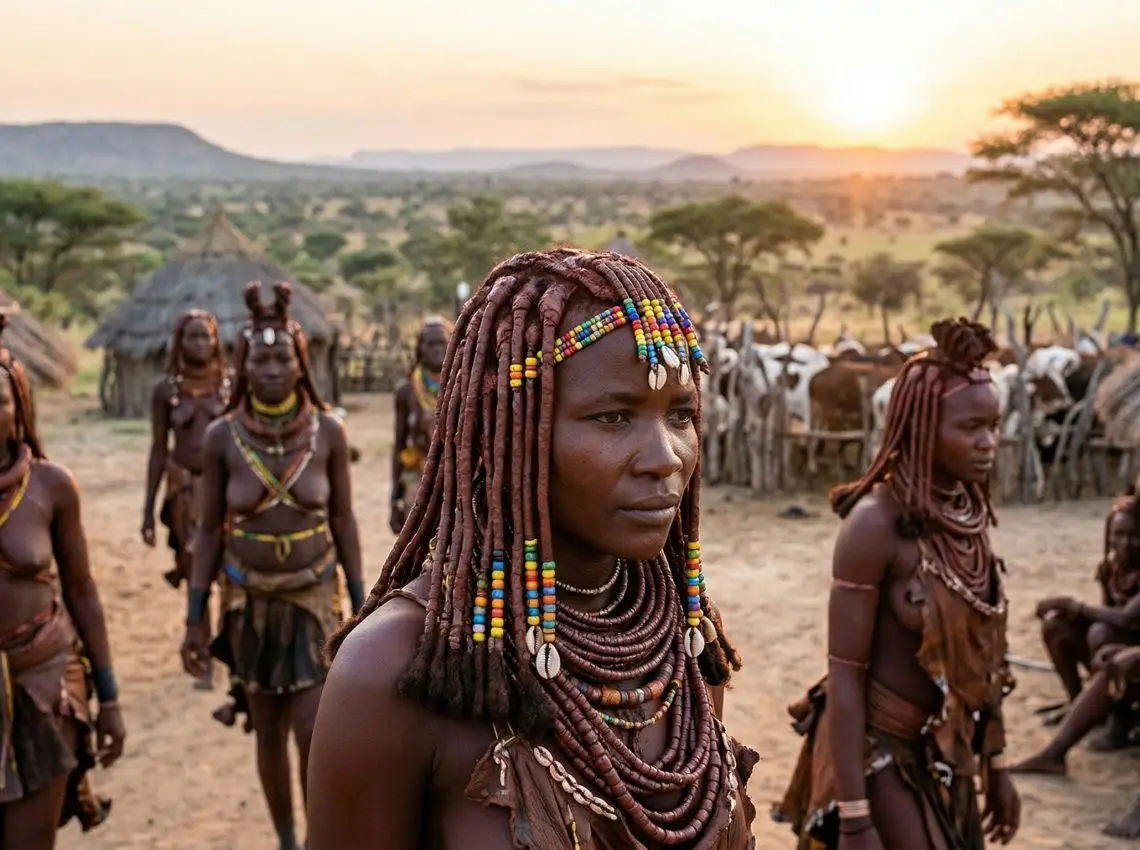
Angola’s traditional fashion and hair practices offer a fascinating window into cultures that
have preserved complex symbolic systems for centuries. Among the most striking and well-
documented traditions are those of the Mwila (Mumuhuila) people, a semi-nomadic ethnic
group living in the Huila province of southern Angola. Their approach to hair and adornment
is not merely decorative but functions as a living language through which women
communicate their age, marital status, personal history, and even family tragedies.
The Origin of Mwila Hairstyles
To understand why Mwila women style their hair with such elaborate mixtures, one must
look to the harsh environment of southern Angola. According to oral traditions, the Mwila
people settled in their current region during the 17th century, following a severe drought that
displaced them from their original lands in the Quilengues area. Their traditions as Bantu
cattle farmers and the social structures they developed date back to this period, when the
powerful kingdom of Huila was established under a leader known as the Soba. The extreme
scarcity of water in this arid landscape has directly shaped their beauty practices. Because
water is too precious to be used for regular washing, Mwila women developed indigenous
methods to cleanse, style, and protect their hair using natural, readily available materials. Far
from being a sign of neglect, this practice is a deep intentional, cultural and aesthetic choice
born from environmental necessity.
The Secrets of the “Oncula” Hair Paste
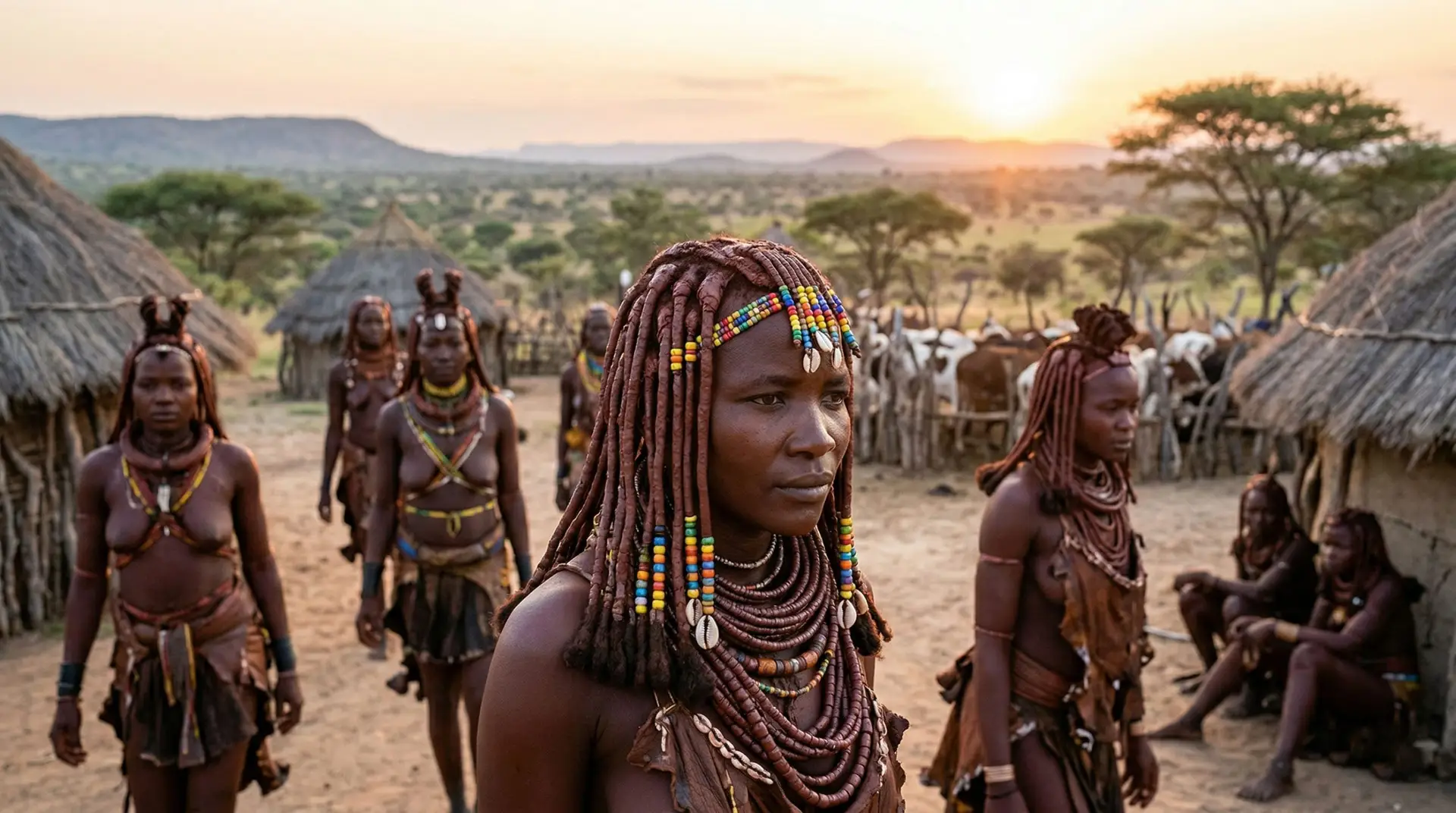
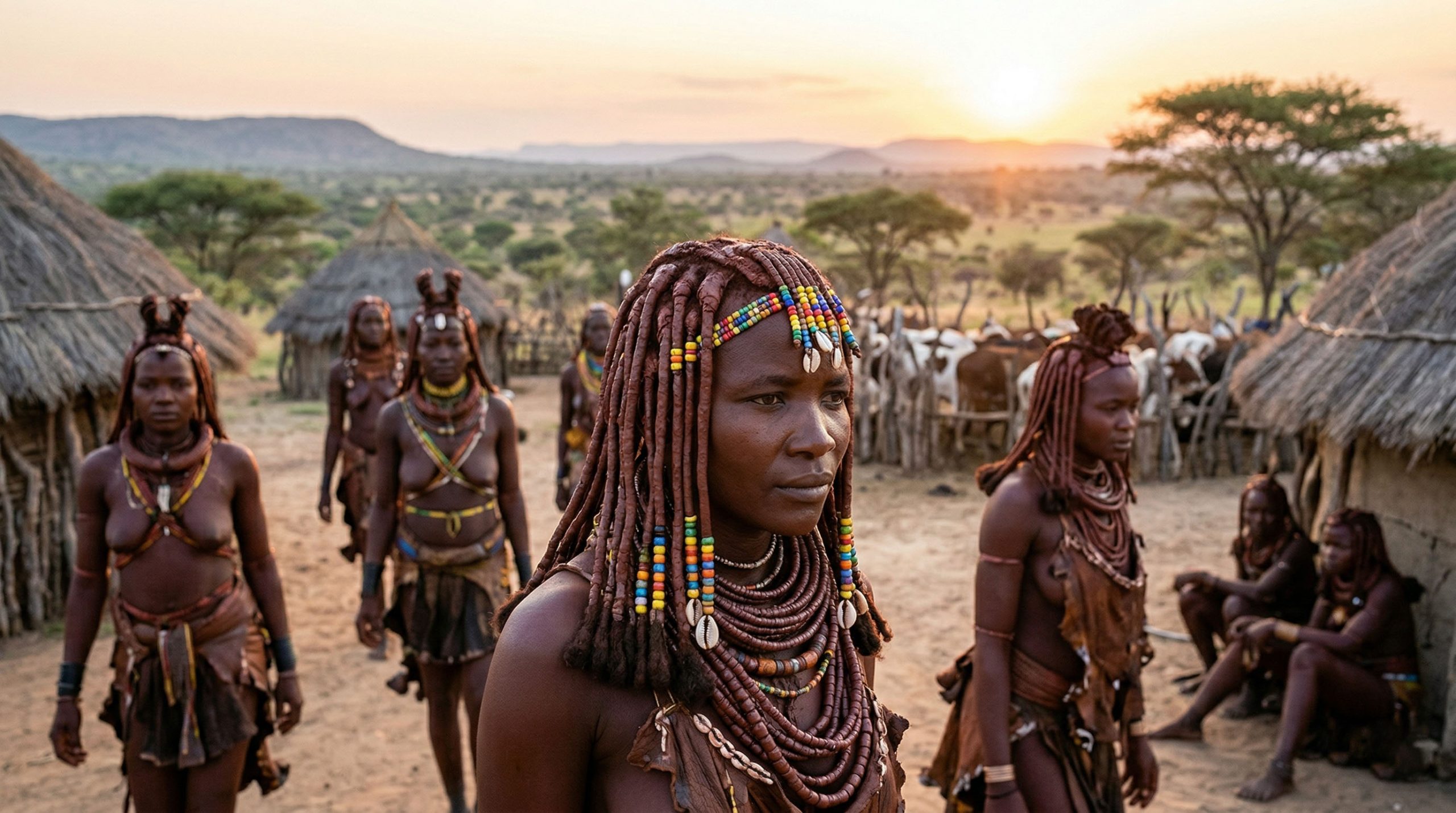
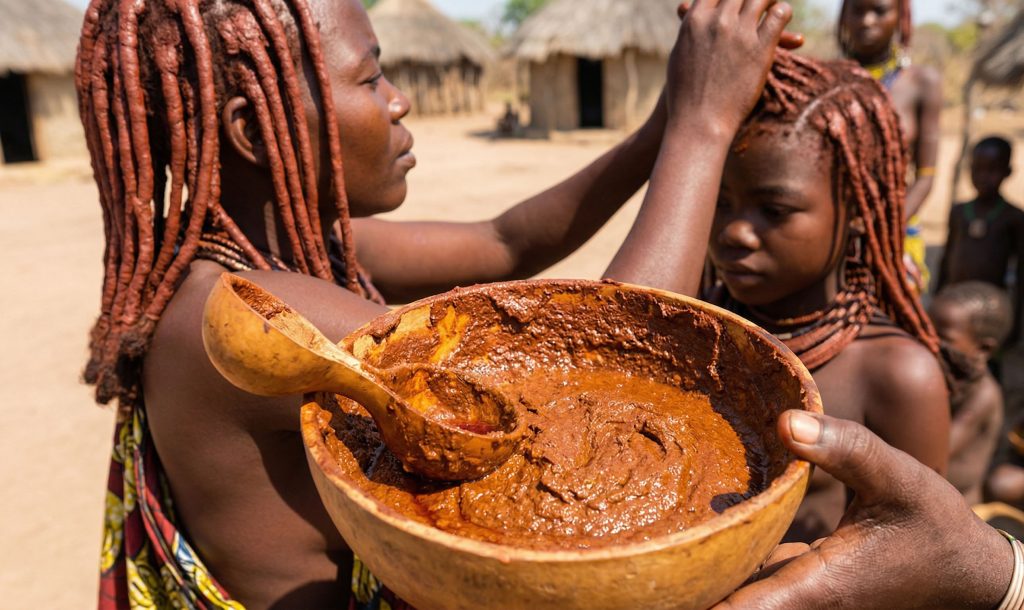
Perhaps the most iconic element of Mwila women’s appearance is the striking red paste that
coats their hair. This substance is called oncula, and it is made from crushed red stone mixed
with a blend of oil, crushed tree bark, butter, dried cow dung, and various herbs. The use of
cow dung, which might startle outsiders, is a brilliant practical solution. The dung acts as a
powerful binder and texturiser, helping the thick mixture adhere to the hair and form the
desired shapes. It also serves a protective function, creating a barrier against the intense sun
and insects. The herbs incorporated into the mixture add a pleasant scent, countering any
negative associations one might imagine.
A fun fact that surprises most people is that the number of dreadlock style plaits, called
nontombi, that a woman creates from this paste has a very precise meaning. Women and girls
typically wear four or six nontombi. However, if a woman has only three plaits, it is an
immediate visual signal to everyone in her community that a death has occurred in her family.
This transforms the hairstyle into a public declaration of mourning. Additionally, shaving the
forehead is considered a sign of beauty among Mwila women, further distinguishing their
distinctive silhouette.
The Lifecycle Necklaces
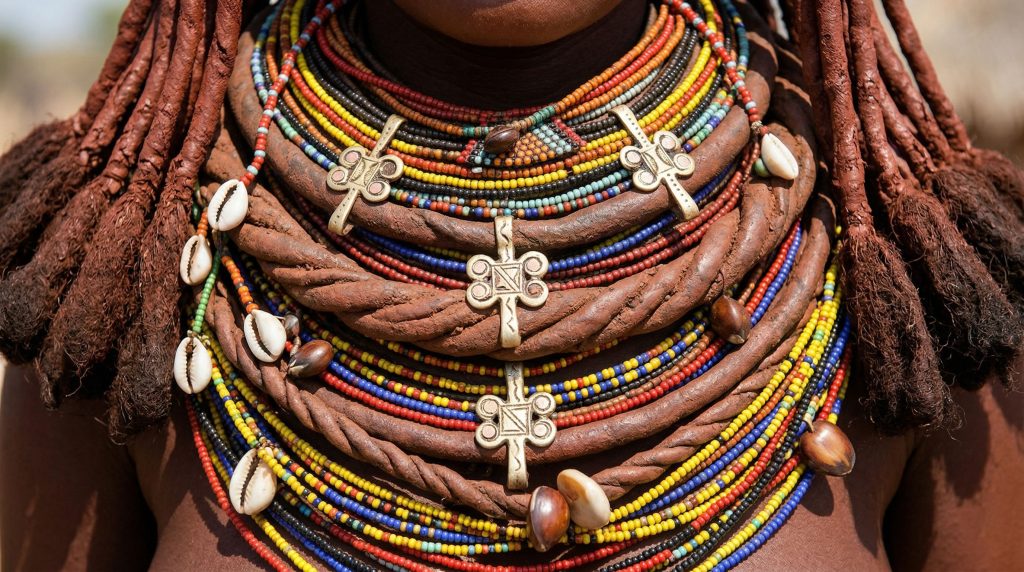
Complementing the hair is a system of necklaces that acts as a visible biography of a
woman’s life. These necklaces are not removed even while sleeping and are central to Mwila
identity. The process begins in childhood. Young girls wear heavy red necklaces made from
beads covered with a mixture of soil and latex. As they mature and approach the age of
marriage, they transition to wearing yellow necklaces known as Vikeka, which are made from
wicker covered with earth. The most significant transformation occurs with marriage. Once a
woman weds, she begins to wear a set of stacked bead necklaces called Vilanda. These
necklaces are added to over time, and once married, a woman never takes them off, sleeping
with them every night for the rest of her life. To protect these elaborate hairstyles during
sleep, Mwila women use wooden headrests, which lift the head and prevent the intricate
plaits and paste from being crushed.
The Mbalantu and Extreme Hair Length
While the Mwila are the most photographed, another group spanning the Angola-Namibia
border, the Mbalantu, have a tradition that answers the question of “how long has this been
practiced?” with a truly astonishing timeline. The Mbalantu are known for a hair growth and
styling practice that begins in early adolescence and continues for years, even decades.
Starting around the age of twelve, Mbalantu girls would cover their hair with a thick layer of
finely ground tree bark from the omutyuula tree mixed with oil. This mixture was not for
styling but was specifically applied to stimulate extreme hair growth.
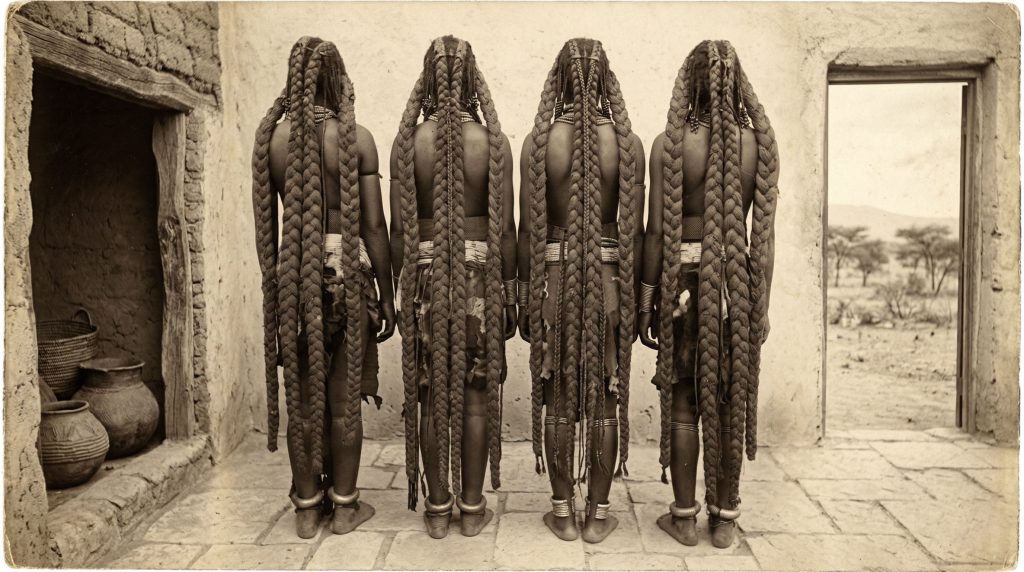
After several years, the mixture was removed, and the long, newly grown hair was revealed.
At this stage, fruit pips from the bird plum were attached to the hair ends using strings. When
a girl reached about sixteen years of age, the fruit pips were discarded and replaced with very
long sinew strands that could reach all the way to the ground. Some historical reports from
the early 1900s indicate that as many as 80 strings of sinew were used to extend the hair. Just
before the girls entered the ohango, the initiation ceremony into womanhood, these long
strands were carefully woven into two or four thick plaits called eembuvi, which hung down
the sides and back of the head. The weight was so significant that it had to be supported by a
piece of rope or skin fastened around the forehead to distribute the load. This tradition,
preserved a much longer period among the Mbalantu than neighbouring groups due to their
relative isolation, represents one of the most extreme and dedicated hair grooming practices
ever recorded.
Modern Challenges and Cultural Preservation
A poignant aspect of these traditions is the pressure they face today. While these fashions
have been practiced for centuries, younger generations are increasingly adopting Western
dress. Women have reported that when they go to markets in towns like Huila, people
sometimes make fun of their traditional appearance, leading many to abandon their ancestral
styles in public settings. This means that the vibrant display of red oncula hair and vilanda
necklaces is increasingly becoming a sight reserved for the most remote villages or cultural
festivals, making the preservation of these extraordinary traditions an urgent concern.