
THE OUTLOOK ON HAIR AND FASHION OF BENIN.
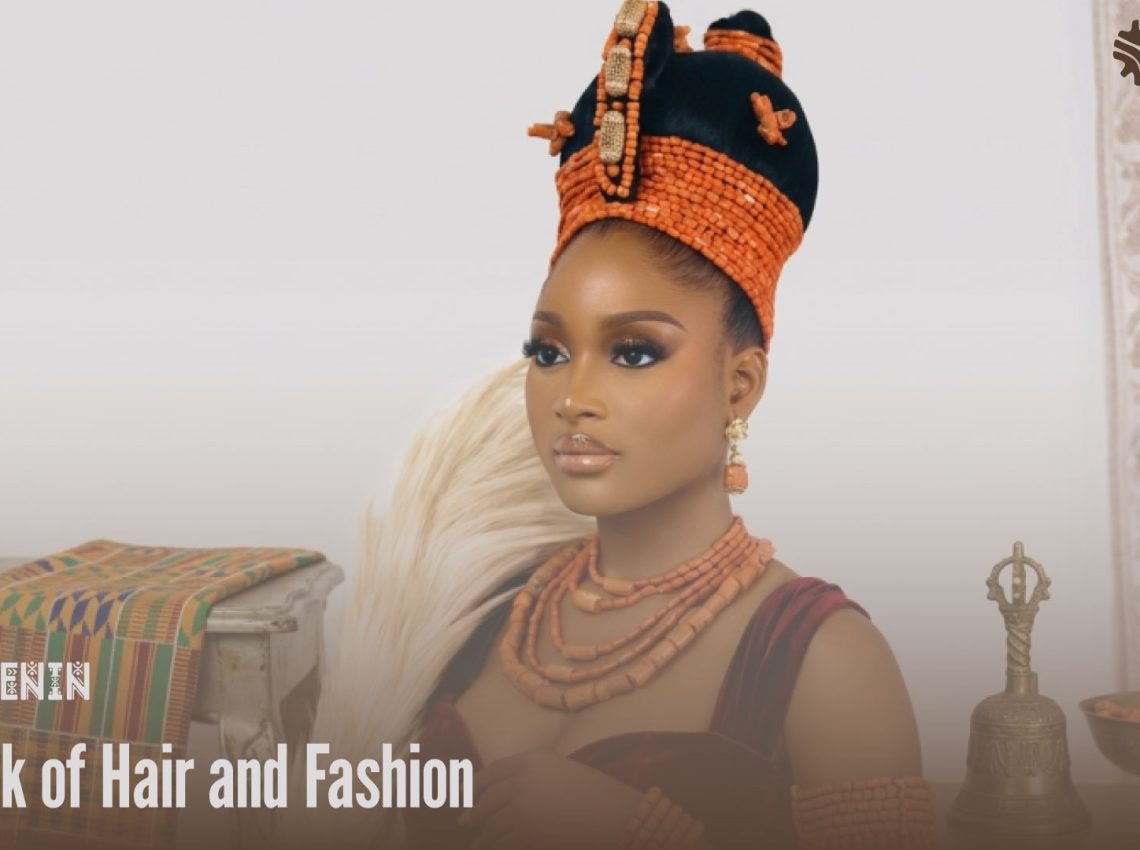
The Benin Kingdom provides one of the richest documented visual cultures in Africa, covering the years of bronze casting history. In contrast to the semi-nomadic adjustments of the Mwila, the fashion of Benin was strong court-based and hierarchical. Ever since the Oba (King) and his court started using hair, coral beads, and textiles, they have employed a complicated visual language in which they expressed rank, lineage, and ritual rank. In the Okuku wig of queens to the hair styles of the warriors and pages, the Benin style of adornment is a striking mixture of ancient religious faith, political influence, as well as the beauty of the style.
THE HISTORY BEHIND THE OKUKU HAIRSTYLE.
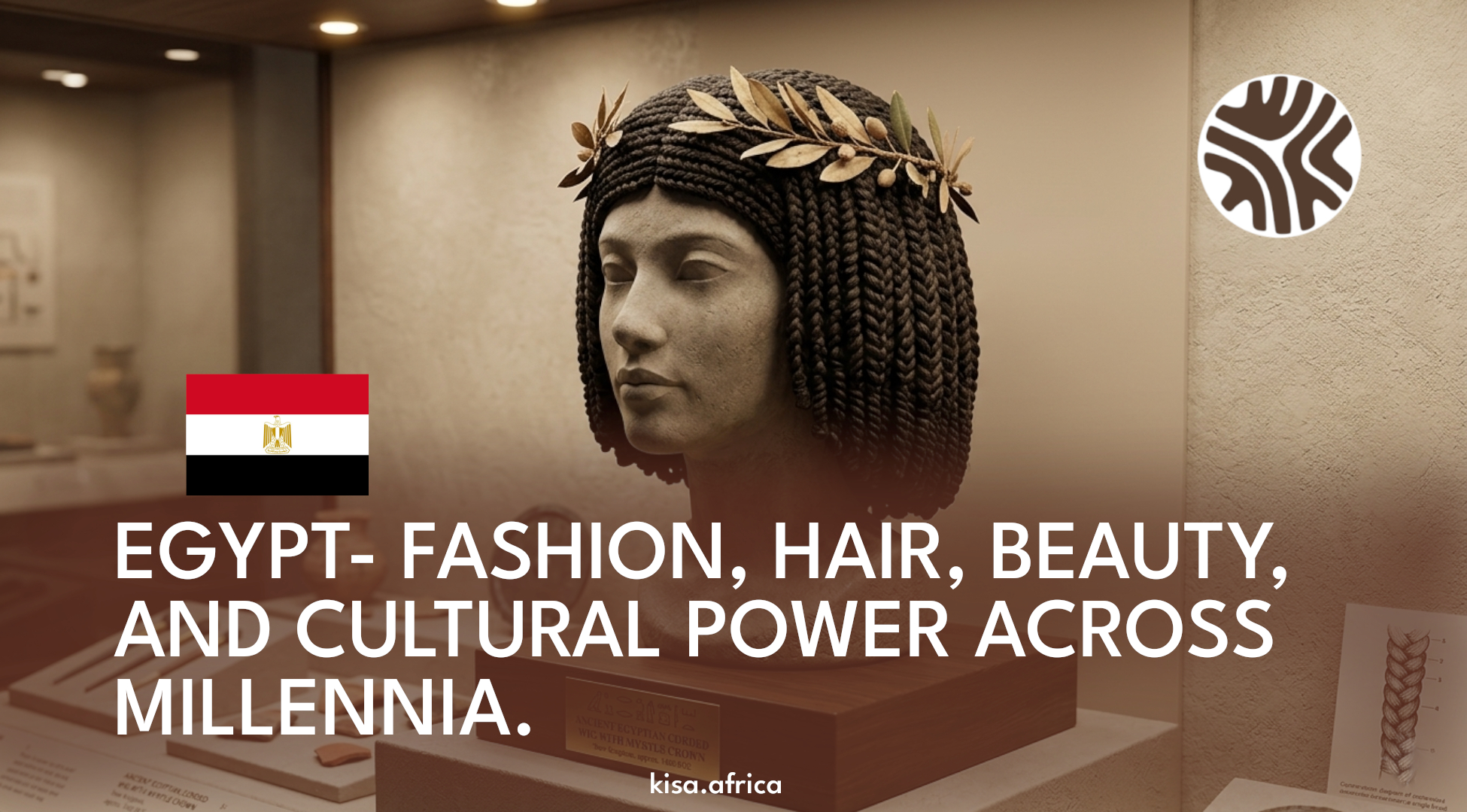
The iconic Okuku hairstyle typically represented on Benin bronze heads is referred to an acclaimed legend during the reign of the 15th century monarch Ọba Ewuare I. As oral traditions have been recorded by Pa Iyekeoretinomwan Aikpitanyi, the Okuku had initially belonged to a legendary beautiful and rich woman called Ekobe.
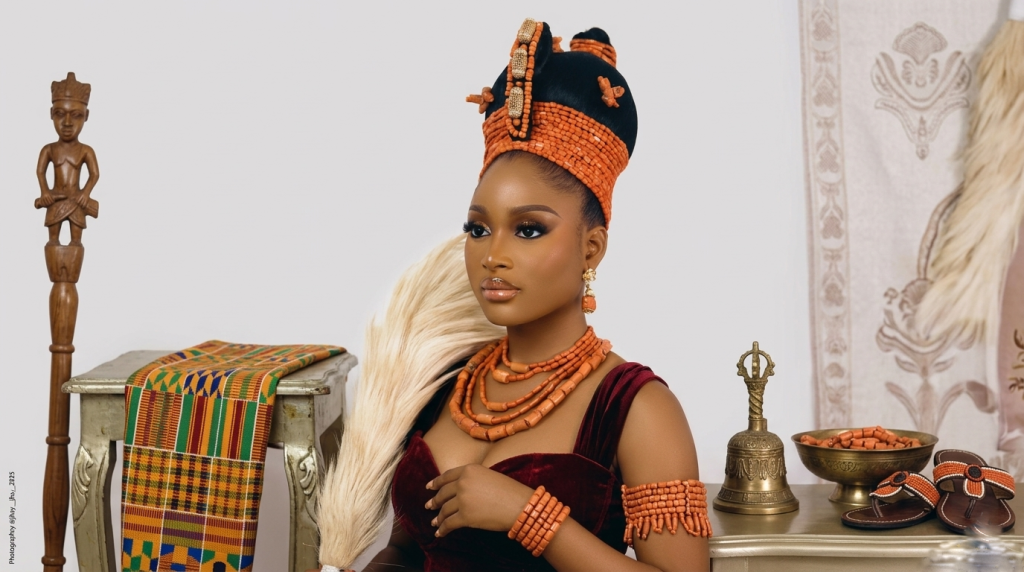
Ekobe during one of Oba Ewuare’s war campaigns wore cotton buds in her hair and hid the truth about her wealth in the fancy style. The Oba tried to find out what was in her possession but after he failed, he beheaded her. After this tragic incident, the King made her unique hairstyle to the kingdom as a model to women. Instead of being a mere fashion statement the Okuku therefore became an icon of beauty, cultural pride, and accessibility to the mystery of the past financial well-being. The Okuku headdress that previously was a preserve of the royal women has now gained popularity among non-royal women as a symbol of citizenship and ethnic identification.
THE SECRET OF OKUKU AND AZUWA (HAIR ORNAMENTS).
The Okuku is not only a hairstyle, but commonly a wig or a carved form that is a basis of heavy decoration. Specific components of the hairstyle are:
Uguekun: A band of beads fastened around the bottom of the Okuku.
Osele, Aha and Igholoye: These ornaments such as a bronze Ada sword and Eben which were a ceremonial fan were the sole reserve of the harem or queens.
Azuwa: Long cross-shaped hair pins comprised of brass and agate or coral. These were used to fasten wigs like the Okuku and to scratch the scalp under the heavy adornment. These pins were not just practical, they were an image, a status symbol that indicated the exact position of the wives of the Oba.
Other forms of traditional hairdos of Benin women according to Pa Aikpitanyi are Ukpokhokho, Ogbuma, Aha, Isaba, and Uleko.
The most interesting fact that most individuals find surprising is that the Okuku style was at times worn over shaved head or certain design patterns that were shaved. The ancient histories tell how the Benin folk used to shave their hair in all manners, and bronze memorial heads frequently bear concentric ring plaits commonly referred to sometimes, as the Ibo style. Although certain of these styles were the prerogative of warriors or the most senior pages, the practice of using the forehead and scalp to paint shaved designs was common in beauty.
THE CORAL BEAD AND THE MEMORIAL HEADS OWUJITO.
Whereas the Mwila employed the wooden headrests to maintain the Oncula, the Benin elite employed coral beads. These are red coral beads (Ivie) which are and were considered holy, connected to the sea god Olokun. They were worn as bracelets, crowns and necklaces. The coral regalia was heavy to the extent that it meant the heaviness of the role of the king.
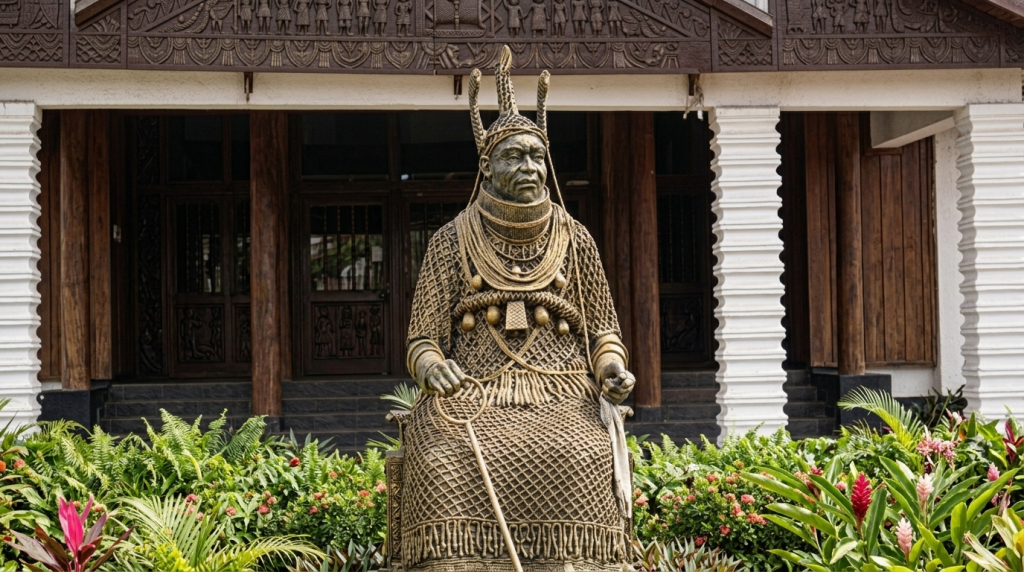
The Transatlantic Coral Trade: The interesting aspect of this history is that even the coral beads were not produced locally. The coral (Corallium rubrum) is native to the Mediterranean Sea and is red. Between 15th and 19th centuries, Sephardic and Christian merchants who settled in the port cities of Italy (Livorno, Genoa, Venice) were exporting large amounts of coral to sub-Saharan Africa, through trade routes across the Maghreb. The Kingdom of Benin developed to be among the best importers, and the exogenous commodities were taken and turned into the most sacred royal regalia. It implies that even the most iconic red coral crowns of the Oba, as the representation of the most spiritual power, were initially a result of a global system of trade between the Italian coral fishermen and the kings of West Africa.
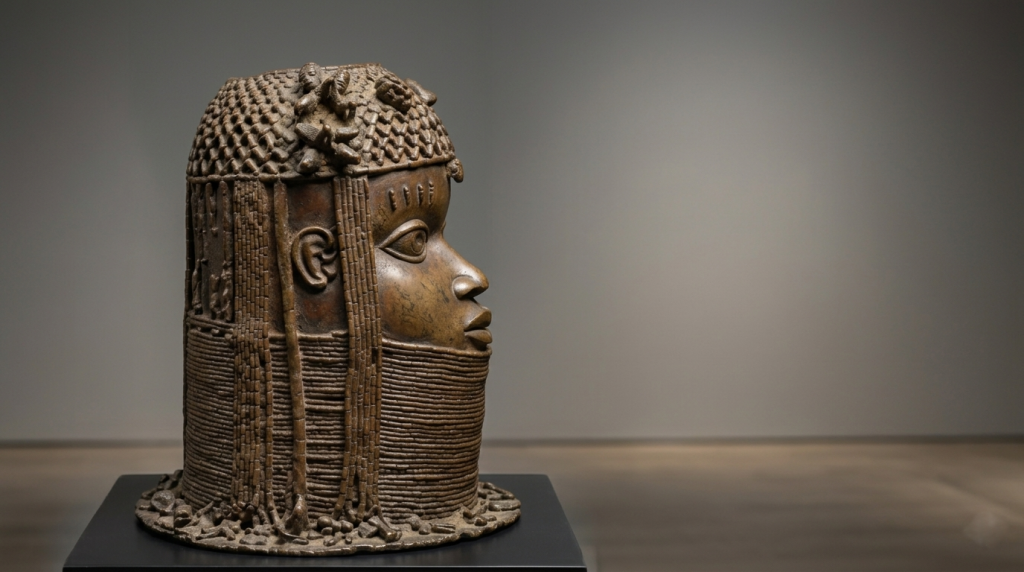
Besides, the Benin tradition of making Memorial Heads (Owujoto) grants an answer to the question of how long has this been practiced? The art of brass casting in Benin dates several decades. The elaborate hair styles of the court are specifically represented by the idealized portrait heads of Obas and Queen Mothers (Iyoba) of the 16th to the 19th centuries. The permanence of these styles as made of permanent brass means that they were not temporary but traditions that have been practiced and keep being practiced over centuries and are sacred.
The Headdress of the Queen Mother (Ede): The studies of the Benin art expert Barbara Blackmun show that Queen Mother has a certain beaded crown that is referred to as Ede on her coral hat. In contrast to the crown of the Oba which has a vertical Oro (beaded protrusion that supposedly connects the human and the spirit world), the headdress of the Queen Mother is said to be Ede but not Oro- the crown of the Oba is entirely beaded. Women serving in royal processions have crest headdresses which show a high status and carry fans that are meant to cool the spirits and gourds that are netted with coral beads that are shaken when women sing praise songs.
SYMBOLS AND MEANING OF BENIN CHIEFTAINCY REGALIA.
The rest of the Benin chieftaincy system in addition to the royal court also employs dress as an exact form of identification. Owens Patricia Eromosele, in a research, states that the title of a chief directly helps in building his costume. The various types of chiefs, such as war chiefs, town chiefs and palace chiefs, have different types of regalia which instantly one can identify the type of the chief, and his or her role to any educated viewer. This system changes clothing into non-verbal system of communication which structures the whole system of political hierarchy.
LIFECYCLE AND SPIRITUAL DIMENSIONS.
Like the Mwila necklaces serving as a visible biography, the Okuku and coral beads are also worn in Benin when one is experiencing important life changes:
Marriage: There were Okuku styles that were traditionally only used by married women or women in the harem.
Motherhood: The title of Iyoba (Queen Mother) was accompanied with its own special headdress and coral decorations which was a strong position that she had her own palace and court.
Spiritual Protection: The Ede (beaded crown) is said to safeguard the wearer since it connects the human and the spirit world. The Orhue (kaolin clay) that is carried by the attendants is a present religious material, which is eaten to calm the stomach, applied to the face and body, and utilized in the anointing of shrines. It is the embodiment of tranquillity, happiness and affluence.
CONTEMPORARY PROBLEMS AND CULTURAL SURVIVAL.
Just like the stress experienced by the Mwila in Angola, the traditional dressing in Benin was in a crisis following the colonization of the country by the British. During a considerable duration, native attire, especially the cumbersome regalia and marks on the body that were linked with paganism worship was morally illegitimized and was denounced by the converts and colonial civil servants as a source of sin and shame.
Although these traditions have been maintained in the Obas court to be used during ceremonies such as the Igue festival, a lot of daily fashion practices were dropped or mixed up. Nonetheless, it has been revived in the modern world. Similarly, the younger Angolans are revisiting Oncula as a form of revolt, nowadays the Okuku and coral bead prints are being revisited by the contemporary Nigerian artists and fashion designers as a representation of pan-Africanity and royal lineage. The problem of cultural appropriation and the necessity to learn about the original cultural context of Okuku is also discussed nowadays.