

WHEN DEATH ENTERS A COMMUNITY CULTURE HAS A RESPONSE.
Kenya has an age- standardized suicide rate of 11.0 per 100,000 compared to a global rate of 9.0. The country has about 100 psychiatrists for 54 million people, and mental health services 0.01% of its national budget.
Every Kenyan community divided the deceased into two categories: good deaths, and evil deaths. Suicide finds itself at the extreme end of the bad category almost everywhere alongside with murder and to extents of death in childbirth.
The ritual response was motivated by three fears which reoccur frequently.
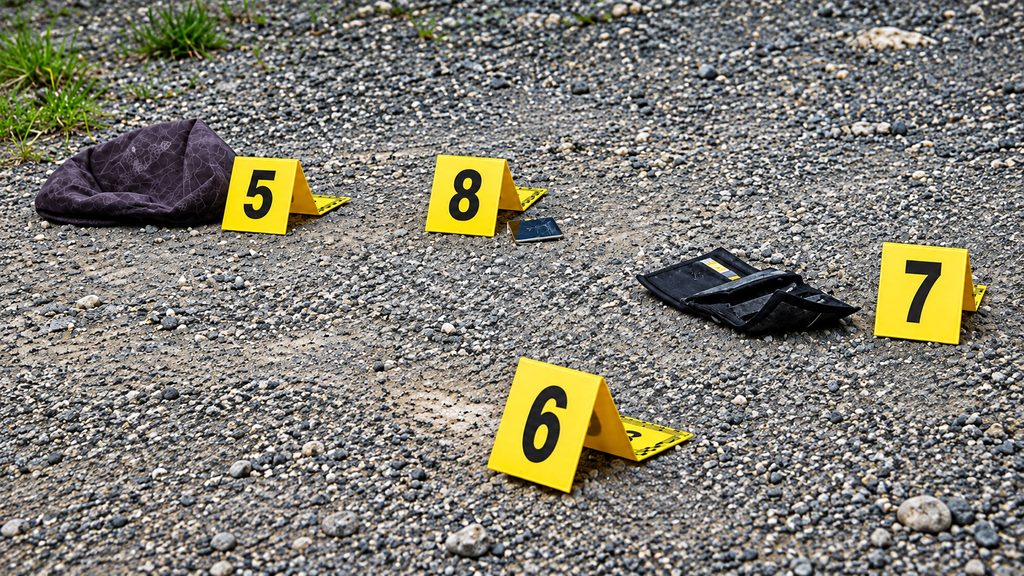
❖ Contagion. The idea that another member of the same household would be taken by the spirit of suicide was not figurative Nearly all the rituals listed below are designed to disrupt that transmission.
❖ The site was tainted, necessitating its destruction, abandonment or ritual washing.
❖ Anyone who encountered the body was contaminated and required cleaning.
While the specifics of each ritual vary, they consistently address the same issues.
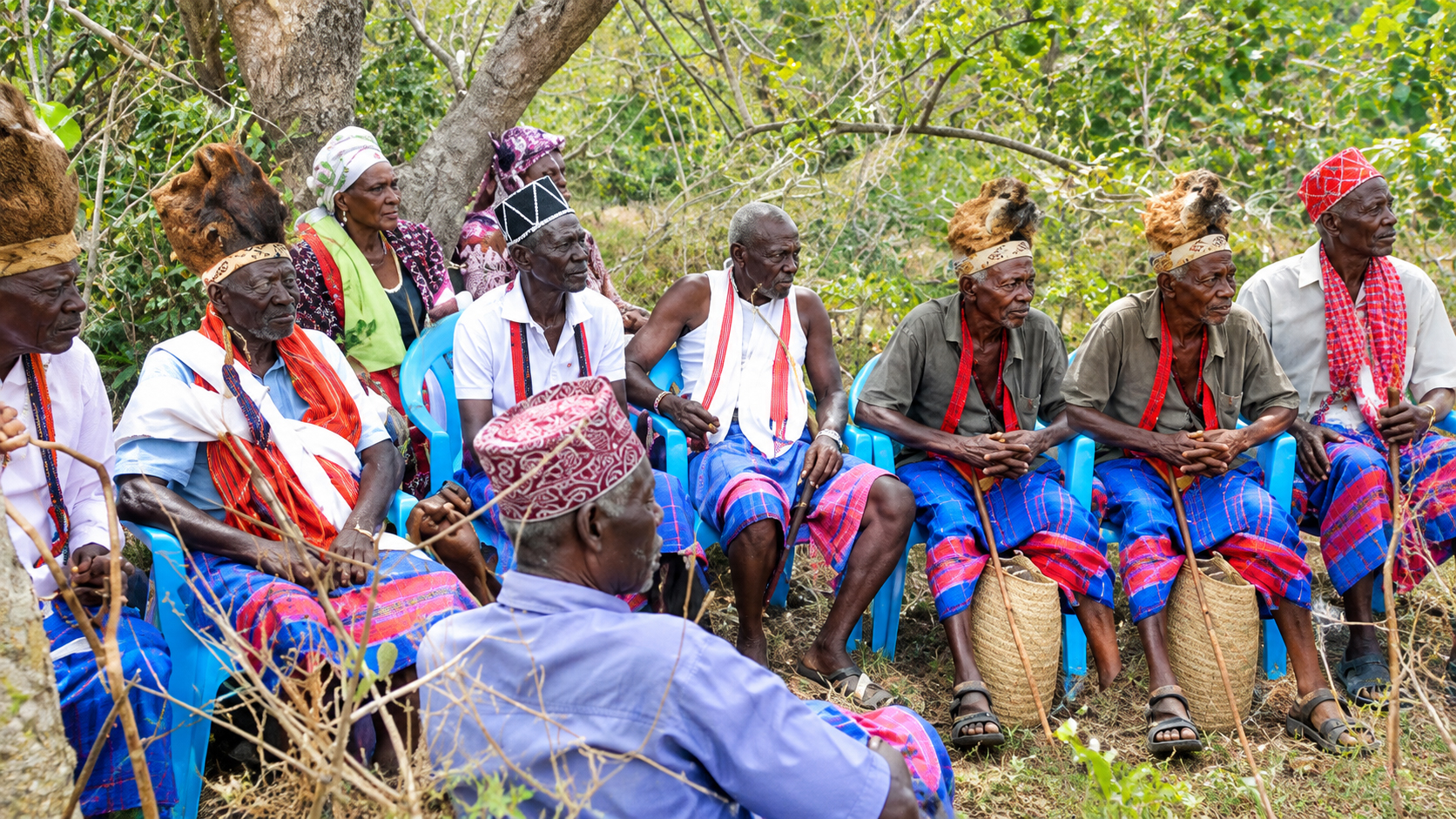
Luhya, Bukusu, Tirirki, Banyala, Batsotso, Bashitsyula
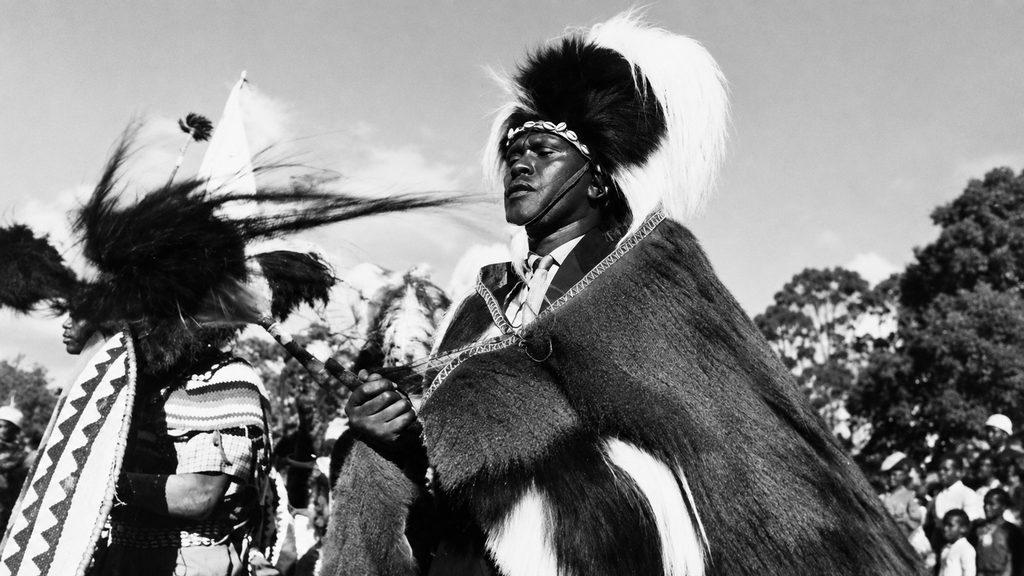
Based on 45 elders, 60 grieving adults and adolescents and eight religious leaders from five clans, this ethnography was published in (Evolution, Medicine and Public Health, 2025) and its best documented instance in Kenya.
The rituals unique to suicide include:
❖ Maternal uncles buried the deceased. They were specifically picked since they have no biological ties to the paternal line, making it impossible for them to spread the suicide spirit through kinship after handling the body. In exchange, the family makes a sacrifice.
❖ The entire homestead’s lights are turned off, women and children are told to stay indoors, and only men who are past a childbearing age are permitted to see the night burial.
❖ In certain clans, burial takes place in the precise location of the death.
❖ The explicit justification is that a respectable burial would please the spirit and encourage other deaths in the family, so most ceremonies are suspended and the body is not cleaned or dressed as bodies of natural deaths are.
❖ Instead of being lowered, the coffins are hurled into the grave, regardless of how it lands.
❖ During burial, the deceased is cursed out loud and told to leave the family entirely, never to be seen again.
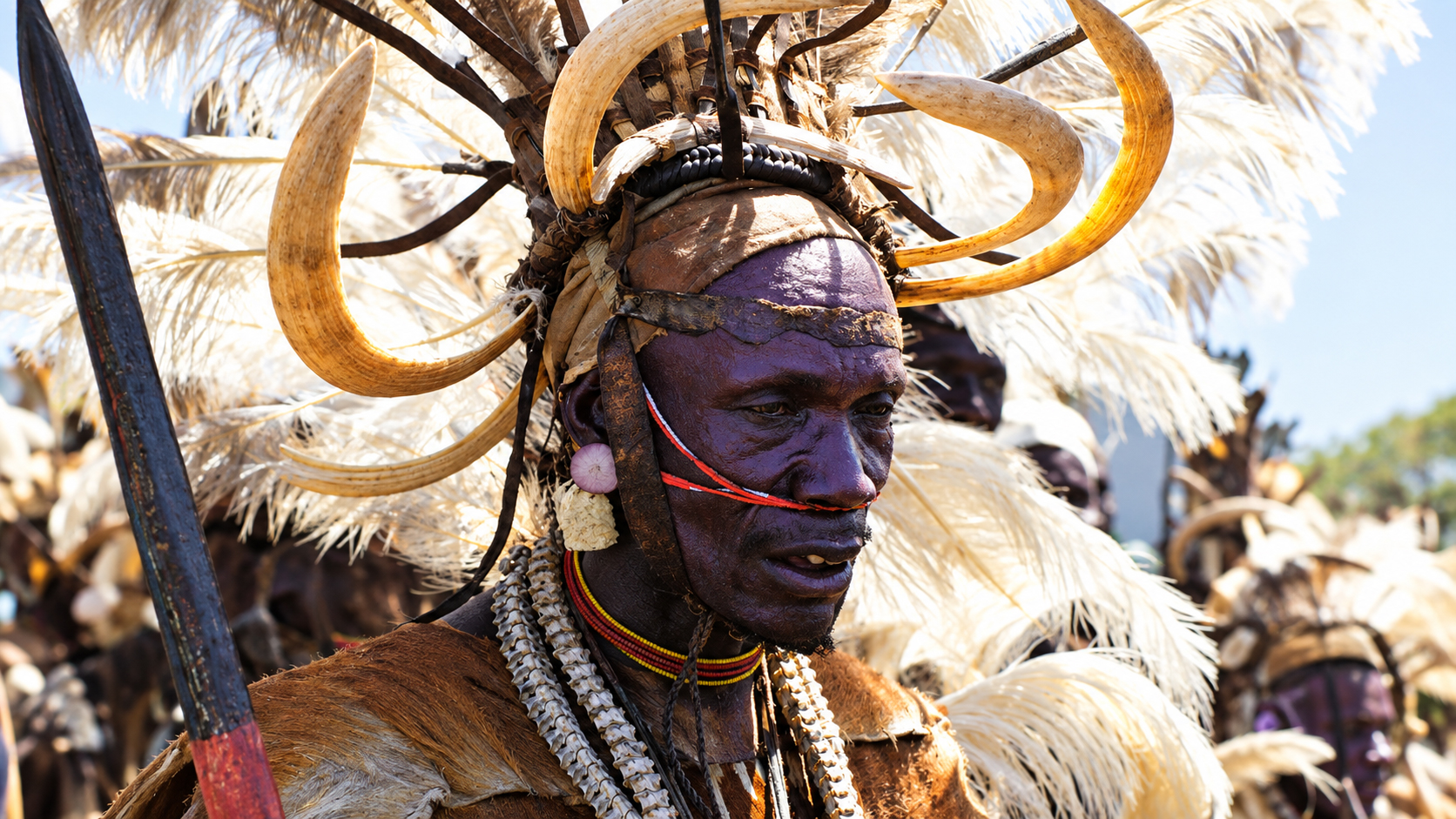
❖ The corpse was beaten. Traditionally, the person who discovers the body will advise the departed to go and never return. Both Muslim and Christian Sheiks and Clergy are against it. A Sheik cited Islam’s mandate to honour the deceased, while a pastor described it as demonic. However, to some it provided comfort and let go of feelings during a time when there many unanswered questions.
❖ To purify the area, the tree or item connected to the death is removed and burned.
❖ The name is sealed. Its is forbidden to name a child after someone who committed suicide for fear that the child might follow in their footsteps. This is irreversible removal from the bloodline in a naming culture.
Kikuyu, Embu, Meru, Mbeere
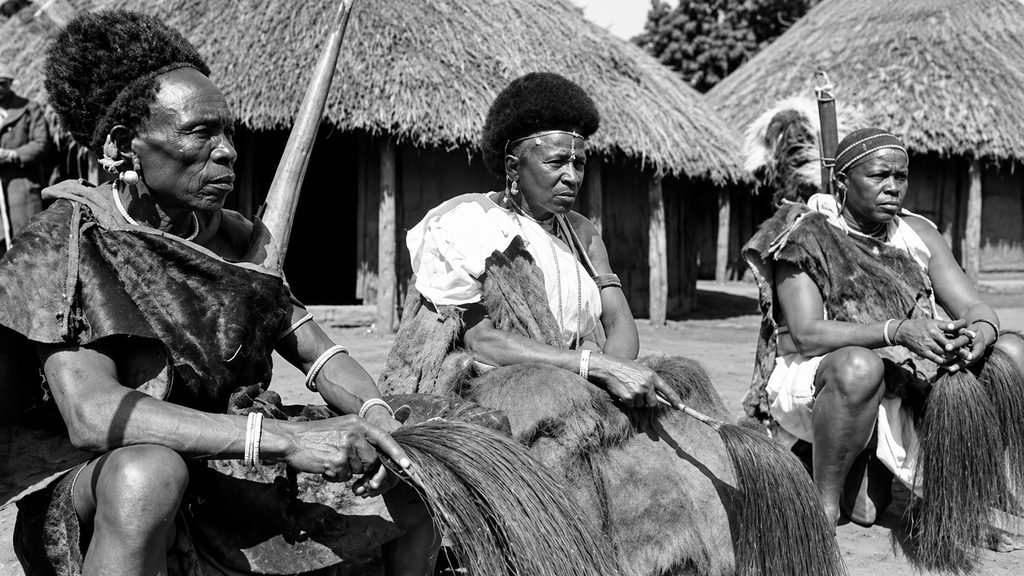
The governing principle is Thahu. Touching any corpse was already extremely contaminating for the Kikuyu, to the point where Francis Hall, a colonial commander, documented burial illness victims himself because Kikuyu custom prohibited it. To prevent Thahu from adhering to handlers, the dead were typically transported beyond the homestead. If a death occurred unexpectedly inside a hut, a hole was constructed in the back wall for the hyenas to carry the body. Anyone who encountered a body needed to be cleaned right away.
Suicide was disastrous. An elder can preside over minor defilements, but a medicine man (mendj mugo) is required for grave offenses. The cleansing rite is (Kuhoruo/ Guthjroria thahu). The severity scale is instructive. When a goat is killed, its stomachs contents are combined with medications; the officiating elder names the offenses while brushing the mixture onto the afflicted persons tongue, and each time the sufferer spits it out. The same mixture is then applied to the house’s walls. If this method is not used, the house needs to be demolished. A hired foreigner paid with a sheep would usually demolish the hut where a death had happened to drive the ghost out, in more severe situations, the entire homestead would be moved.
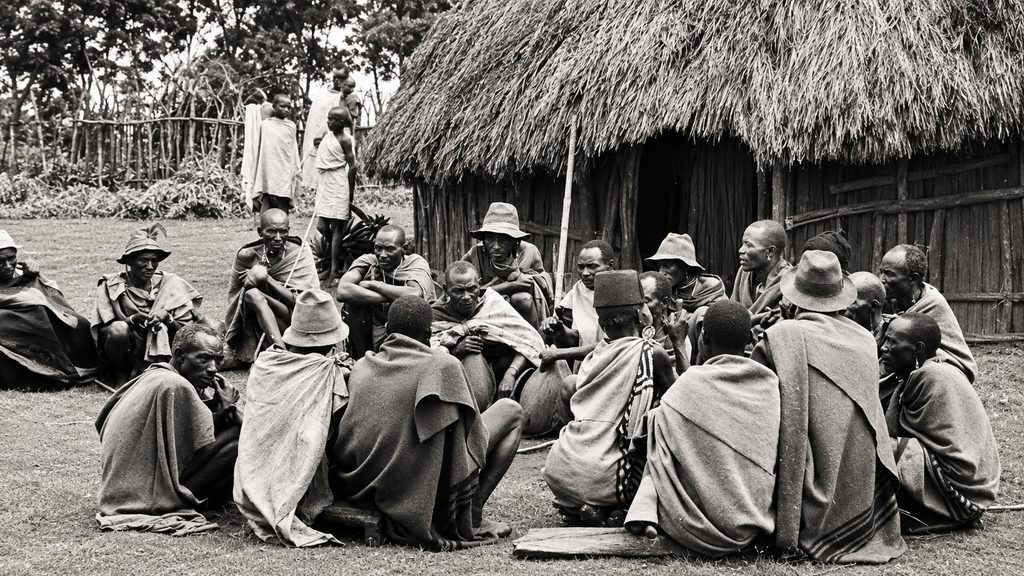
There were two further repercussions for suicide in particular, the deceased was not allowed to participate in (Gukdra) the ceremony that raised the spirit of a person who had sired offspring to ancestral status, and the place was either demolished or permanently abandoned. No (Gukdra) denotes a spiritual dead end and no ancestor.
The Njuri Ncheke council of elders in charge of cleaning among the Meru, who share the same Highland Bantu logic and language as the Embu and Mbeere.
Kamba
Here, every death results in community pollution. Prior to the rite, the entire village is considered unclean. On the third or fourth day, a senior elder kills a goat and sprays its blood to cleanse the homestead. Younger relatives are prohibited from touching or burying a corpse because they are considered ritually unclean.
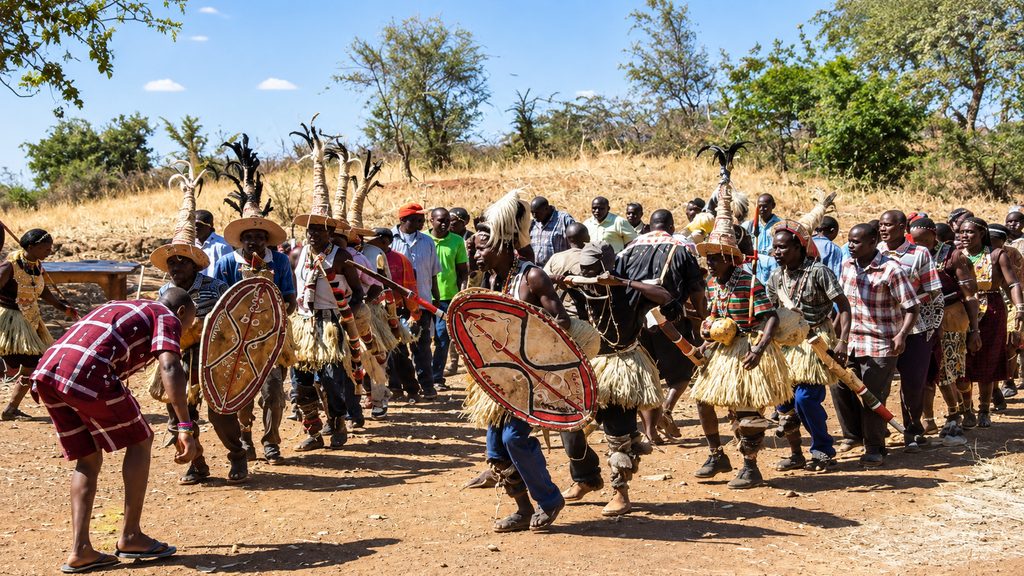
Typically, Kamba burials are east-west oriented, with men on the right and women on the left. Poor deaths disrupt that arrangement and are pushed to the outskirts. According to The Standard, an unmarried person who passed away was buried at the far end of the compound with purposefully dehumanizing rituals meant to ward off evil spirits. The same type of peripheral burials plus increased purification applied to suicide.
Withholding the name from a suicide is, as with the Luhya, the harshest punishment possible since the Kamba believe that the spirit returns through reincarnation and honour this by naming a child after the deceased.
Gusii (Kisii and Nyamira)
Like their Luo neighbours, the Gusii believed that death was abnormal and frequently blamed witchcraft for it (Oborogi). An adult is buried exactly outside their home, with a man on the right and a woman on the left. The following day, there is a public funeral. To determine the source of disaster, a diviner (Omoragori) is consulted.
The sequence is shortened and the placement is shifted from the recommended position in the event of a suicide. The enforcement culture surrounding funeral procedures is still strong, In March 2025, a widow was attacked at a burial in Nyamira for refusing to pour soil into the grave, prompting a combined rebuke from Kenyan women lawmakers.
Kuria (Migori)
Kuria customs are like those of the Gusii and Luo, homestead centred burial, rigid grave placement based on Gender and seniority, elders acting as ceremonial guardians, and cleaning the homestead following an unnatural death.
Mijikenda- Digo, Giriama, Duruma, Chonyi, Rabai, Kauma, Kambe, Ribe, Jibana
Graves by roadsides, riverbanks and under coconut palms are prevalent in Mijikenda because of the fundamental rule; a body from an unnatural death is not carried inside the homestead. People slain or dying in accidents are buried where they fell. Ali Abdalla Mnyenze of Kaya Kinondo, a Digo elder, stated unequivocally that the household must be cleansed with a sheep and that such bodies are forbidden to be brough into the homes.
(Chera), the misery that will return to the family if the rite is not performed. The purpose of burying someone who drowns at sea is to prevent (Chera) from coming back. Some subgroups like the Duruma go as far as to sacrifice an animal in the kaya to purify the instrument of death.
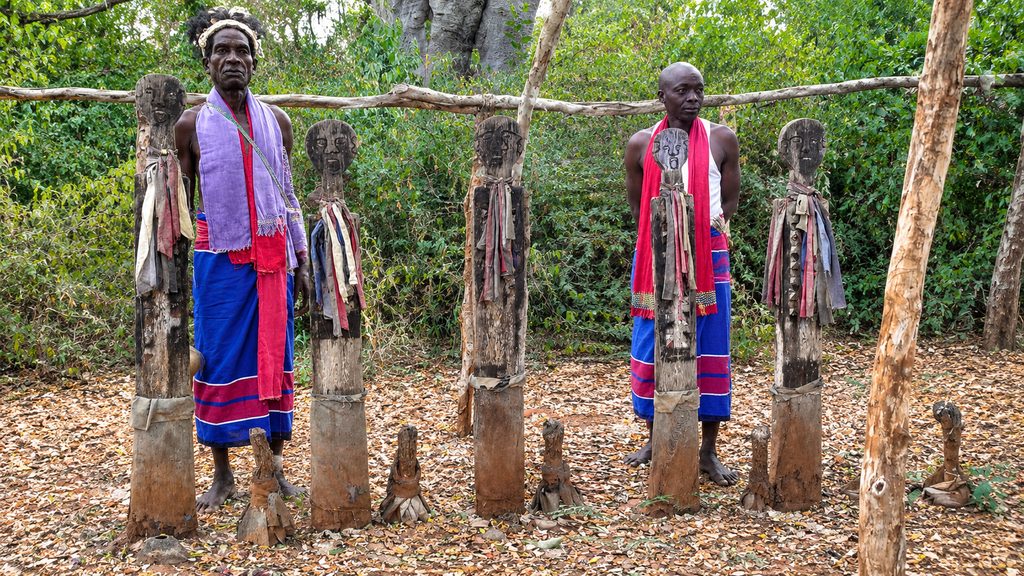
Suicide fits squarely into this category, as does the ritual neutralization of the object involved in Duruma Practice, the family purification by sheep, and burial at or close to the place rather than the homestead. These ceremonies are still preserved by the Kambi the Council of Elders in the Kaya forests). UNESCO recognizes these ceremonies as living intangible heritage, which means that they are ongoing practices rather than historical ones.
Taita
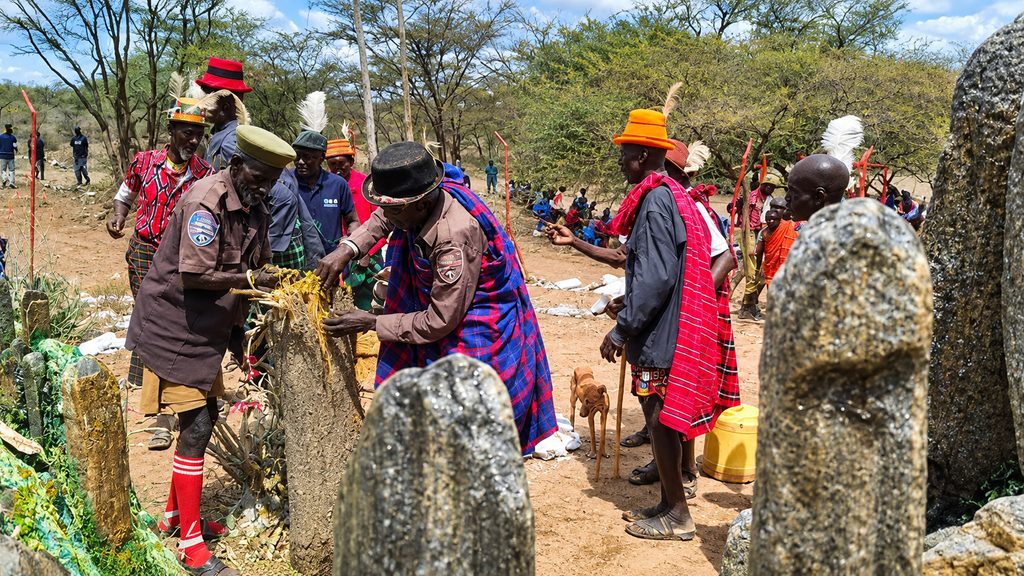
Skull exhumation and reburial in ancestral caves upon decomposition is a noteworthy aspect od Taita practice, which served as a means of gaining ancestral rank. The penalty for terrible deaths was exclusion form that secondary rite.
Swahili and Coastal Muslim communities
Governed by Islamic law as opposed to ethnic tradition, and this genuinely distinct pattern that is made apparent. Although suicide is strictly forbidden, the body is nevertheless washed (Ghusi), shrouded (Kafan) and buried in a Muslim cemetery facing Mecca, usually within a day. The only point of contention is whether the Imam or community leader should personally lead the (Janazah) prayer; some believe He should refrain as a deterrent, while others lead it. The community performs the prayer itself.
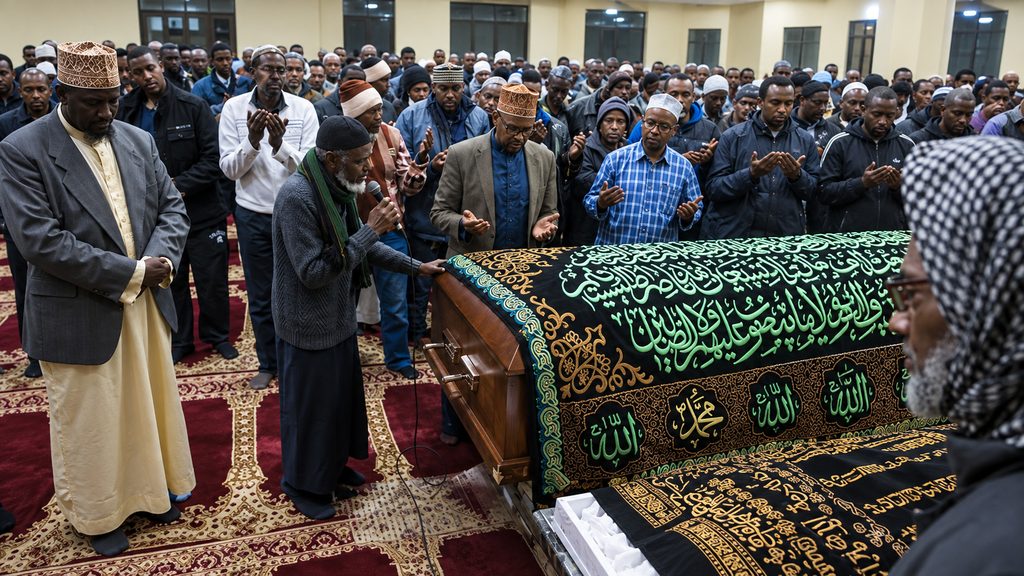
No beating, no sealed name, no night burial, and no sacrilege. Degradation of the body is not necessary to condemn the conduct because it shows from within a Kenyan religious tradition that moral disapproval and dignified burial are distinct, this distinction is crucial for preventative efforts.
Luo
Subtraction is the Luo mechanism. Grave placement inside the (Dala) precisely codes seniority, and typical Luo funerals consist of about thirteen different phases, including (Tero buru). The entire architecture is withheld in the event of a suicide; the (Budho) mourning gathering is abbreviated, the drumming is reduced, and the (tero buru) excluded, and the burial was positioned outside of the standard hierarchy. Withholding a lavish burial is the penalty in a community where it is the greatest honour.
The governing principle is (Chira) a squandering misfortune that results from violations of ceremonial order and is perceived as affecting the entire homestead rather than just one person. A (Jabilo), or diviner, may be consulted about purifying the compound after a suicide, which increases the fear of (Chira). The path to (Juogi), which is the status of an ancestral spirit and reincarnation via name is closed.
Kalenjin- Nandi, Kipsigis, Keiyo, Marakwet, Tugen, Pokot, Sabaot, Terik
The baseline is important here as well, among the Marakwet, only the barren were abandoned, whereas the Nandi typically buried only infants and elders, leaving adult corpses to be eaten by wild animals. Corpse handlers, who were typically sons or close relatives, had to be ritually cleansed and paid from the estate because death was polluting
The night vigil is denied in cases of suicide. According to Kalenjin custom, an elderly man’s body is kept at his home overnight before being buried the next day, however suicide deaths are not included in this, the body is jus brought on the day of burial and buried immediately. To prevent more curses, the scene of the death must be cleaned by chosen elders. It was interpreted as a negative sign for the upcoming generation, which is the claimed explanation for its severity.
The aspect of cleaning the place is not historical. Following the deaths of the late Legislator Ng’eno and five other people in a helicopter crash in Nandi County in March 2026, Kalenjin elders announced a significant traditional purification ritual and issued a warning that two more eventsof similar nature may occur if rites were not performed at the scene of the disaster. That is the same reasoning if a place is contaminated by an unnatural death, it must be cleaned up or the death will recur.
Maasai and Samburu
In the past, most Maasai dead were not buried at all, instead, their bodies were left out for scavengers, with just a few prominent individuals being buried. Since there was no elaborate funeral to withhold the denial of a proper burial mechanism that carries the sanction elsewhere had no corresponding power here. The same site pollution applied to Maasai custom, which required abandoning a homestead (Enkang) following specific fatalities and treating the location as contaminated.
Somali, Borana, Rendile, Gabra, Orma, Burji
The Islamic practice outlined under the Swahili applies here. Islamic customs co-exist with earlier (Waaqeffanna) deliveredfeatures and the (Gadaa) related authority of elders among the Borana, Gabra and Rendille. Cleaning up after an unnatural death may entail the sacrifice of livestock.
Two Sides of a coin
Research does show a genuine co-relation between exposure to a peer’s suicidal behaviour and subsequent attempts, and burial apart from the community with rites suspended may be a culturally evolved method to limit suicide contagion. The elders’ dread of repeating within a family is a true fear rather than superstition dressed up.
By portraying the deceased as the weak link, these rituals may serve as tools for retaining power, discourage others from seeking assistance, and further stigmatize already vulnerable survivors.
Educating local counsellors about the benefits of these customs while raising their awareness of the negative effects on socially vulnerable individuals.
References
Asatsa, S., Lew-Levy, S., Ngaari Mbugua, S., Ntaragwe, M., Shanyisa, W., Gichimu, E., Nambiri, J., & Omuchesi, J. (2025). Regulating community well-being through traditional mourning rituals: Insights from the Luhya People of Kenya. Evolution, Medicine, and Public Health, 13(1), 14–24. https://doi.org/10.1093/emph/eoaf001
Kihaki, M. (2025, March 25). Nyamira widow ordeal sparks outrage as calls for justice grow. The Standard. https://thestandard.ke/business/amp/national/article/2001514631/nyamira-widow-ordeal-sparks-outrage-as-calls-for-justice-grow
Nyarangi, E. (2025, March 25). Women MPs condemn attack on Nyamira woman during estranged husband’s burial. The Standard. https://thestandard.ke/business/amp/national/article/2001514686/women-mps-condemn-attack-on-nyamira-woman-during-estranged-husbands-burial
Nation Media Group. (2026, March 4). Ng’eno burial: Kalenjin traditional rites for chopper crash victims.Nation.Africa. https://beta.nation.co.ke/kenya/counties/narok/ng-eno-burial-kalenjin-traditional-rites-for-chopper-crash-victims-5380904
Kenyans.co.ke. (2026, February 28). Helicopter crashes and bursts into flames in Nandi County.https://www.kenyans.co.ke/news/121250-helicopter-crashes-and-bursts-flames-nandi-county