

SOMALIA- DIRAC ELEGANCE, POETIC HAIR TRADITIONS, AND INDIAN OCEAN FASHION HERITAGE
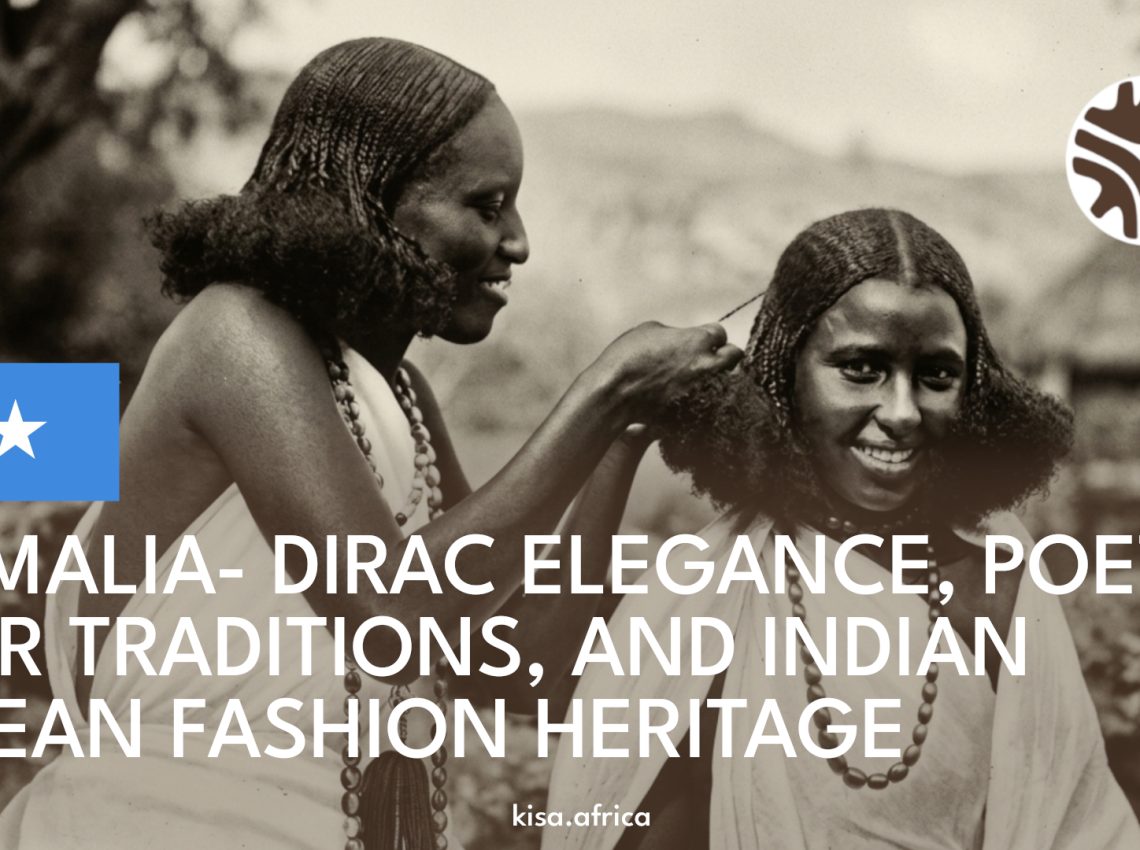
The fashion traditions of Somalia reflect one of the oldest and most sophisticated cultural histories in the Horn of Africa. Positioned along major Indian Ocean trade routes for thousands of years, Somalia became deeply connected to Arabia, Persia, East Africa, South Asia, and the wider Islamic world. Yet despite these interactions, Somali communities preserved a highly distinctive cultural identity expressed through clothing, poetry, beauty traditions, and social customs.
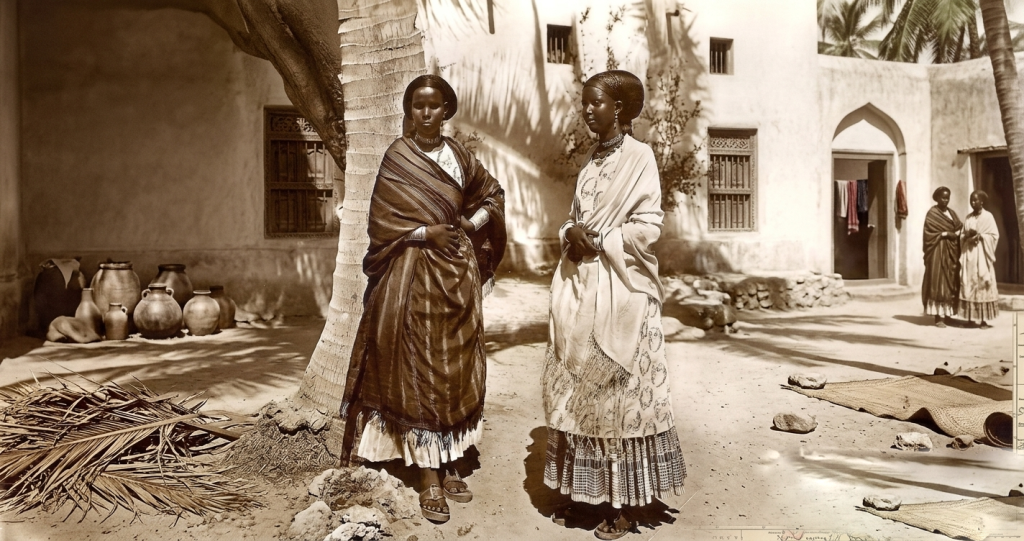
Fashion in Somalia historically balanced:
- Elegance
- Modesty
- Mobility
- Climate adaptation
- Spiritual values
- Nomadic practicality
- Artistic refinement
Because much of Somali society historically involved pastoral nomadic lifestyles in arid environments, garments evolved to remain lightweight, breathable, and practical while still emphasizing sophistication and beauty.
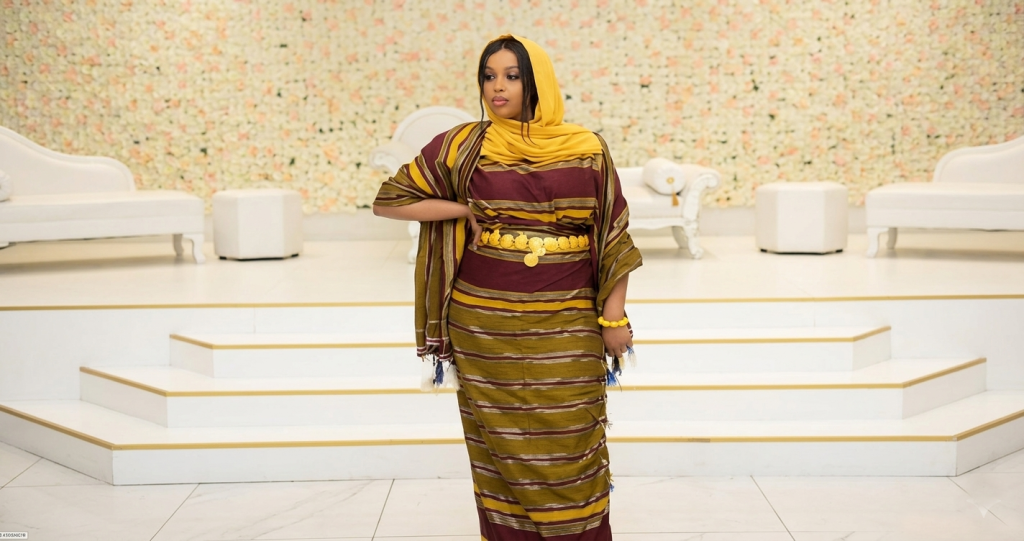
Among the most famous garments in Somali fashion history is the dirac.
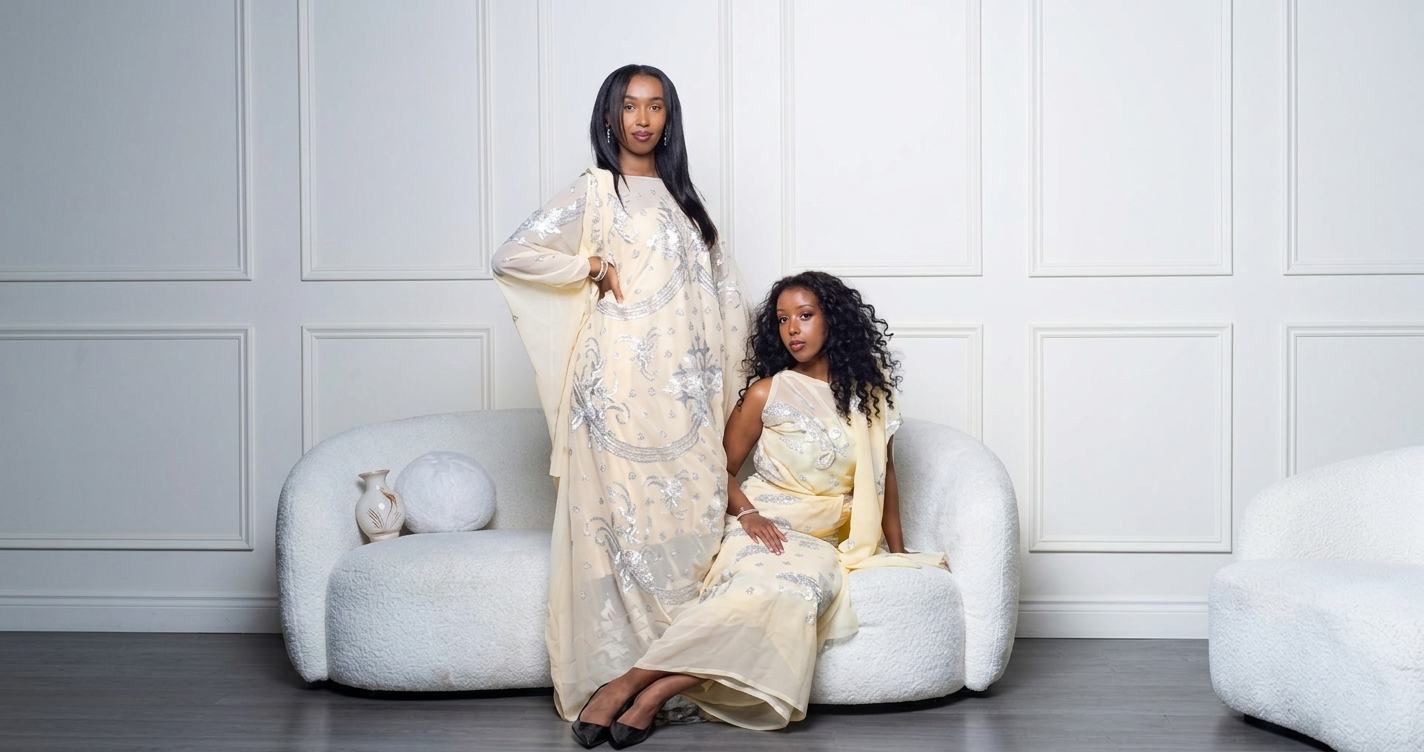
The dirac is a flowing lightweight dress traditionally worn by Somali women, often layered over a slip called a gorgorad and accompanied by shawls or scarves.
The garment became especially associated with:
- Femininity
- Elegance
- Celebration
- Hospitality
- Weddings
- Religious festivals
Diracs are often made from sheer or brightly coloured fabrics decorated with embroidery, lace, sequins, or shimmering details.
One fascinating aspect of Somali fashion history is that Somali women historically adapted imported textiles from India, Arabia, and other trading regions into uniquely Somali designs and silhouettes. Over time, the dirac evolved into one of the Horn of Africa’s most recognizable garments.
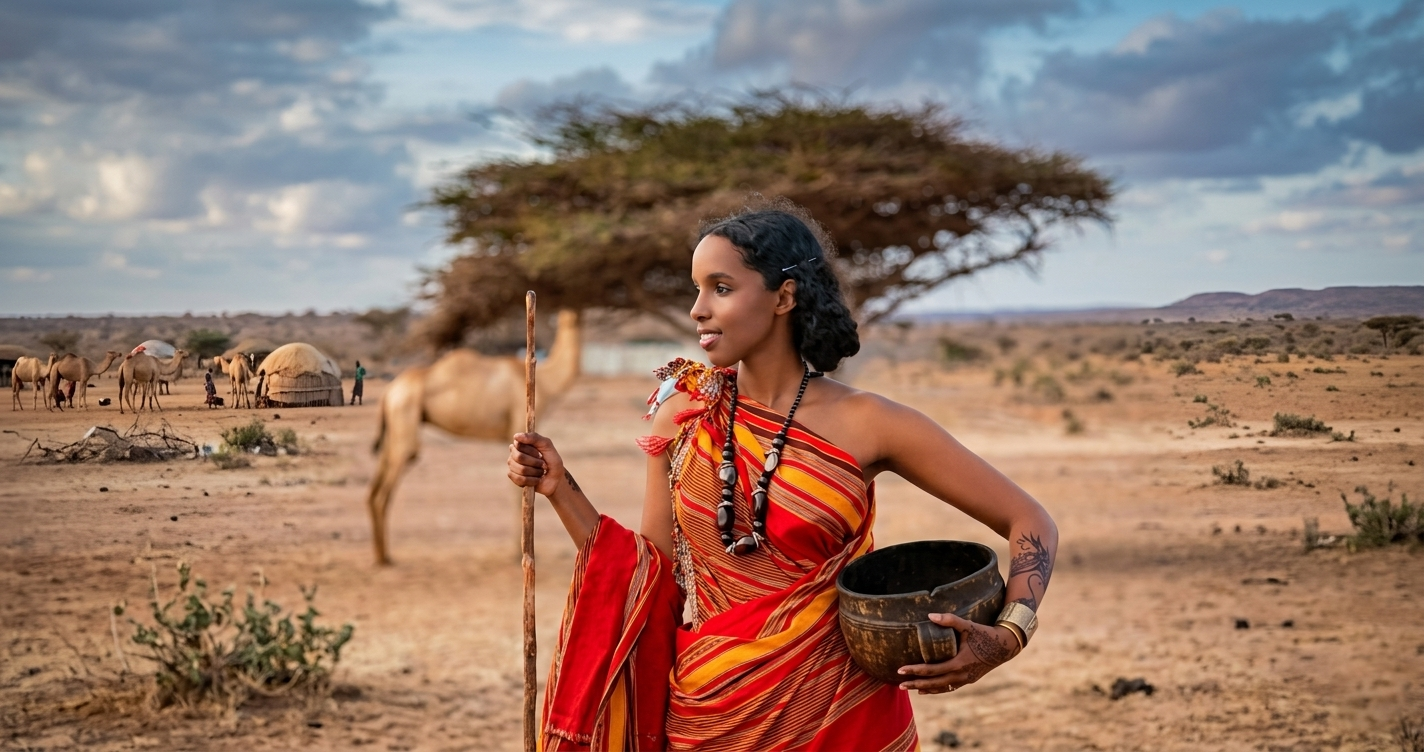
Another important traditional women’s garment is the guntiino.
The guntiino is a wrapped cloth traditionally draped around the body and tied over one shoulder. Historically, it was especially practical for nomadic movement and desert climates while still maintaining graceful presentation.
Men’s traditional clothing also reflects Somalia’s pastoral and Islamic heritage.
Many Somali men traditionally wear the macawiis, a sarong-like wrapped garment well suited for heat and mobility.
Additional traditional garments include:
- White robes
- Embroidered shawls
- Kufi caps
- Turbans
- Lightweight cotton garments
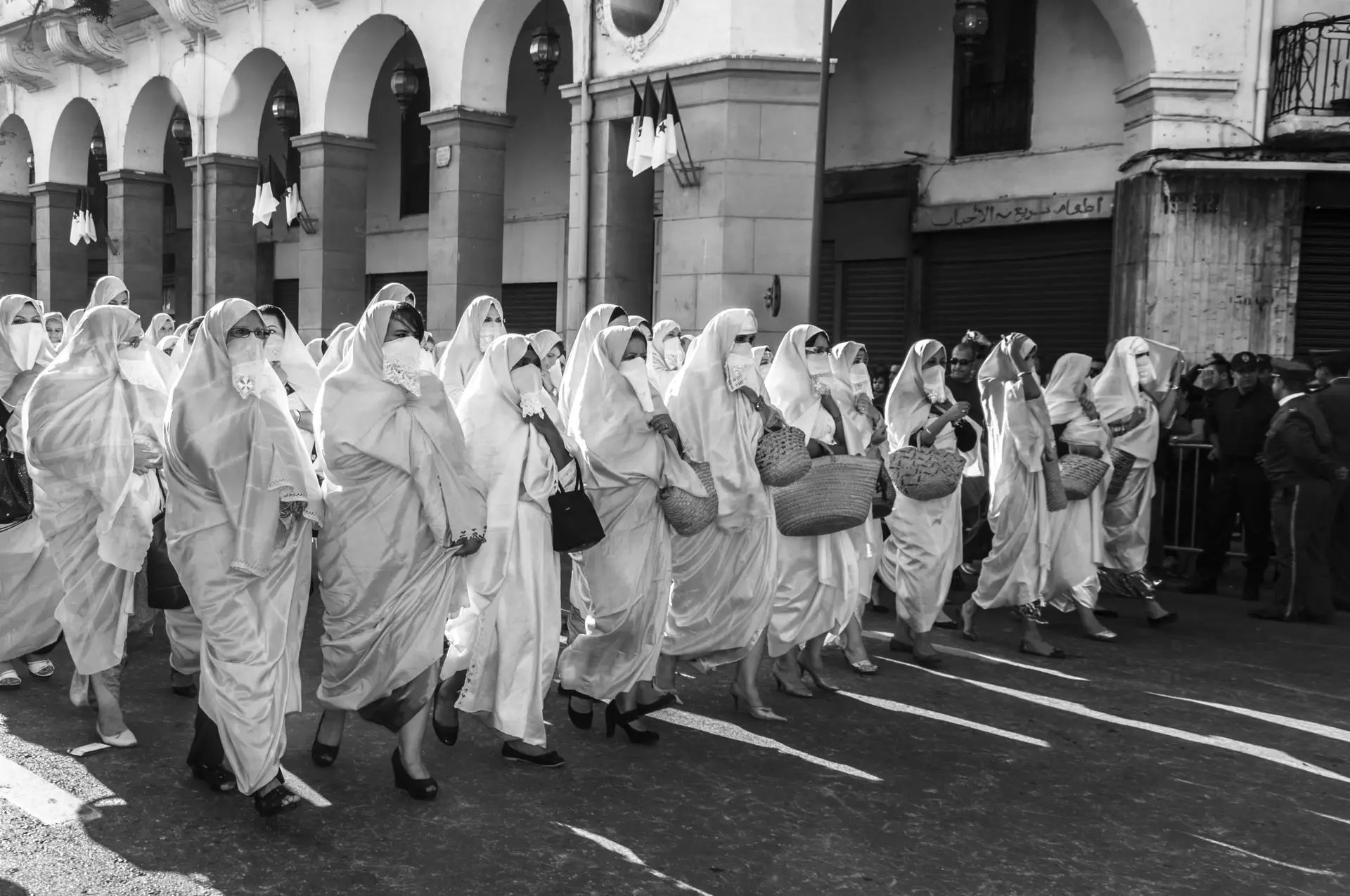
The preference for white fabrics partly reflects practical adaptation to sunlight and heat while also connecting to Islamic traditions emphasizing cleanliness and modesty.
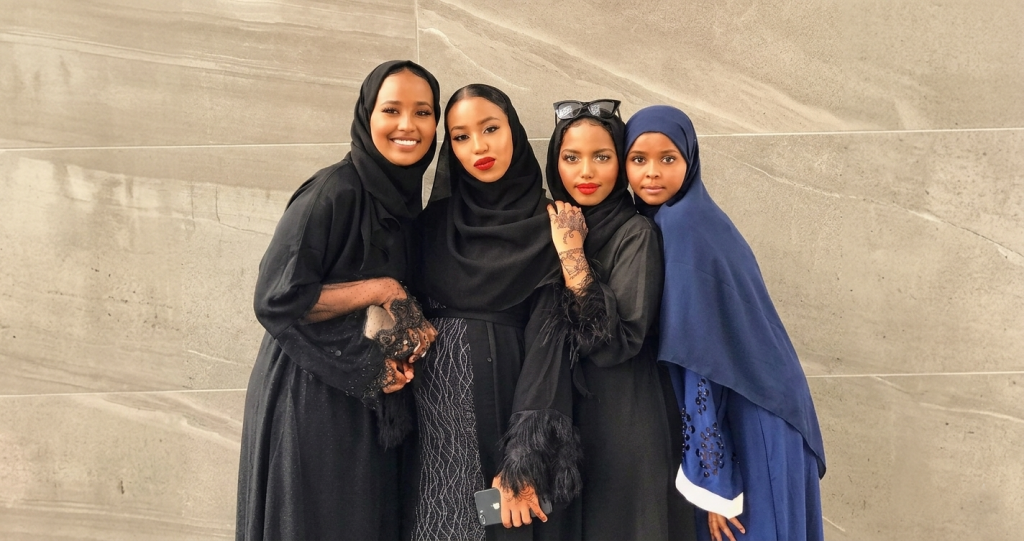
Islam profoundly shaped Somali fashion for more than a thousand years.
Somalia became one of the earliest regions in Africa influenced by Islam through Red Sea and Indian Ocean trade networks.
Islamic influence encouraged:
- Modest silhouettes
- Flowing garments
- Head coverings
- Shawls
- Elegant but conservative presentation
However, Somali communities developed highly distinctive local aesthetics through colourful fabrics, jewellery traditions, and uniquely Somali tailoring.
Modern Somali modest fashion continues balancing Islamic identity with contemporary style and global trends.
Hair culture occupies a particularly important place in Somali beauty traditions.
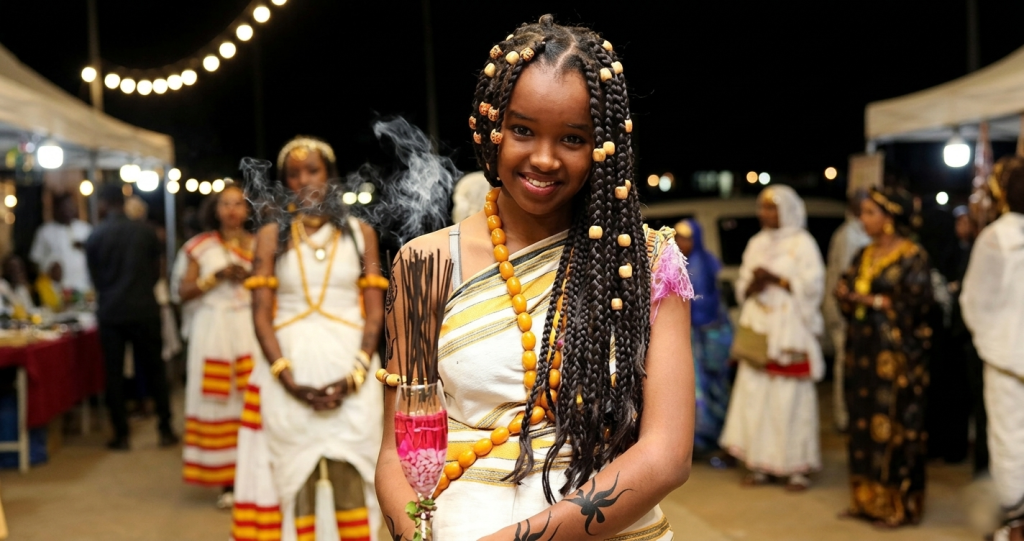
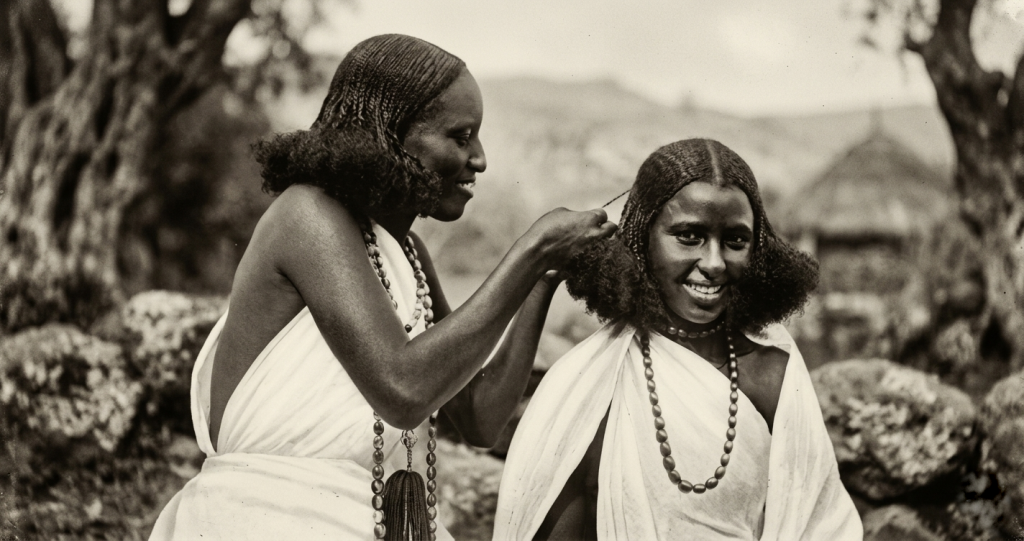
Somali hair traditions historically emphasized:
- Braiding
- Protective styling
- Oil treatments
- Scented haircare
- Grooming rituals
Natural oils such as sesame oil and fragrant perfumes helped maintain hair health in Somalia’s dry and windy climates.
Haircare sessions frequently became important communal gatherings where women exchanged:
- Poetry
- Advice
- Family news
- Oral traditions
- Cultural teachings
Somali poetry historically celebrated hair beauty in extraordinary detail.
Classical Somali poets often compared braided hairstyles to:
- Rivers
- Rainfall
- Camel movement
- Nature
- Moonlight
- Flowing landscapes
This reflects the broader Somali oral tradition, one of the richest poetic traditions in Africa.
Hair therefore represented not only beauty, but also artistry, femininity, refinement, and cultural pride.
Trade history also heavily influenced Somali fashion aesthetics.
For centuries, Somali ports connected East Africa to:
- Arabia
- Persia
- India
- The Ottoman world
- Southeast Asia
Imported fabrics, perfumes, jewellery, and textiles entered Somali society through these commercial networks.
Somalis adapted these materials creatively while preserving distinct Somali visual identity and tailoring traditions.
Modern Somali fashion now blends:
- Gulf Arab modest fashion
- East African aesthetics
- Contemporary Afro-fashion
- Luxury fabrics
- Diaspora influences
- Global streetwear
- Somali diaspora communities in places such as the United Kingdom, North America, the Gulf states, and Scandinavia helped popularize Somali beauty aesthetics internationally.
Today, Somali fashion is increasingly visible in:
- Modest fashion industries
- Natural hair movements
- African luxury fashion
- Social media beauty culture
- Contemporary Muslim fashion design
This modern visibility continues a long history of Somali elegance, trade sophistication, and cultural creativity.
FASCINATING LESSER-KNOWN FACTS ABOUT SOMALI FASHION AND HAIR
- Somali poetry historically described hairstyles in remarkable artistic detail.
- The dirac evolved partly through Somali adaptation of imported Indian Ocean fabrics.
- Haircare gatherings functioned as important social and cultural spaces.
- Somali fashion reflects both pastoral nomadic life and cosmopolitan trade history.
- White garments helped regulate heat in arid climates.
- Somalia was among the earliest African regions influenced by Islam through trade.
- Perfumed oils played major roles in Somali beauty traditions.
- Somali modest fashion combines Islamic aesthetics with uniquely Somali colours and fabrics.
- Indian Ocean trade networks shaped Somali textile traditions for centuries.
SOURCES
Lewis, I. M. (1998). Peoples of the Horn of Africa: Somali, Afar and Saho. Lawrenceville, NJ: Red Sea Press.
Akou, H. M. (2011). The Politics of Dress in Somali Culture. Bloomington, IN: Indiana University Press.
Eicher, J. B., & Ross, D. A. (1992). Dress and Identity. New York, NY: Fairchild Publications.
Rovine, V. L. (2015). African Fashion, Global Style: Histories, Innovations, and Ideas You Can Wear. Bloomington, IN: Indiana University Press.
Kapteijns, L., & Arman, A. (2004). Women’s Voices in a Man’s World: Women and Pastoralism in the Somali Oral Tradition. Portsmouth, NH: Heinemann.
Picton, J., & Mack, J. (1989). African Textiles. London, England: British Museum Press.