
KISA AFRICA- CAMEROON
INTRODUCTION
CAMEROON HAIR AND FASHION
With a population of more than 250 ethnic groups, Cameroon, also known as the Africa in miniature, has a variety of textile cultures, hair styles and body decorations. The styles of Cameroon run between bead-embroidered royalty of the Bamileke and Bamun kingdoms of the Grass fields, to the elaborate scarification and ochre-haired Fulani (Mbororo) pastoralists of the north, and the matrilineal weaving of the Bassa, Douala, and Beti. Hair and fashion in Cameroon are ethnic identifiers, spiritual protective and status symbols, and even historical documents of migration, commerce and revolt against colonialism.
THE BAMILEKE NDOP (FEATHER HEADDRESS) HISTORY.
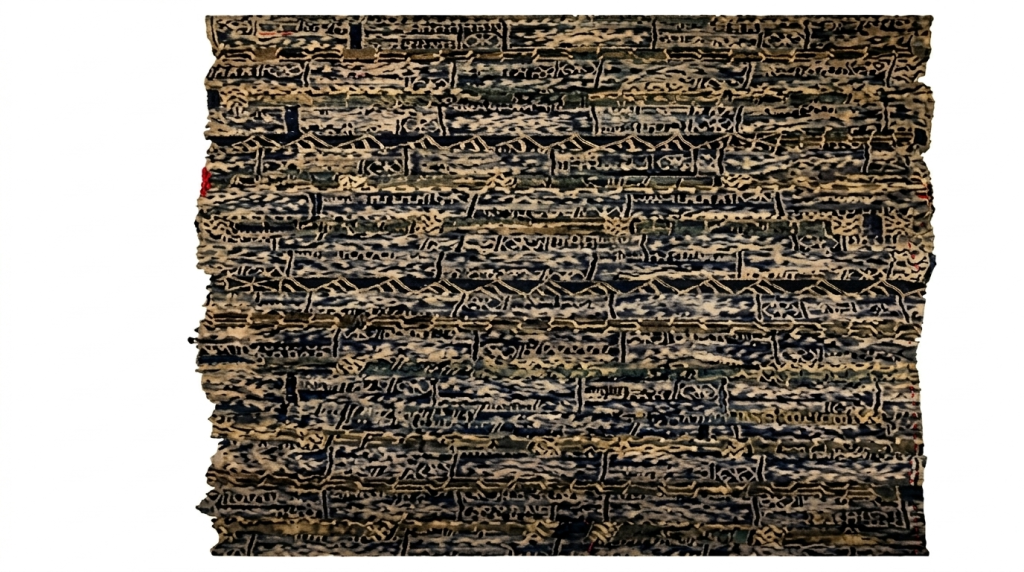
The Bamileke people (West Cameroon) have a famous iconic Ndop crown or feather headdress, which is not merely decorative. Oral traditions of the Bandjoun chiefdom tell that the Ndop was brought in during the 17th century under King Nji Mforifoum. Its towering feather-covered design symbolizes the elephant of the forest a symbol of royal power, memory and wisdom. The feathers (usually of Turaco or grey parrot) attached to each lineage represent a certain victory or alliance. The bottom cloth which is woven locally grown cotton and dyed in deep pits is known as Lak or Ndop. Little known to people is that the height of the Ndop increased with time, a new ring of feathers after every successful war or peace treaty was made and the crown of every king was literally a vertical history of his own reign.
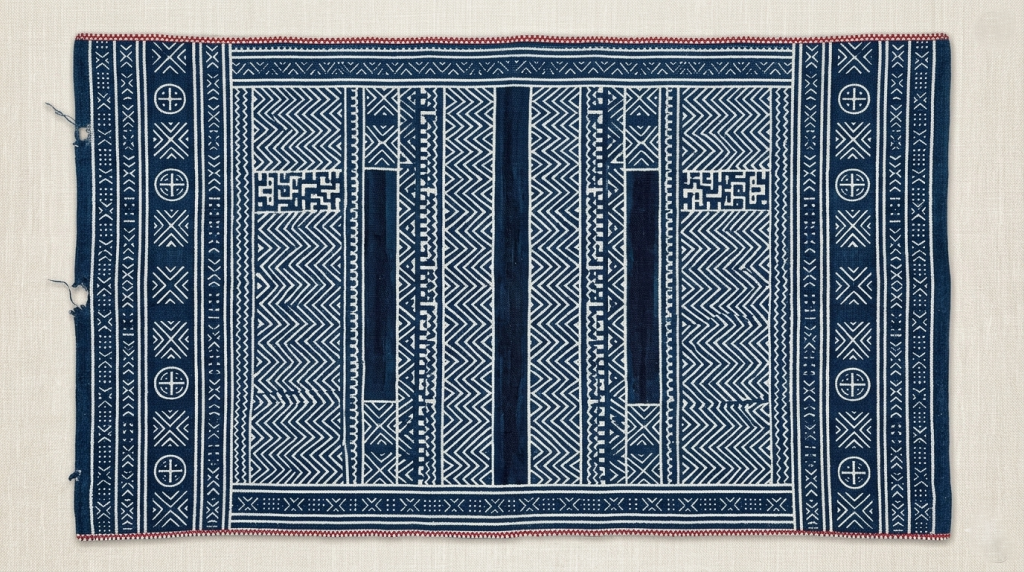
THE SECRET OF KWA (CAMEROON HAIR PIN AND SHEA BUTTER)
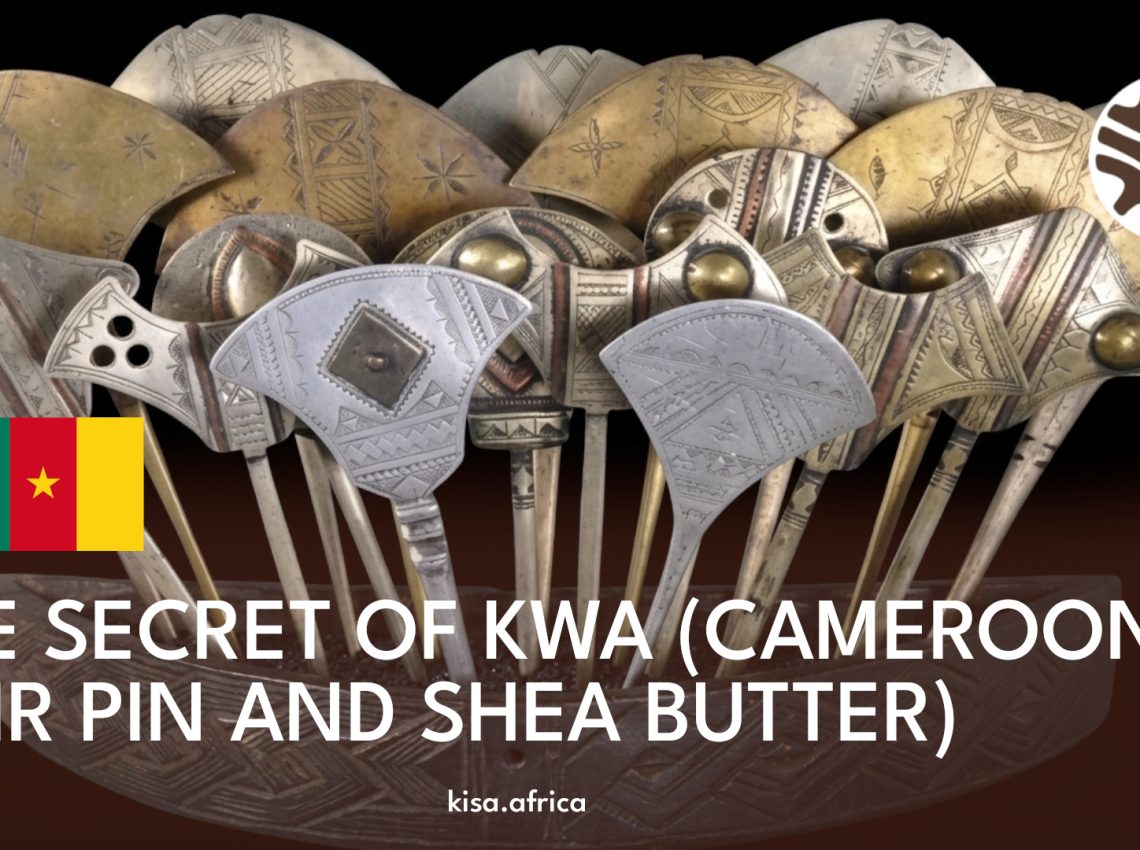
Beti and Fang Cameroonian hairstyles were based on the use of Kwa (wooden or bone hair pins) and Nkoum (whipped shea butter with red camwood powder, Baphia nitida). Kwa pins were made of fallen iroko wood, which had been thought to have the spirits of the forebears.
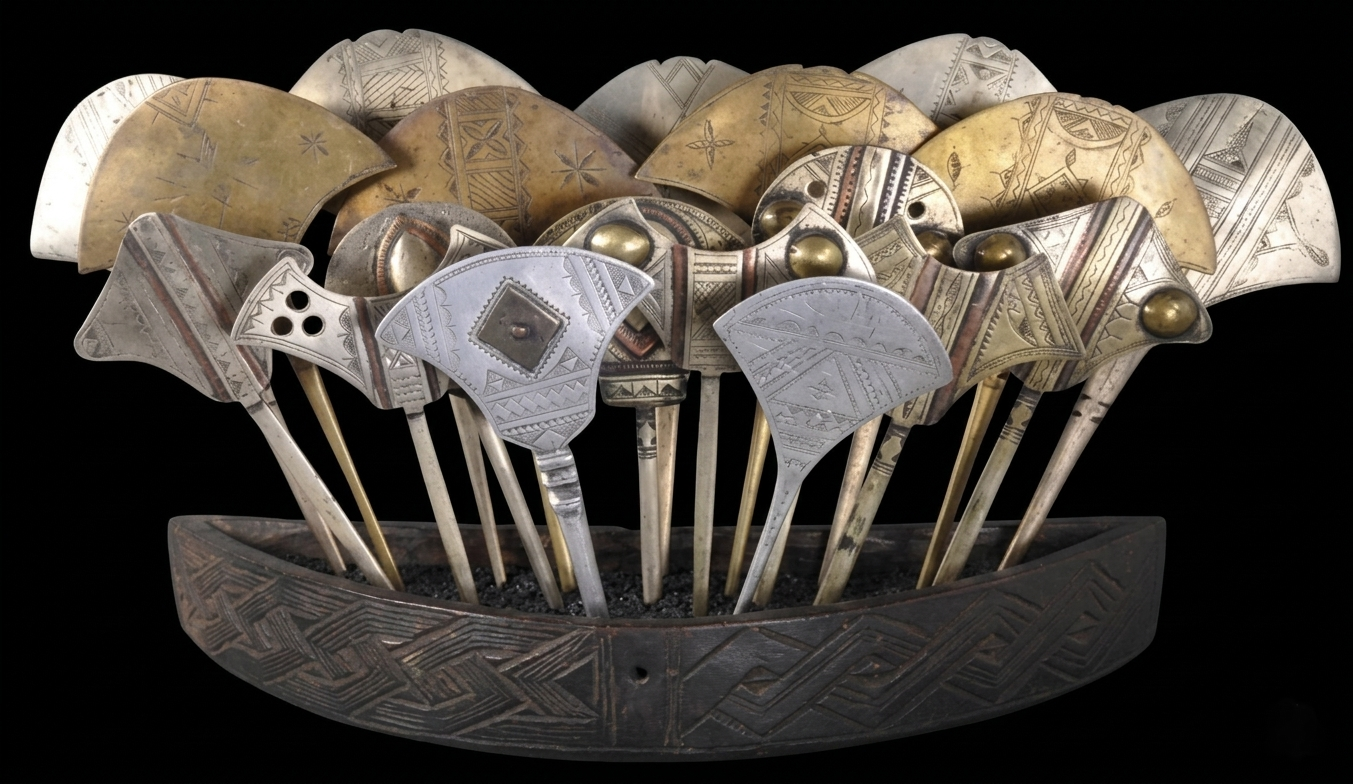
Women would insert these pins either upwards, downwards, or sideways (married women, widows and healers respectively).
Fun fact: Beti women would cut each other’s hair in the pitch darkness on the eve of a full moon. Touch and rhythm (chanting of patterns) were used to weave their family lineage into blind maps – each pattern of the braid was a representation of a female ancestor. This was known as Kwe Nda mew, was banned by German missionaries in 1908 as pagan darkness yet resurfaced in the 1950s independence movement in secret.
Other conservative hairstyles that have been documented by the elders in the Mfoundi region are:
Mbala mbaa -shaved crown with one tuft – worn by twins.
Mvèm -bride mourning wedding wear.
Ngouon-vertical beaded cornrows by female warriors in the 19th century.
THE INDIGO CLOTH (NDOP) AND THE MEMORIAL LOOMS OF FOUMBAN.
The Benin elite, in contrast, adorned themselves with coral beads originating in the
Mediterranean but the Grassfields kingdoms (Bamun, Bamileke, Kom) invented indigo resistdye cloth as their sacred regalia. The Bamun palace at Foumban has the oldest known Ndop loom, which is claimed to have been made under Sultan Njoya Palace historian Njipdounon Pierre says the loom was not locally developed, but was a result of a dream. Njoya dreamed of a spider-webbing a chameleon, the changing colours of the chameleon represented flexibility, and the web of the chameleon was the design of the royal cloth.
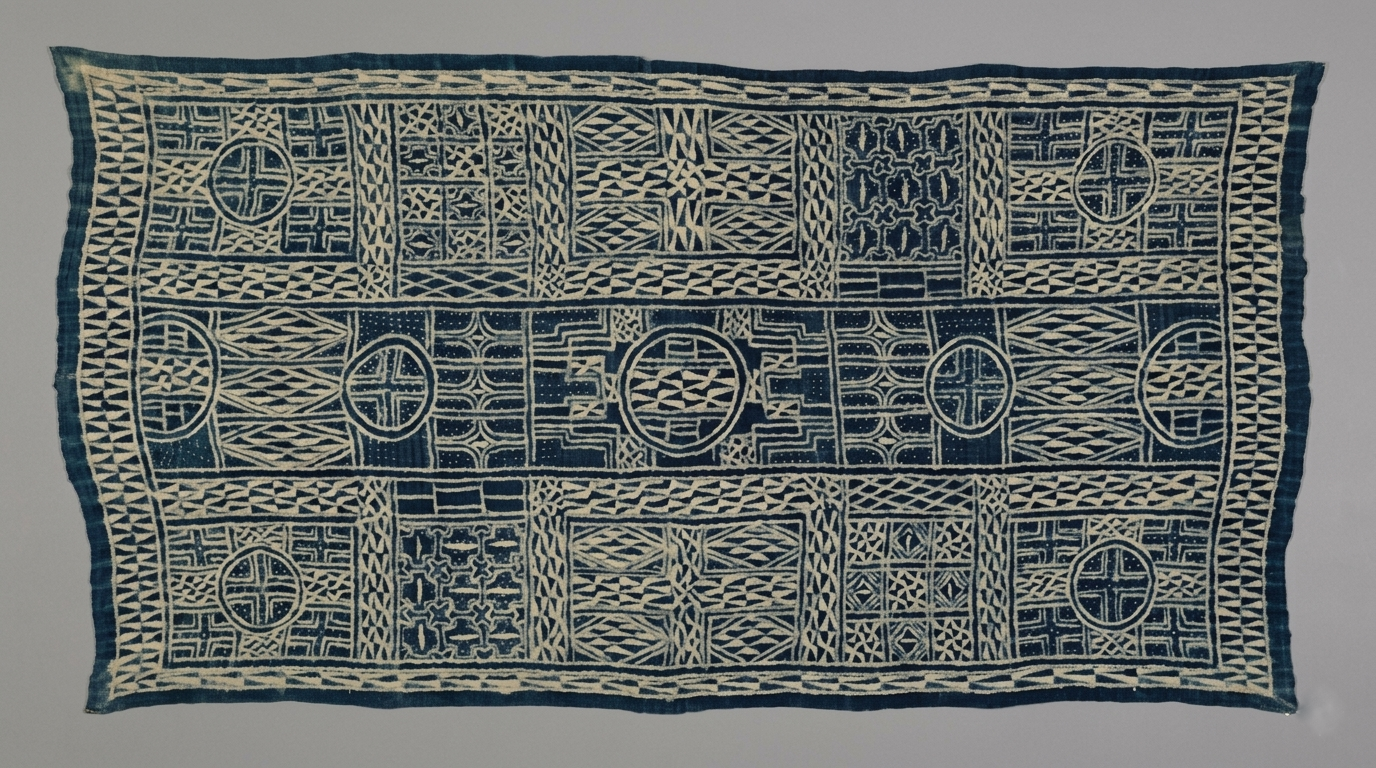
The Trans-Saharan Indigo Trade: Little known fact is that the deep blue indigo of the royal cloth of Cameroon was also of Indigofera plants grown in the basin of Lake Chad, which were traded south over the Sahelian routes of the Fulani. But later after the 19th century the synthetic indigo was brought out by German and then French colonial companies and almost wiped out the organic dye tradition. In Foumban nowadays there are less than 50 master dyers who understand the original method of fermentation, a process that requires 21 days and ashes of the Yan tree (Combretum glutinosum).
Only in the Kom kingdom, contains existence of memorial looms (Nta’ Ndop). The personal loom of a queen mother was not dismantled upon her death, but was simply frozen, that is, the loom was not removed, but rather covered with a special hut, leaving one piece of cloth still in-progress. It is believed that that cloth will grab her wandering spirit before it goes to the ancestor realm. The practice is at least 250 years old with these frozen looms dated orally to at least the late 18th century.
FULBE (MBBORORO) HAIR AND JEWELRY HAVE SYMBOLS AND MEANING. Fulbe (Mbororo) women of the semi-nomadic Fulbe community of northern Cameroon have a unique hairstyle, the Kollé a flat, crown-like disc of coiled braided hair, commonly filled with amber and silver coins, around the head. The Kollé is completely natural, untouched hair, stiffened with black soap and acacia gum.
Symbolic codes:
Amber beads (Kaaka): The inclusions of insects, plant matter in each amber piece are interpreted by Fulani elders to foretell good or bad fortune.
Silver coins: Silver coins were historically real thalers of 18th-century Austria, which were matrimonial price. Women who get over 30 coins keep them to use as a Barke (blessing shield) since it is believed that the clinking sound of the coins keeps away evil spirits at night.
Henna marks on the chin: They were put on only after having a child but in case of the death of the child, the marks are painted with charcoal and not henna in the span of a year.
Fun fact: The Mbororo never use mirrors when styling the Kollle. Rather, two women are opposite to each other and braid at the same time, relying on each other in the eyes of each other. This is called Nyii “seeing through the other soul”. It is considered taboo to braid alone.
LIFECYCLE AND SPIRITUAL DIMENSION IN CAMEROON.
Cameroonian fashion is modified according to stages in life:
Birth (Bassa): The first hat of the baby is made of Elimb-ngo (raffia fibres dyed in red with Pterocarpus bark). This hat is buried with the child in case he/she dies before the age of 2 but in case of marriage, it is burnt.
Initiation (Sawa/Douala): During the period of puberty, Douala girls are given their first
Lambi loin cloth, decorated with Nje (crocodile) motif, which is a representation of the ancestor that guided them out of the sea The garment is never laundered merely beaten with wooden mallets, and subjected to moonlight.
Marriage (Bamileke): A bride wears a Toghu (black velvet with many coloured embroidery) on a skirt of Ndab (beaded belt). The belt has several cowries, which symbolize the number of children her grandmother had, a secret fertility prayer.
Spiritual protection (Beti): The Nkuk (little leather amulet pouch) is embroidered into the waistband of a man loin cloth. The interior contains the loam of the grave of the father, a fragment of python skin, and verses in the symbols of Nsibidi which are now almost extinct.
This is thought to be a shield against witchcraft bullets in conflict situations.
MODERN AND CULTURAL SURVIVAL.
The traditional fashion in Cameroon was severely hit during the German occupation) and the French/British mandate. The Toghu was banned in urban centres like Douala and Yaoundé from 1921 to 1945 under the indignant code, which considered native dress a sign of rebellion. A good number of weavers changed to the manufacture of plain cotton to colonial rulers.
Nevertheless, there was a significant resurgence in the 1990s. Traditional hairstyles and beadwork were reintroduced by the Festival National des Arts et de la Culture (FENAC) and the Ngondo festival (Sawa people). Currently, Cameroonian designers such as Imane Ayissi apply Ndop cloth and Toghu embroidery to the international runways. Yet, there is controversy: young people in the city can be spotted with faux Kollé that is composed of synthetic wool and plastic coins, which Fulani elders refer to as Nyii kaa – a cultural appropriation without spiritual authorization.
SOURCES
1. Ndop Cloth (Bamileke / Grassfields)
MedCrave Online. (2023). Challenges of the modernization and industrialization of the manufacture of Ndop fabric from Cameroon. https://medcraveonline.com/JTEFT/challengesof–the–modernization–and–industrialization–of–the–manufacture–of–ndop–fabric–fromcameroon.html
Fashion & StyleX. (2025). Everything you need to know about African fashion.
Karioska. (n.d.). Bamileke Ndop and Toghu fabric: Two symbols of Cameroon’s living heritage. https://karioska.com/bamileke–ndop–and–toghu–fabric–two–symbols–cameroonsliving–heritage
Ledoux. (n.d.). Authentic African textiles: Know-how, heritage and creativity.
2. Bamileke Traditional Fashion & Royal Dress
Ultimate Traditional Designs. (n.d.). Buy Bamileke traditional clothing.
Ultimate Traditional Designs. (n.d.). The Bamileke traditional wear. https://ultimatetraditionaldesigns.com/the–bamileke–traditional–wear/
3. Symbolism & Cultural Meaning of Textiles
The Colourful Cloth. (2023). A journey through Cameroon’s vibrant textile heritage. https://www.thecolorfulcloth.com/2023/05/a–journey–through–cameroons–vibrant.html
Karioska. (n.d.). Bamileke Ndop and Toghu fabric: Two symbols of Cameroon’s living heritage. https://karioska.com/bamileke–ndop–and–toghu–fabric–two–symbols–cameroonsliving–heritage
4. Exclusivity, Ritual Use & Social Status
StopBlaBlaCam. (2024). Was Ndop only worn by kings and notables? https://www.stopblablacam.com/culture–and–society/2401–1388–was–ndop–only–worn–bykings–and–notables