
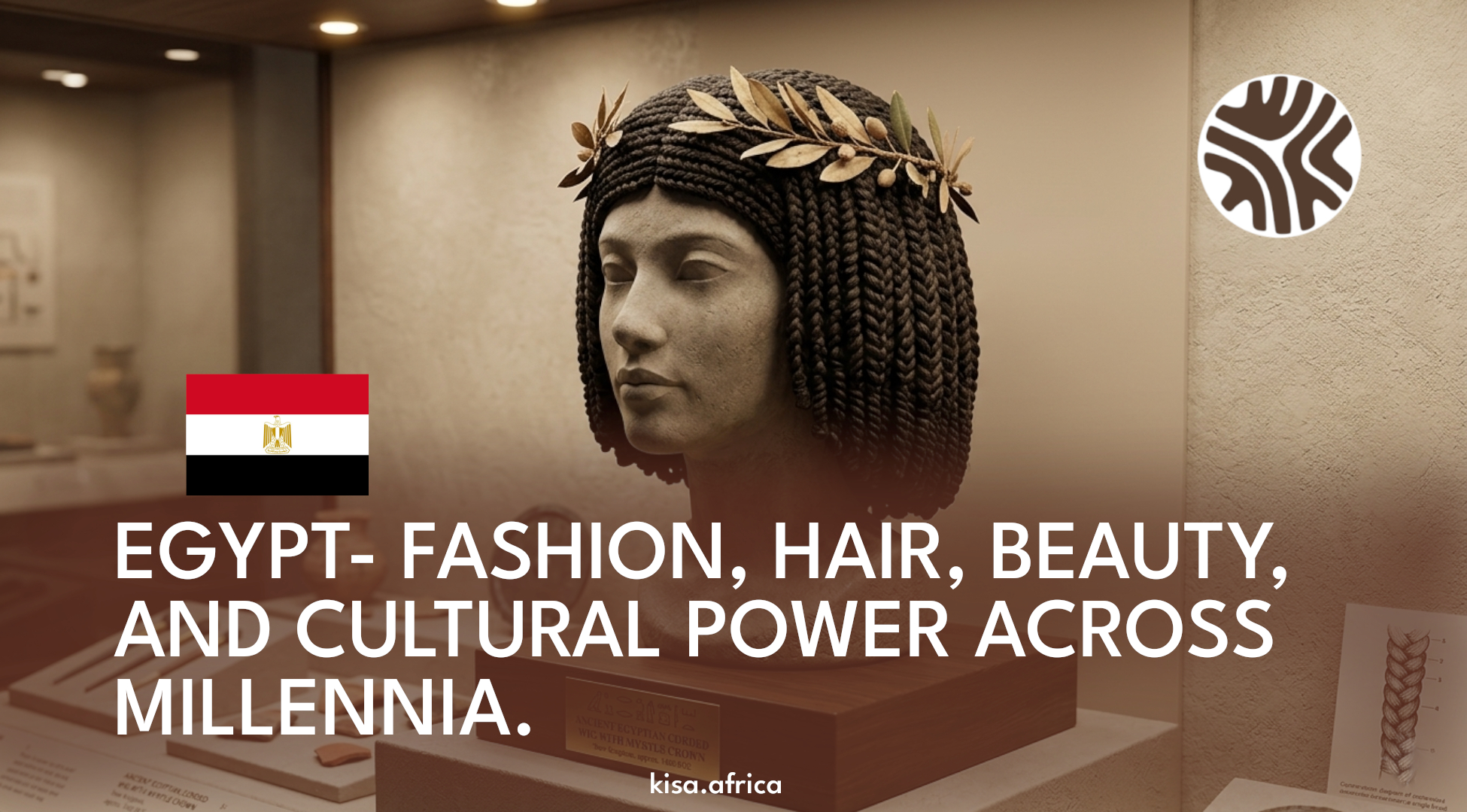
DEEPER CULTURAL HISTORY OF COMORIAN FASHION
The culture of the Comoros is often described as one of the most layered cultural identities in Africa because the islands absorbed influences from nearly every civilization connected to the Indian Ocean trade system. For over a thousand years, sailors from the Swahili Coast, Oman, Yemen, Persia, Gujarat in India, and even parts of Southeast Asia stopped in the islands. Clothing therefore became more than protection from climate; it became proof of trade, faith, status, and family heritage.
Unlike many mainland African societies where fashion traditions developed mostly inland, Comorian dress evolved around maritime life. Lightweight cottons, flowing silhouettes, and breathable fabrics were essential because of the humid tropical weather. The garments also needed to align with Islamic standards of modesty after Islam spread through the islands between the 10th and 15th centuries. This created a distinctive fusion where African textile aesthetics merged with Arab garment structures.
Traditional women’s attire often centred around layered wrapping techniques rather than tailored clothing alone. The shiromani was not simply a decorative cloth but a social language. Different colours and patterns could suggest age, marital status, or participation in celebrations. Floral patterns became especially popular because flowers were deeply tied to Comoros’ perfume economy. The islands are among the world’s major producers of ylangylang, an essential ingredient in luxury perfumes, and floral imagery naturally entered textile decoration.
In elite households centuries ago, imported fabrics from India were treasured possessions. Families sometimes stored ceremonial fabrics for generations and passed them down as inheritance. Some garments were so valuable they functioned almost like wealth reserves. During weddings, a bride might wear layers of imported cloth to display the trading success and prestige of her extended family.
THE SPIRITUAL AND SOCIAL MEANING OF MSINDZANO
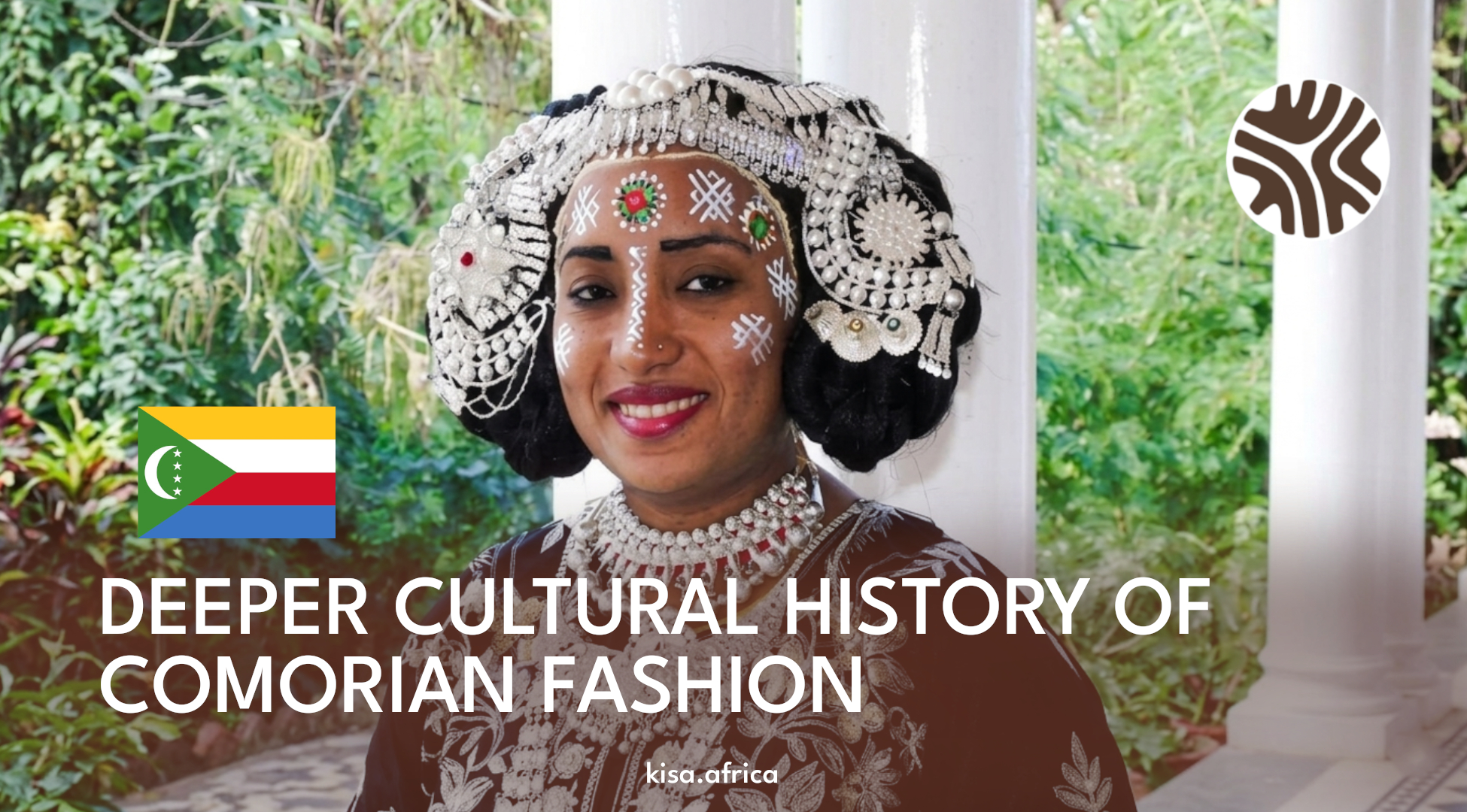
One of the most culturally important aspects of Comorian beauty culture is msindzano, which outsiders frequently misunderstand as merely decorative face paint. It is connected to spirituality, femininity, protection, and community identity.
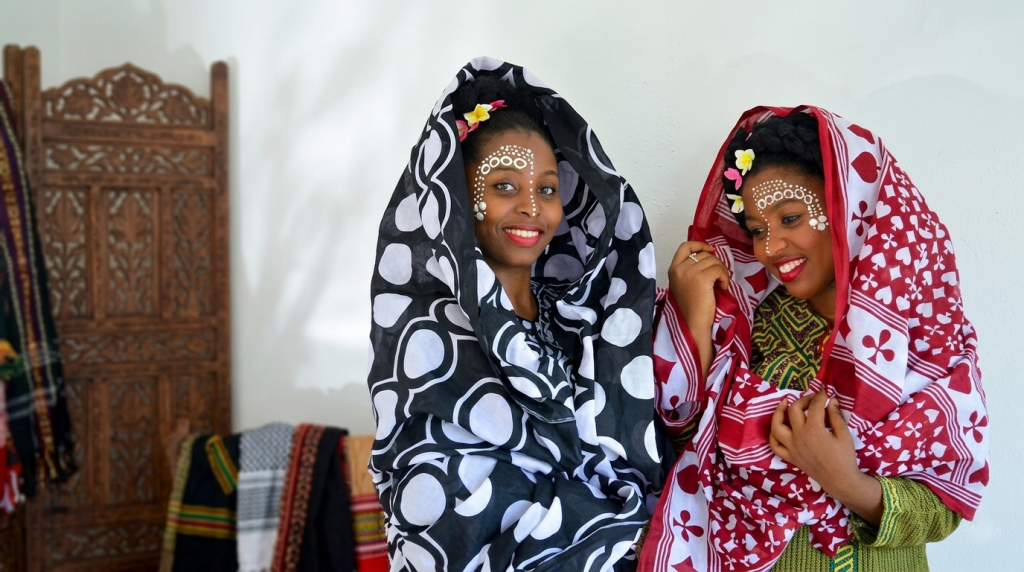
The paste is traditionally made by grinding sandalwood against coral stone with water, creating a creamy yellow or white substance applied artistically across the face. Some women use full-face designs while others paint delicate geometric or floral patterns. Historically, different regions of Comoros developed their own recognizable application styles.
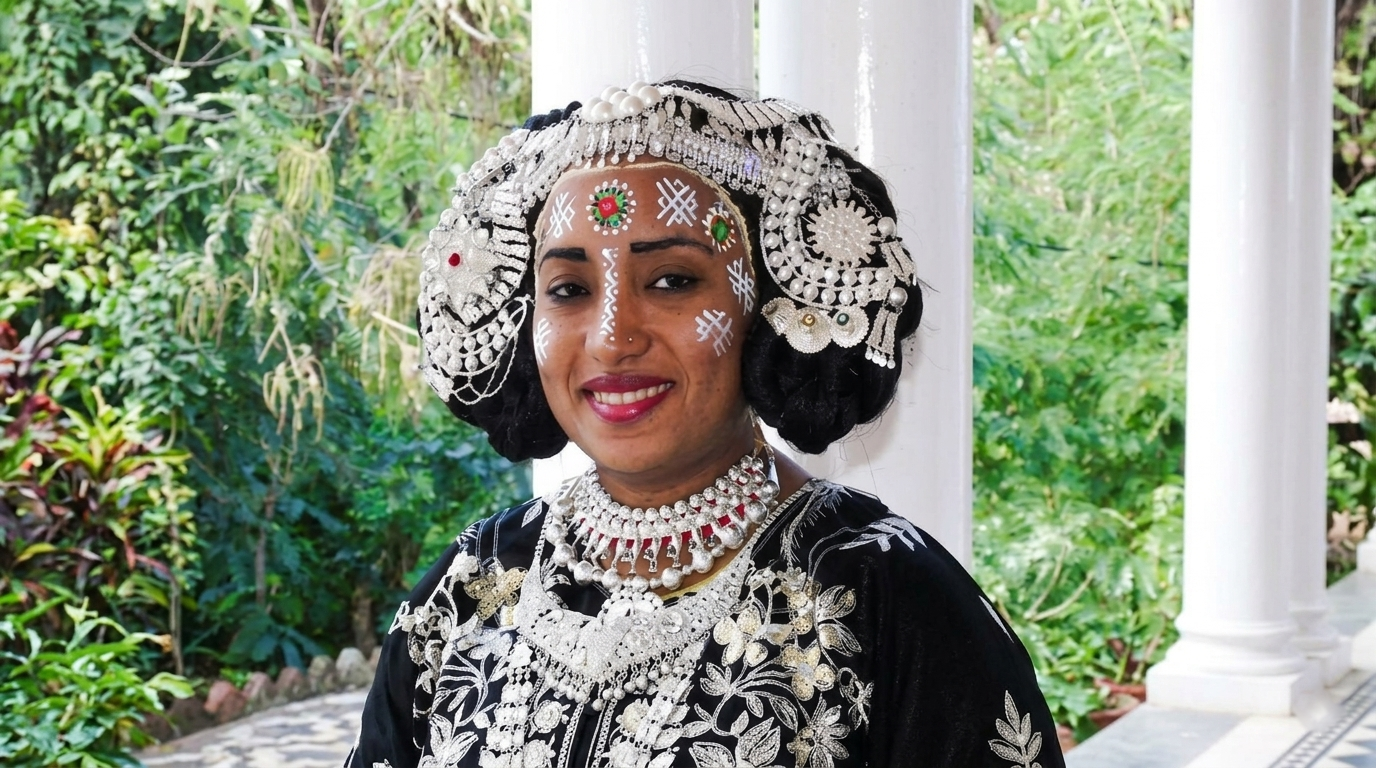
The ritual of preparing msindzano was important socially. Mothers taught daughters how to grind the paste correctly, how to apply it evenly, and when specific styles were appropriate. Wearing it communicated refinement, discipline, and respectability. In some communities, a young woman skilled in preparing msindzano was considered well-raised and marriage ready.
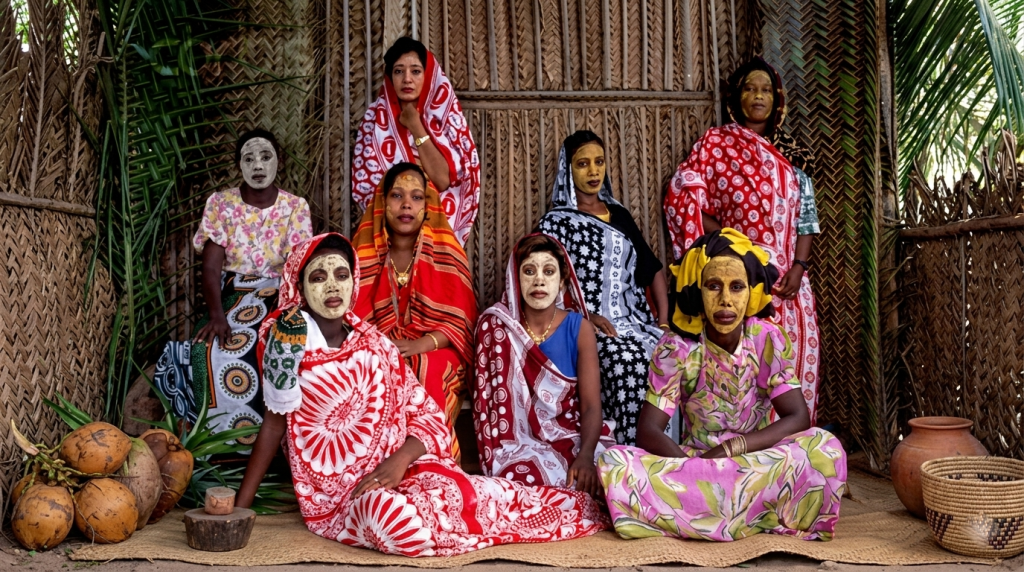
There were also practical reasons behind the practice. Sandalwood naturally cools the skin, and the coral mixture provided protection from intense equatorial sunlight. Long before commercial cosmetics existed, Comorian women had developed an advanced skincare tradition rooted in local botanical knowledge.
Some historians also note that fragrance was inseparable from the practice. Women frequently mixed aromatic oils into the paste so that beauty involved scent as much as visual appearance. In Comorian culture, elegance was historically associated not only with appearance but also with the way a person smelled.
HAIR TRADITIONS AND THE SOCIAL ROLE OF BRAIDING
Hair culture in Comoros carried deep communal importance. Braiding sessions often lasted an entire day and became spaces where oral history, family stories, and social etiquette were passed from older women to younger girls. Hairstyles therefore acted as educational and social experiences.
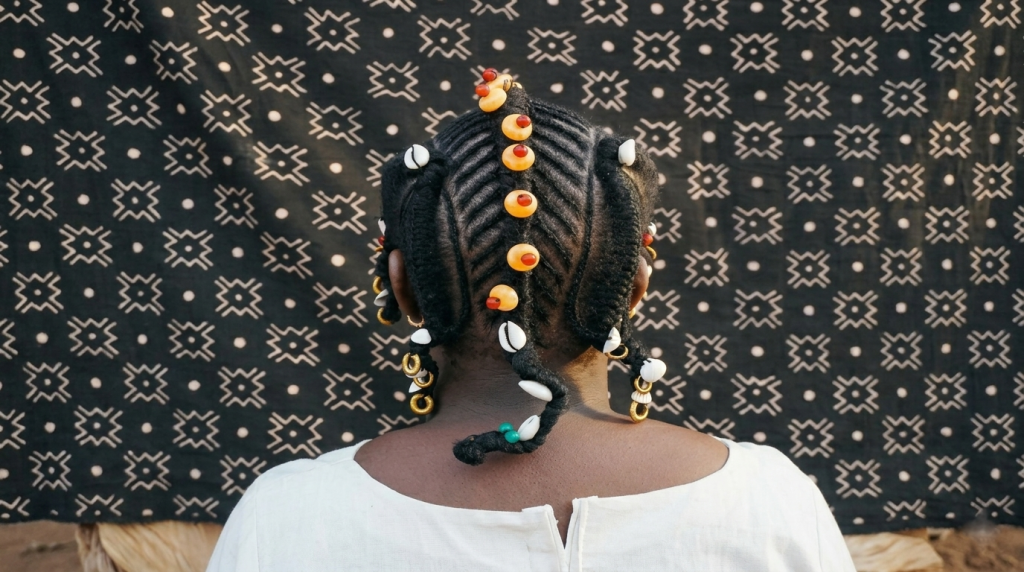
Traditional hairstyles commonly featured:
- Thin intricate braids arranged in geometric sections
- Decorative shells connected to Indian Ocean symbolism
- Beads imported through coastal trade routes
- Coconut oil treatments for moisture and shine
- Floral adornments during weddings and festivals
Coconut oil was especially significant. Because coconuts grow abundantly on the islands, oil extraction became part of everyday beauty maintenance. Women infused oils with cloves, jasmine, or ylang-ylang to perfume the hair naturally. Scented hair was considered elegant and attractive.
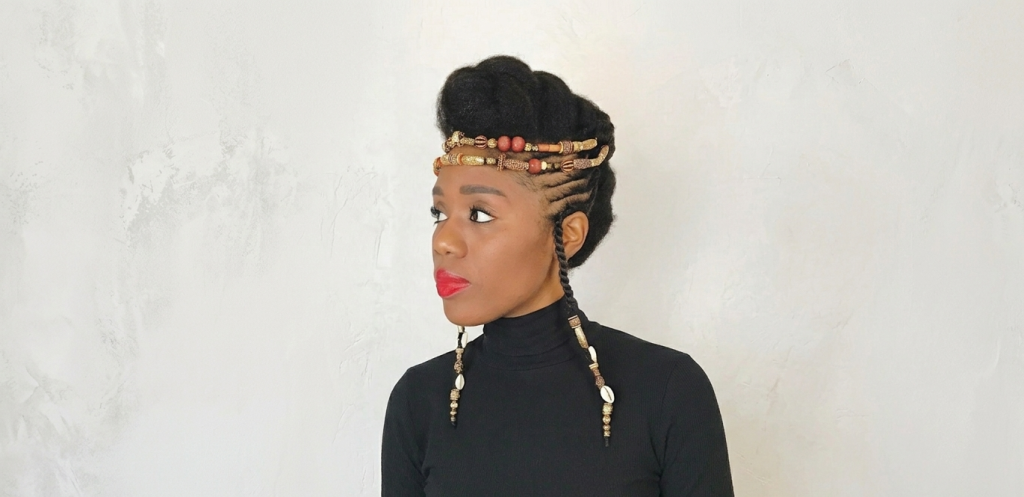
Some hairstyles indicated life stages. Young, unmarried girls often wore different braid patterns from married women. Brides sometimes spent days preparing ceremonial hairstyles before weddings. Hair decoration could include gold jewellery or imported fabrics if the family was wealthy.
Interestingly, the humid climate affected hairstyle evolution. Protective styles became necessary not only for aesthetics but also for preserving hair health against salt air and tropical heat.
MEN’S FASHION AND STATUS SYMBOLS
Comorian men’s clothing reflects both Swahili and Arab influence. Historically, many men worked in fishing, navigation, or trade, so clothing needed to balance practicality with social prestige.
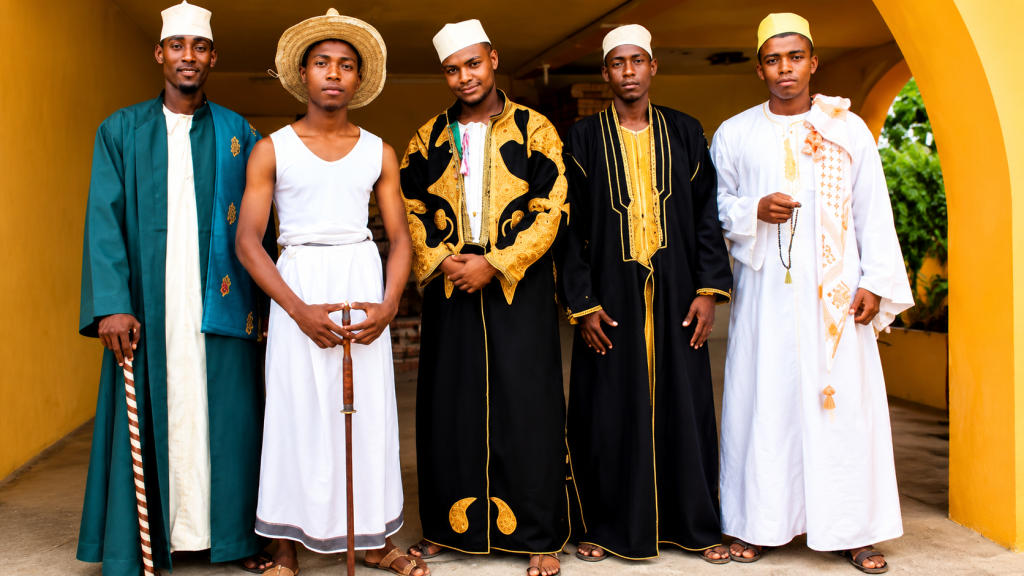
The long white robe commonly worn today derives partly from Arab kanzu traditions spread through East African coastal Islam. Embroidered caps, often resembling Swahili kofia hats, became important symbols of religious respectability and adulthood.
Embroidery patterns on men’s caps were historically meaningful. More elaborate stitching often reflected wealth, age, or family standing. Skilled embroidery itself became a respected artistic craft.
One fascinating historical detail is that elite Comorian men sometimes imported perfumes directly from Arabia or India to scent their robes. Because Comoros was tied to luxury fragrance routes, perfume became integrated into masculine fashion culture as well.
WEDDING FASHION AND THE “GRAND MARRIAGE” TRADITION
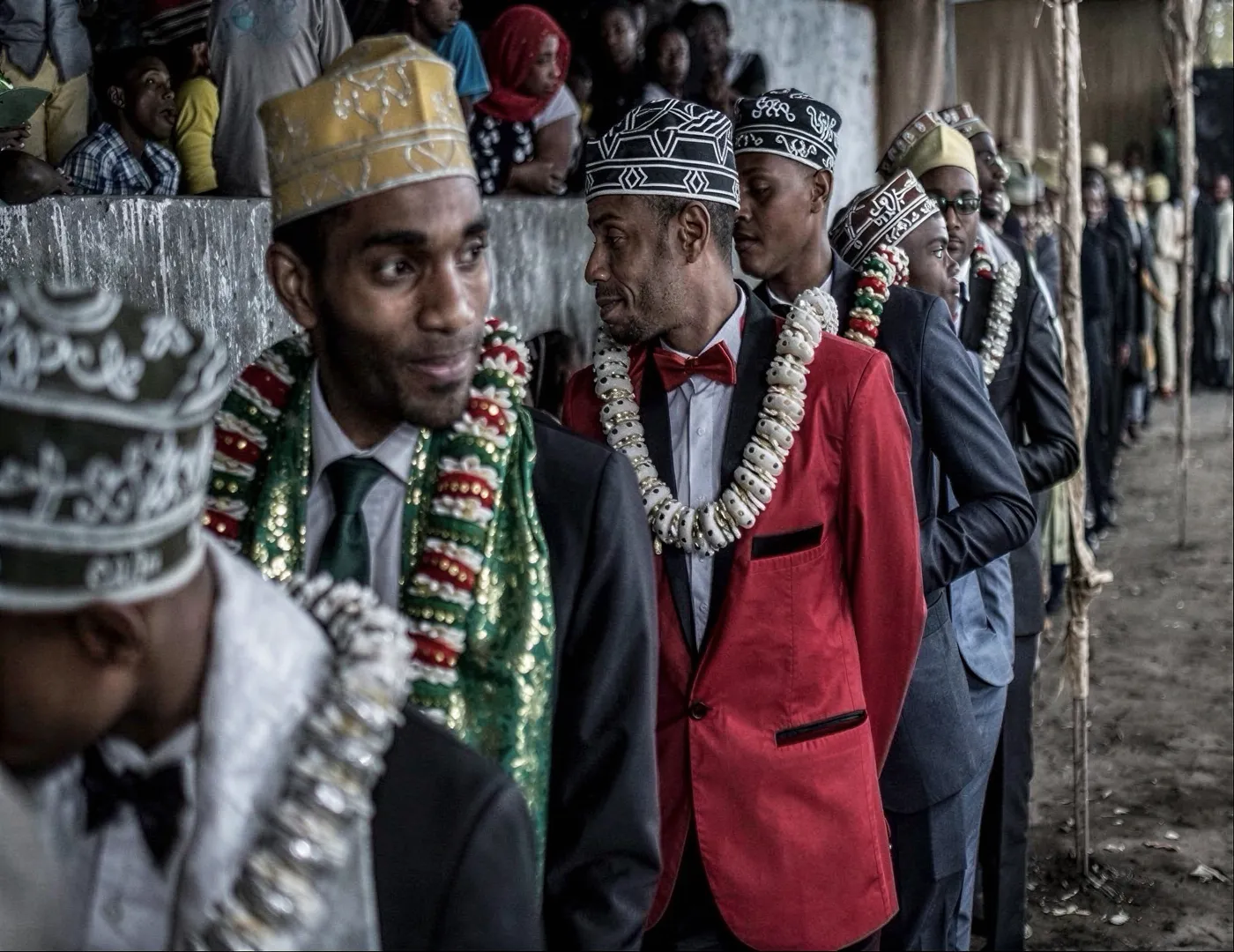
Comoros has one of Africa’s most elaborate marriage systems known as the “Grand Marriage” (anda). This institution transformed fashion into a public demonstration of social achievement.
A Grand Marriage could involve years of financial preparation because families were expected to host enormous celebrations featuring luxurious clothing, jewellery, music, and feasting. The garments worn during these ceremonies often represented the highest level of traditional craftsmanship available.
Brides layered multiple fabrics, gold jewellery, embroidered veils, and elaborate hairstyles. Imported textiles from Dubai, India, Madagascar, and East Africa became part of the ceremonial display. Some women changed outfits several times during wedding festivities.
The importance of wedding fashion was so strong that clothing expenses could elevate or damage a family’s social reputation. In some communities, participation in Grand Marriage traditions historically influenced access to leadership positions or social prestige.
THE INFLUENCE OF ISLAM ON FASHION
Islam profoundly shaped Comorian clothing culture, but local communities adapted Islamic fashion into uniquely island-based forms rather than simply copying Arabian styles.
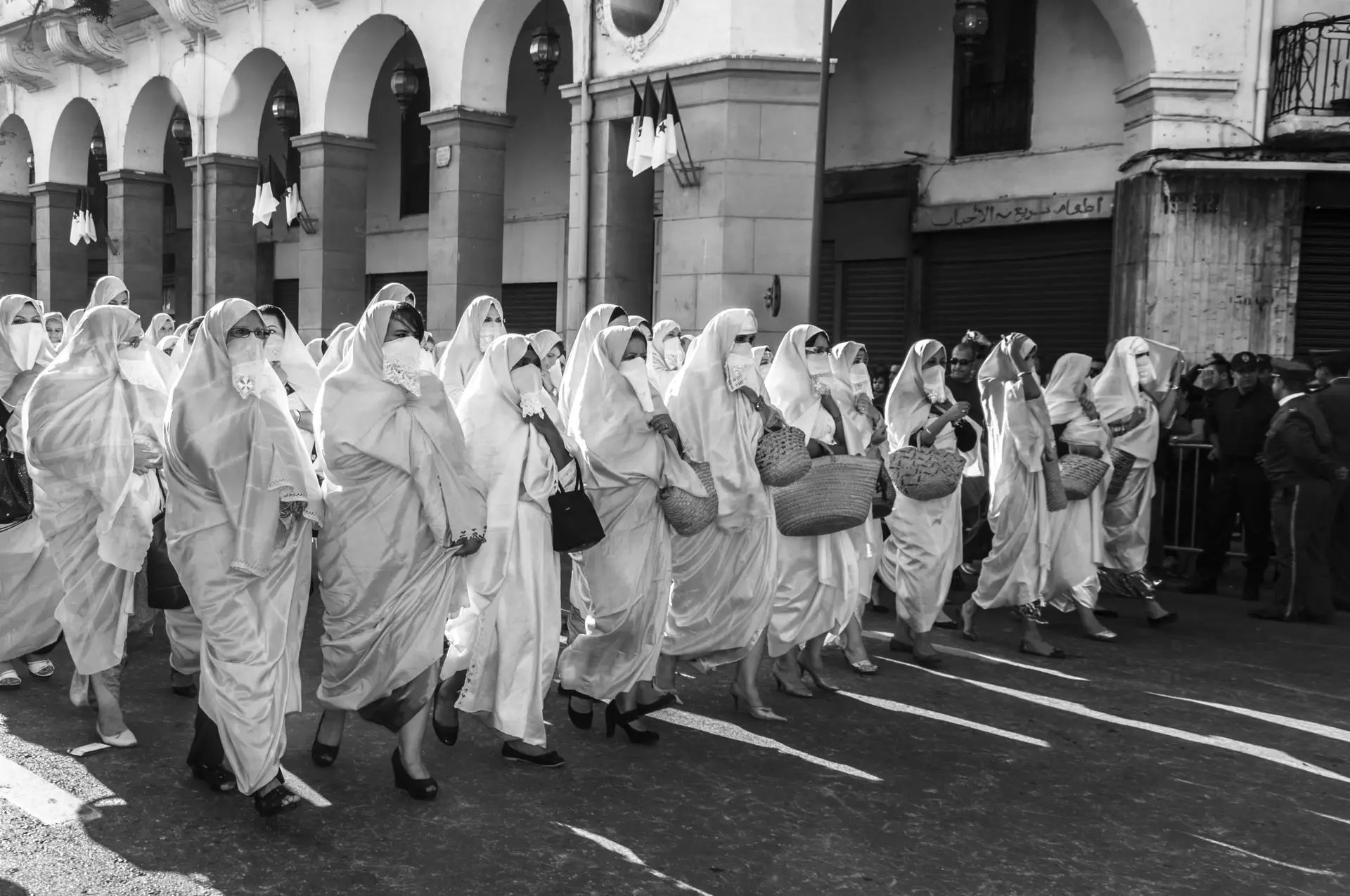
Women commonly adopted headscarves and modest dress yet retained bright colours and African textile aesthetics. Unlike some regions where modest clothing became visually subdued, Comorian women preserved vibrant patterns, embroidery, and decorative layering.
Religious celebrations such as Eid encouraged displays of elegant clothing, perfume, and jewellery. New garments during Islamic holidays became signs of renewal and blessing.
Mosque attendance also influenced men’s clothing habits. Clean white robes and embroidered caps symbolized spiritual dignity and discipline.
COLONIAL INFLUENCE AND MODERN TRANSFORMATION
French colonial rule altered Comorian fashion in complex ways. European fabrics and tailoring techniques entered urban areas, especially among educated elites. Western-style shirts, skirts, and suits became associated with schooling and administrative work.
However, colonial influence never fully replaced traditional fashion. Instead, Comorians blended styles creatively. A woman might wear a European-cut dress made from traditional patterned fabric, or pair Islamic veiling with modern accessories.
Today, globalization continues this blending process. Younger generations follow fashion trends from:
- Tanzania and Zanzibar
- France
- Dubai
- Madagascar
- Kenya
- Global modest-fashion influencers online
Yet traditional identity remains strongest during:
- Weddings
- Eid celebrations
- Religious ceremonies
- Family gatherings
- Cultural festivals
Modern Hair and Beauty Trends
Modern Comorian hairstyles now include:
- Knotless braids
- Wigs and lace-front installs
- Natural Afro-textured styles
- Silk press techniques
- Hijab fashion styling
- East African salon trends from Nairobi and Dar es Salaam
Social media has also changed beauty standards. Younger women increasingly combine traditional aesthetics like msindzano with modern makeup artistry, photography, and influencer culture.
Despite modernization, many women still learn traditional beauty preparation from older relatives, especially before weddings. Some brides continue using msindzano during prewedding rituals as a connection to ancestry and femininity.
LESSER-KNOWN FACTS ABOUT COMORIAN FASHION AND HAIR
Clothing Was Historically Linked to Ocean Trade
Certain fabrics could reveal which trade routes a family had access to. Indian cottons, Omani embroidery, and Swahili wrap each reflected different economic connection.
Perfume Was Once a Marker of Civilization
In historical Comorian society, pleasant fragrance was associated with refinement, morality, and cleanliness. Scented oils for clothing and hair were considered part of proper grooming.
Beauty Rituals Were Community Events
Women rarely prepared elaborate hairstyles or ceremonial cosmetics alone. Beauty practices reinforced social bonds between mothers, daughters, sisters, and neighbours.
Ylang-Ylang Changed Fashion Culture
Because Comoros became globally important in perfume production, floral aesthetics heavily influenced clothing patterns, hair oils, and ceremonial beauty rituals.
White Clothing Symbolized Spiritual Purity
Men frequently wore white garments during religious events because white represented cleanliness, spirituality, and moral respectability within Islamic traditions.
SOURCES (APA STYLE)
Allibert, C. (2000). The Comoros Islands: Emerging states in a maritime world. Paris: Karthala.
Martin, J. (1983). Comorian culture and society in the Indian Ocean world. African Arts Journal, 16(4), 42–57.
Shepard, S. (2015). Beauty traditions of the Swahili coast: The cultural meaning of msindzano in Comoros. Journal of African Cultural Studies, 27(3), 311–327.
Walker, I. (2019). Islands in a cosmopolitan sea: A history of the Comoros. Oxford University Press.
Middleton, J. (1992). The world of the Swahili: An African mercantile civilization. Yale University Press.
UNESCO. (n.d.). Swahili coastal cultural traditions and Indian Ocean exchange networks.
Smith, R. (2010). Islamic dress and identity in the western Indian Ocean. African Studies Review, 53(2), 87–109.