
Mauritania-Desert Robes, Indigo Traditions, and Nomadic Elegance
The fashion traditions of Mauritania developed through centuries of interaction between Arab, Amazigh (Berber), West African, and Saharan nomadic cultures. Mauritania’s environment dominated largely by the Sahara Desert shaped clothing systems focused on survival, mobility, modesty, and protection from extreme heat, wind, and sunlight. Over time, these practical desert garments evolved into highly elegant cultural symbols expressing identity, beauty, spirituality, and social status.
Mauritanian fashion reflects the country’s position at the crossroads of North Africa and West Africa. The region historically connected trans-Saharan trade networks carrying gold, salt, textiles, books, indigo dye, and luxury goods between West African kingdoms and North African Islamic societies. These exchanges helped shape Mauritania’s distinctive aesthetic blending Saharan practicality with rich textile and jewellery traditions.
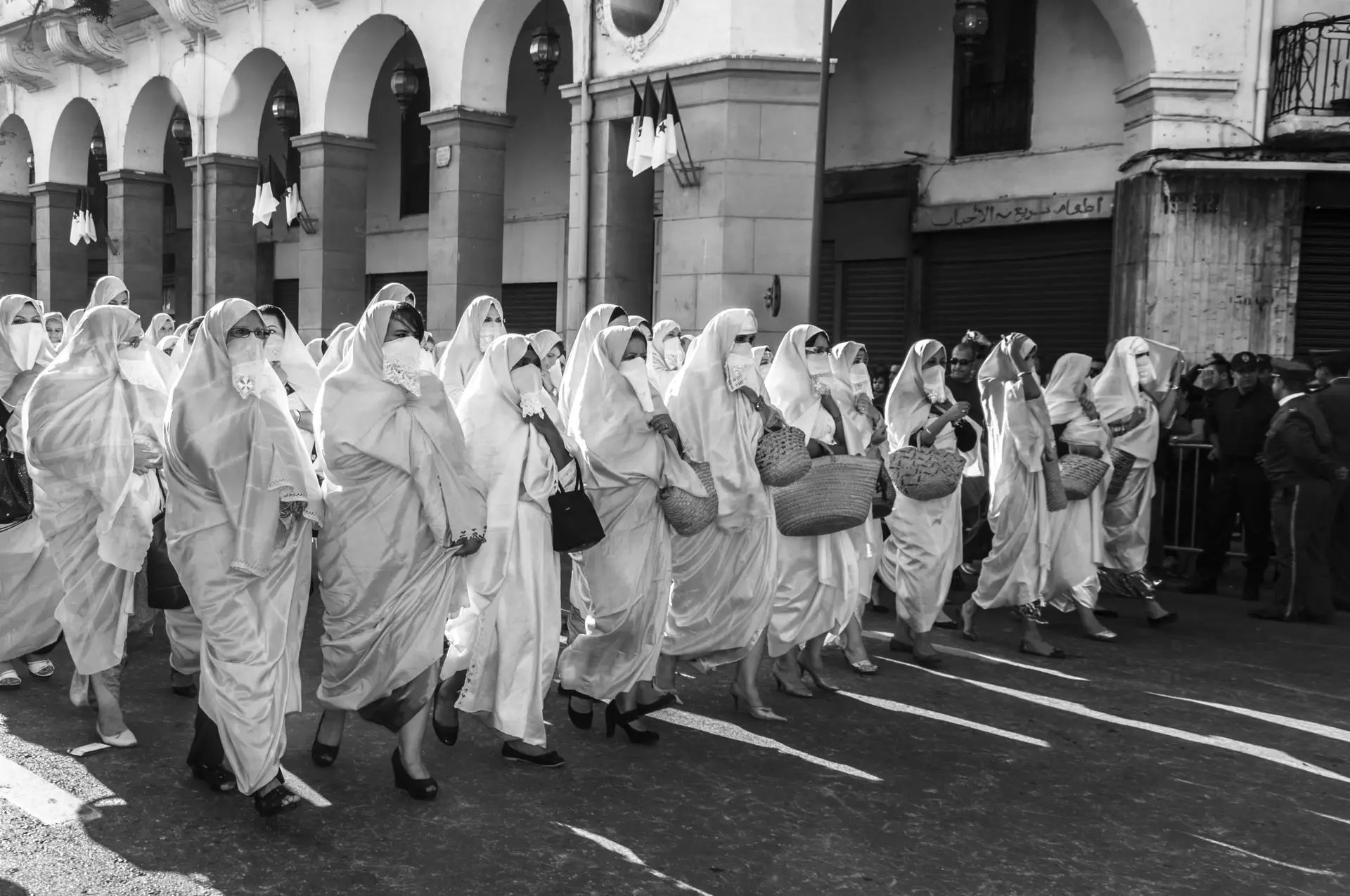
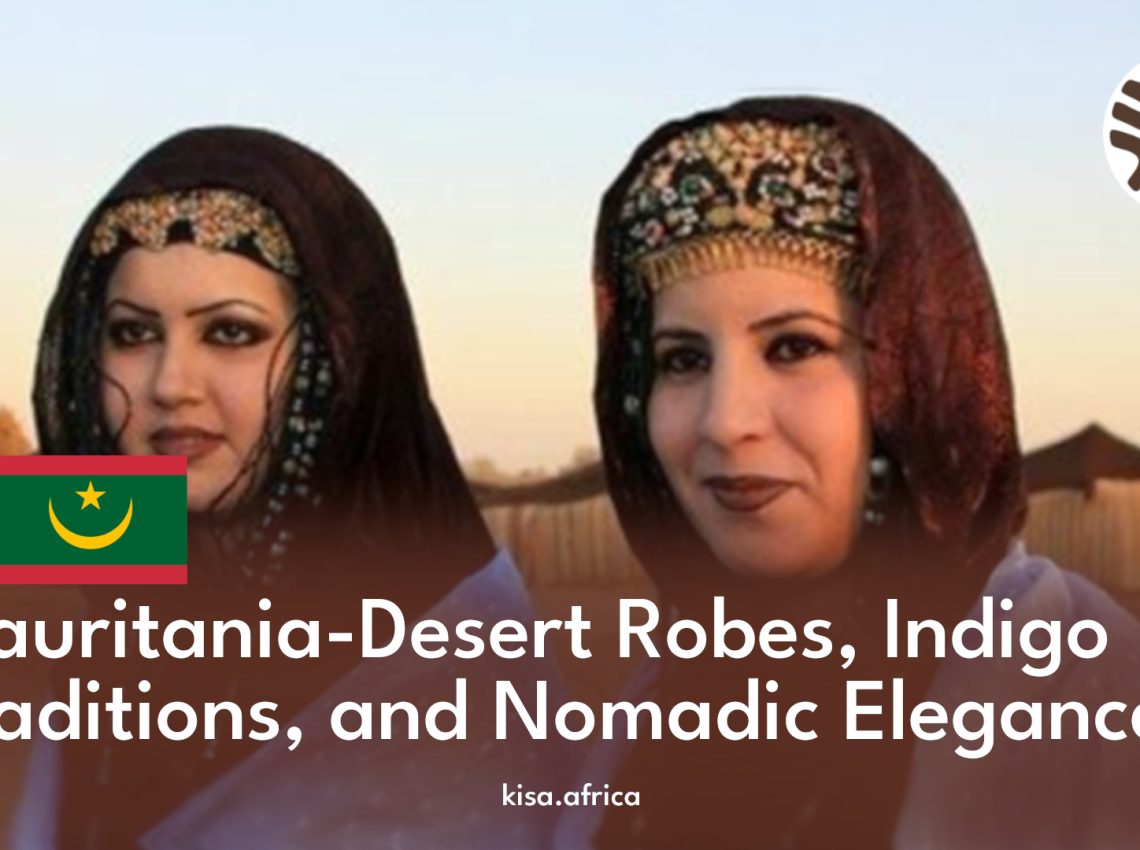
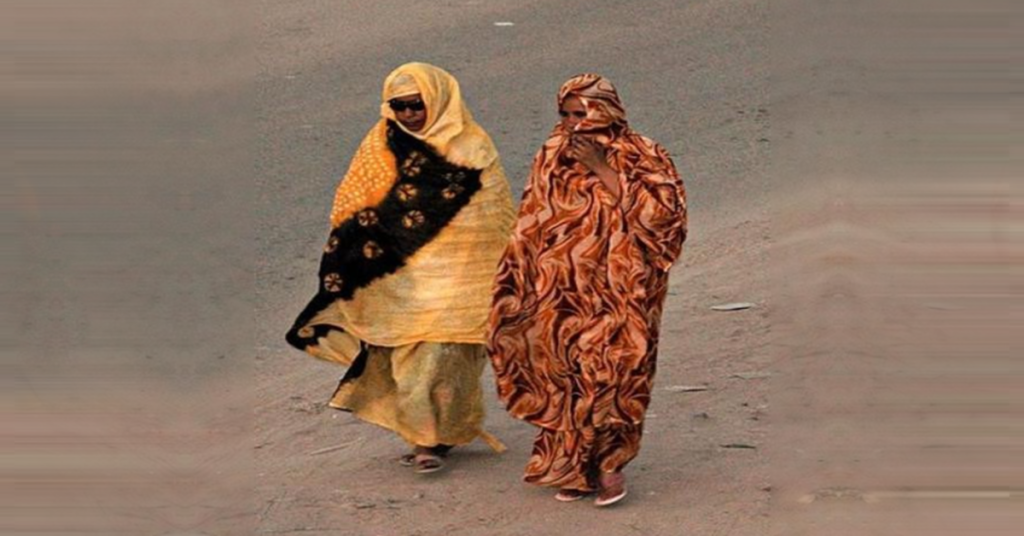
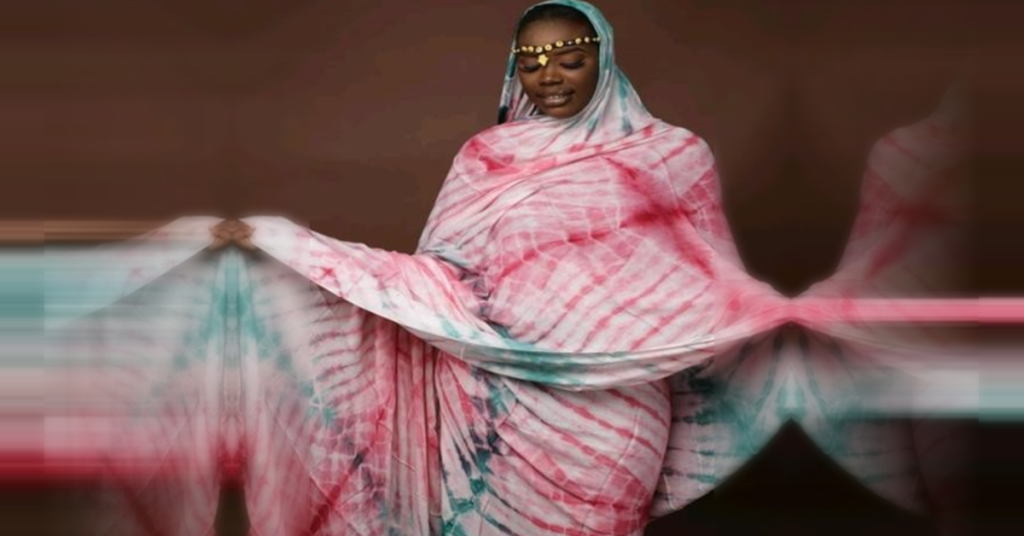
One of the most iconic garments in Mauritania is the melhafa worn by women.
The melhafa is a long flowing fabric wrapped gracefully around the body and head, often in vivid colours or richly patterned textiles. Unlike heavily structured clothing, the melhafa relies on draping and wrapping techniques allowing flexibility, airflow, and comfort in desert climates.
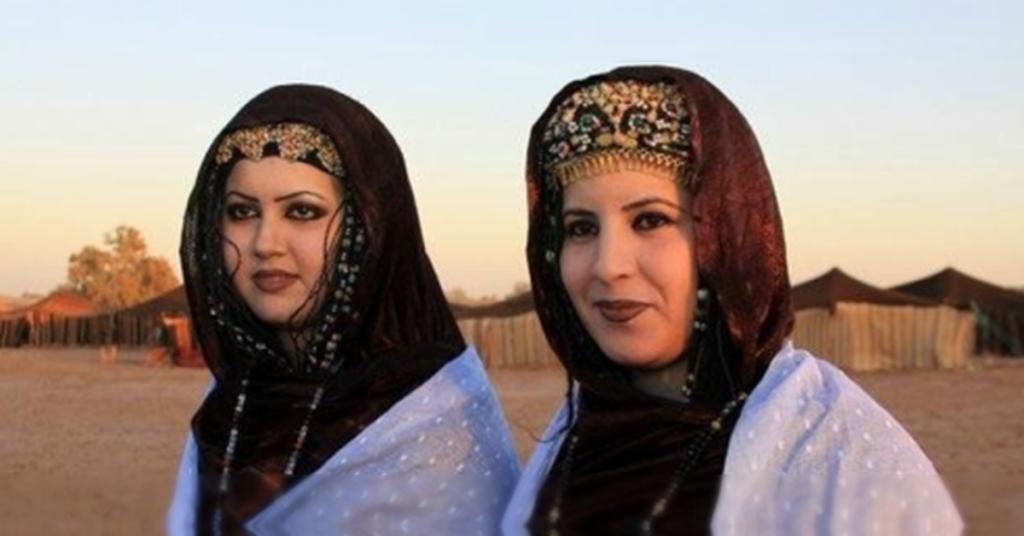
The garment serves multiple purposes simultaneously:
- Protection against sun and wind
- Regulation of body temperature
- Expression of modesty
- Display of elegance and social identity
The fluid movement of the fabric during walking or riding also contributes to the garment’s visual beauty. In many communities, the skill with which a woman wraps and carries her melhafa is itself considered part of elegance and refinement.
Mauritanian men traditionally wear large flowing robes called daraa or boubou.
The daraa consists of a wide, loose robe often dyed blue, white, or other desert-associated colours. The oversized structure allows air circulation that cools the body while also protecting skin from direct sunlight and blowing sand.
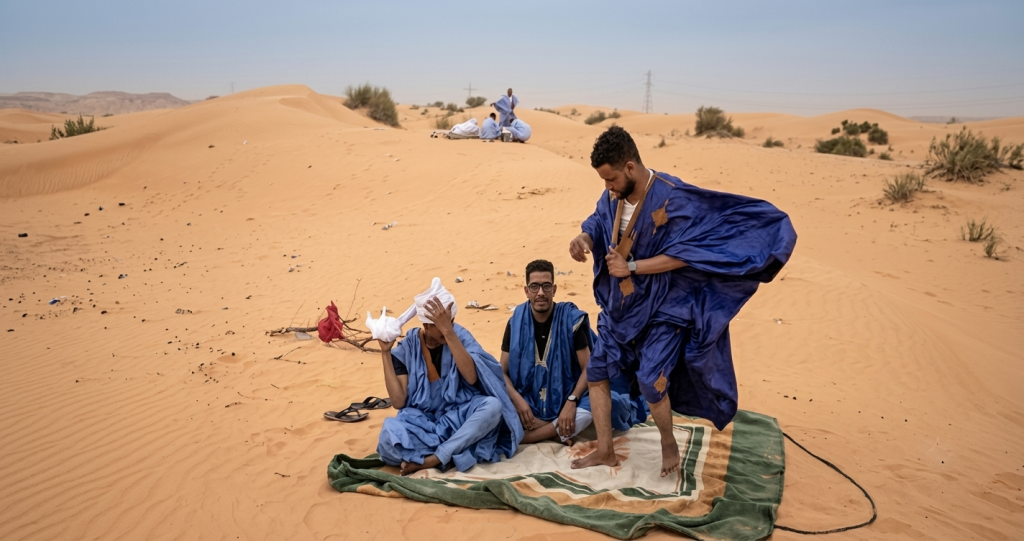
This demonstrates one of the most scientifically fascinating aspects of Saharan clothing traditions: loose desert garments help maintain cooler body temperatures despite covering much of the body. The flowing structure traps cooler air and reduces direct solar exposure, making these robes highly effective environmental adaptations developed over centuries.
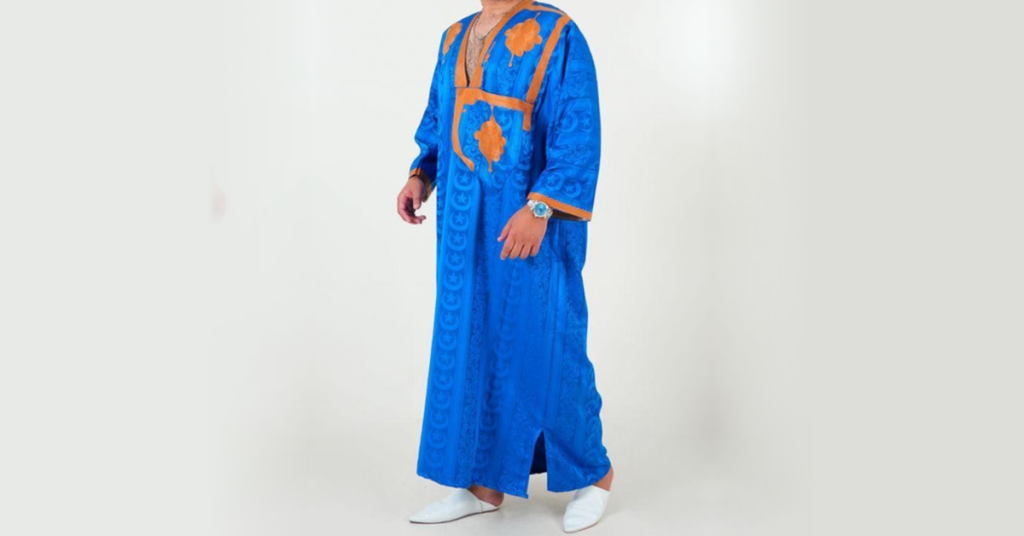
Blue, indigo-dyed robes became especially prestigious throughout Saharan societies because indigo dyeing required tremendous labour and specialized craftsmanship.
One fascinating historical detail is that indigo pigment sometimes rubbed onto the skin, causing outsiders to nickname some Saharan peoples the “Blue People.” This association became especially linked with Tuareg and neighbouring desert cultures across the Sahara.
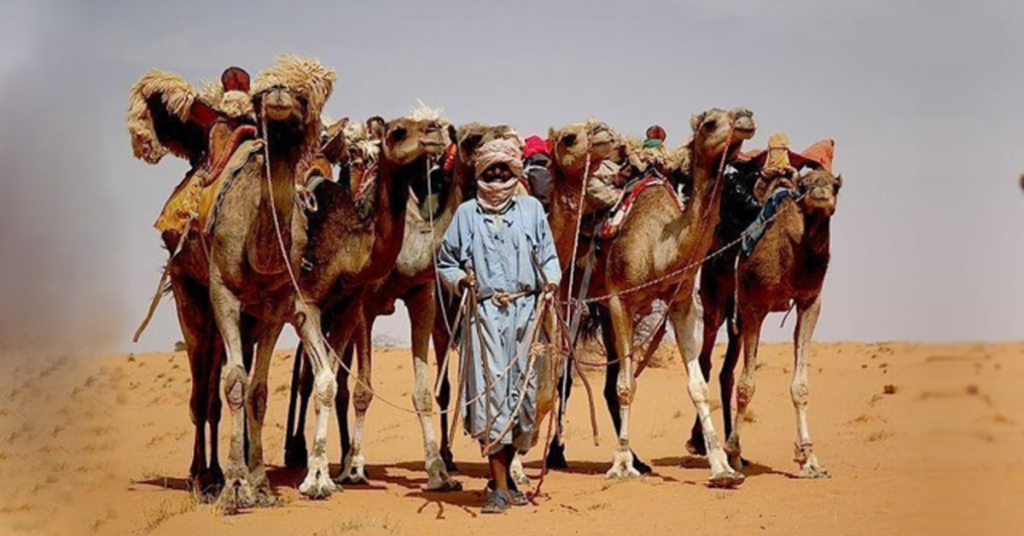
Indigo itself symbolized wealth, prestige, and status because producing deep blue dyes historically demanded extensive labour, imported materials, and advanced dyeing knowledge. As a result, richly dyed garments often signalled social standing and prosperity.
Nomadic lifestyles strongly shaped Mauritanian clothing systems.
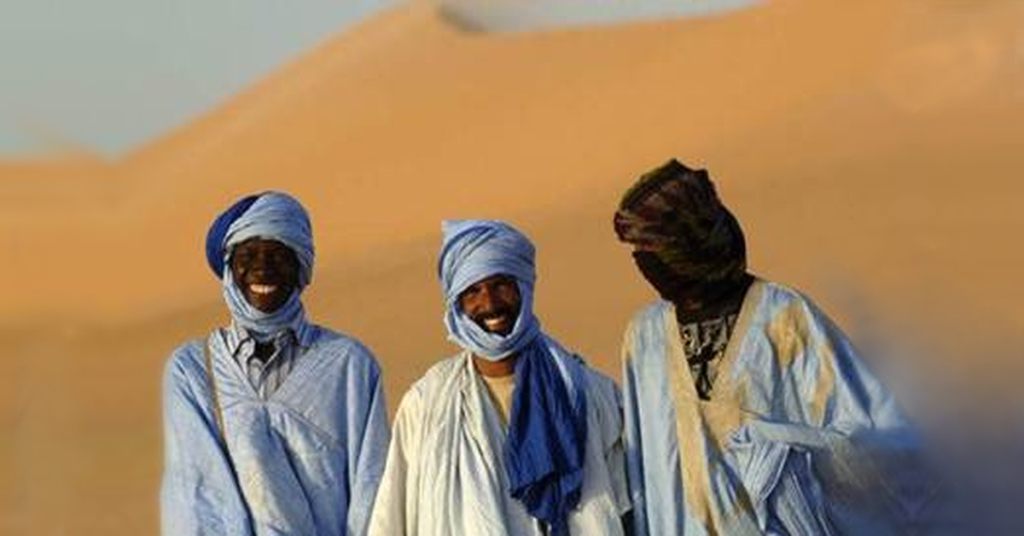
For communities traveling long distances by camel across harsh desert terrain, clothing needed to remain lightweight, protective, durable, and adaptable. Head coverings shielded wearers from sandstorms and sun exposure, while layered fabrics helped regulate temperatures between scorching days and cold desert nights.
Fashion therefore became deeply connected to mobility and environmental survival. Many garment forms evolved specifically because they functioned effectively for caravan travel, herding, and nomadic movement across the Sahara.
Hair traditions in Mauritania also reflected beauty ideals and social identity.
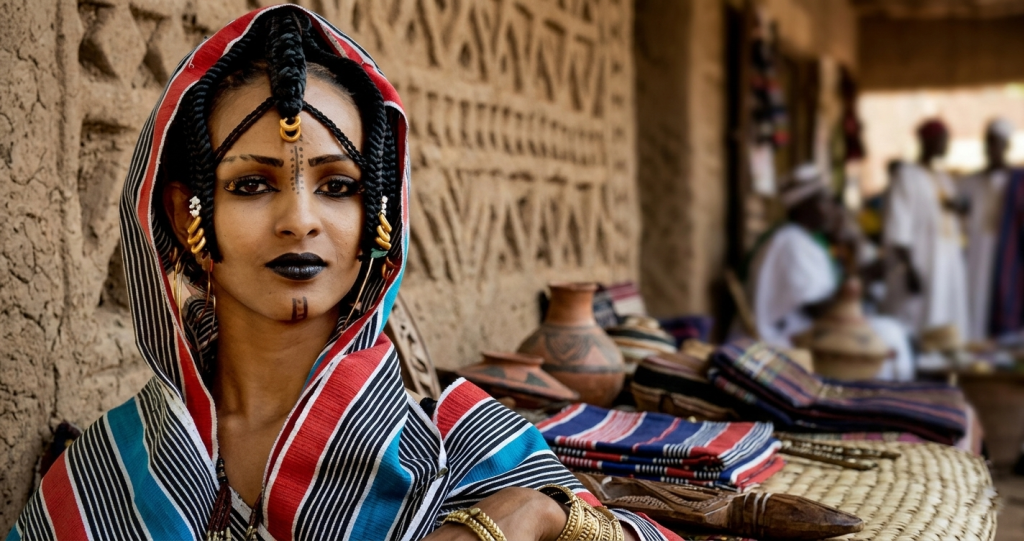
Braided hairstyles historically symbolized attractiveness, maturity, family status, and cultural belonging. Hair grooming could involve oils, perfumes, herbal treatments, and decorative accessories adapted to arid climates.
Henna became one of the most important ceremonial beauty traditions in Mauritania. Women decorated hands, feet, and sometimes hair during weddings, religious festivals, and celebrations. Henna designs symbolized beauty, blessing, femininity, joy, and protection.
Jewellery also carried major cultural significance within Mauritanian society. Silver jewellery, beads, pendants, and decorative ornaments often functioned as portable wealth within nomadic communities.
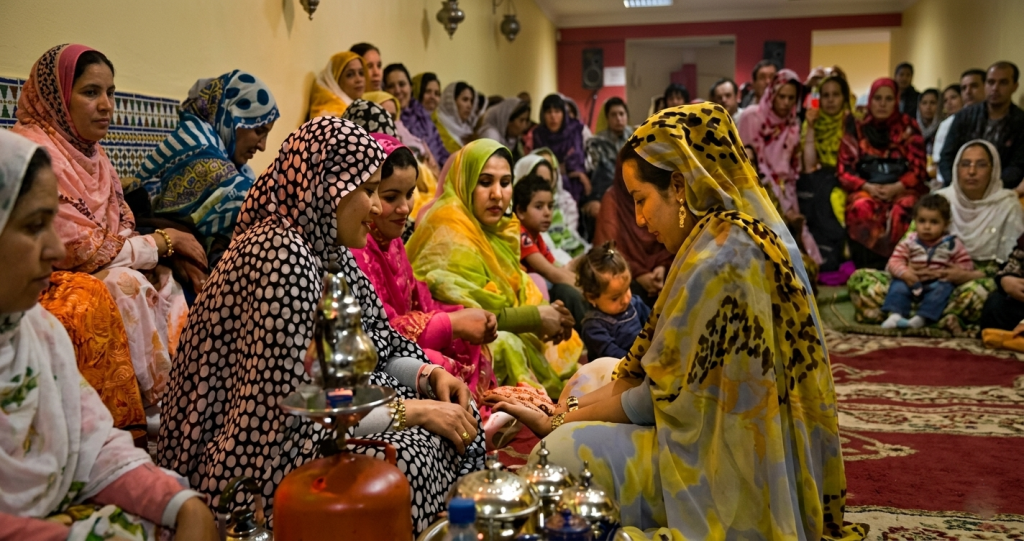
This was especially important in societies where families travelled frequently across desert regions. Jewellery provided both adornment and financial security because valuable pieces could be traded or sold when necessary. As a result, jewellery often represented inheritance, prestige, and economic stability.
Islam profoundly influenced Mauritanian fashion over centuries through modest dress traditions, flowing robes, embroidered garments, and head coverings connected to broader Islamic and Saharan cultural systems.
Arab and Amazigh influences blended with West African aesthetics, creating a fashion culture combining North African elegance with sub-Saharan textile traditions.
French colonialism later introduced European tailoring and imported fabrics, particularly within urban centres. However, traditional Saharan garments remained remarkably resilient because they were so practical for the environment and deeply tied to cultural identity.
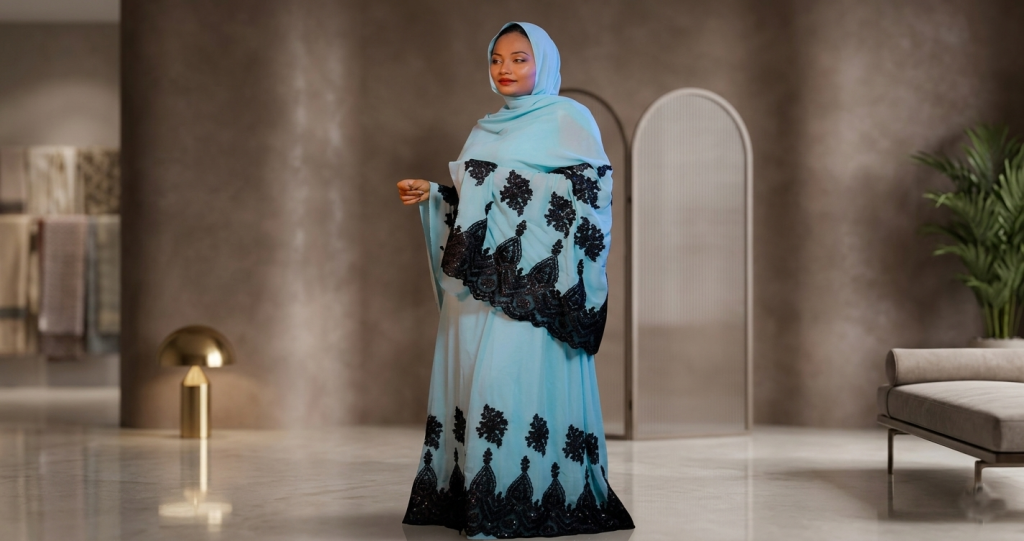
Modern Mauritanian fashion continues evolving today.
Contemporary Mauritanian style increasingly blends Gulf Arab modest fashion, luxury fabrics, designer tailoring, and Saharan aesthetics. Younger generations combine traditional robes and melhafas with modern accessories, urban fashion trends, and international influences while maintaining strong connections to desert fashion heritage.
Even in modern urban settings, traditional garments remain culturally important during weddings, religious events, festivals, and formal gatherings. Clothing continues functioning not only as fashion but also as an expression of nomadic history, Islamic identity, and Saharan cultural continuity.
Fascinating Lesser-Known Facts About Mauritanian Fashion and Hair
- Loose Saharan robes were specifically engineered over centuries for desert climate survival.
- Indigo dye sometimes stained skin blue, inspiring the nickname “Blue People.”
- Deep indigo garments historically symbolized wealth because dye production was labour-intensive.
- Mauritanian jewellery functioned as portable wealth in nomadic societies.
- The melhafa combines modesty, elegance, and environmental practicality.
- Camel caravan culture strongly shaped garment design and wrapping techniques.
- Henna ceremonies became important expressions of beauty and celebration.
- Braided hairstyles communicated maturity and social identity.
- Modern Mauritanian fashion blends Gulf Arab luxury aesthetics with Saharan traditions.
SOURCES
Brett, M., & Fentress, E. (1996). The Berbers. Oxford, United Kingdom: Blackwell Publishers.
Stillman, Y. K. (2000). Arab Dress: A Short History. Leiden, Netherlands: Brill Academic Publishers.
Spring, C., & Hudson, J. (1995). North African Textiles. Washington, DC: Smithsonian Institution Press.
Eicher, J. B., & Ross, D. A. (1992). Dress and Identity. New York, NY: Fairchild Publications.
Kriger, C. E. (2006). Cloth in West African History. Lanham, MD: AltaMira Press.
Perani, J., & Wolff, N. H. (1999). Cloth, Dress, and Art Patronage in Africa. Oxford, United Kingdom: Berg Publishers.