
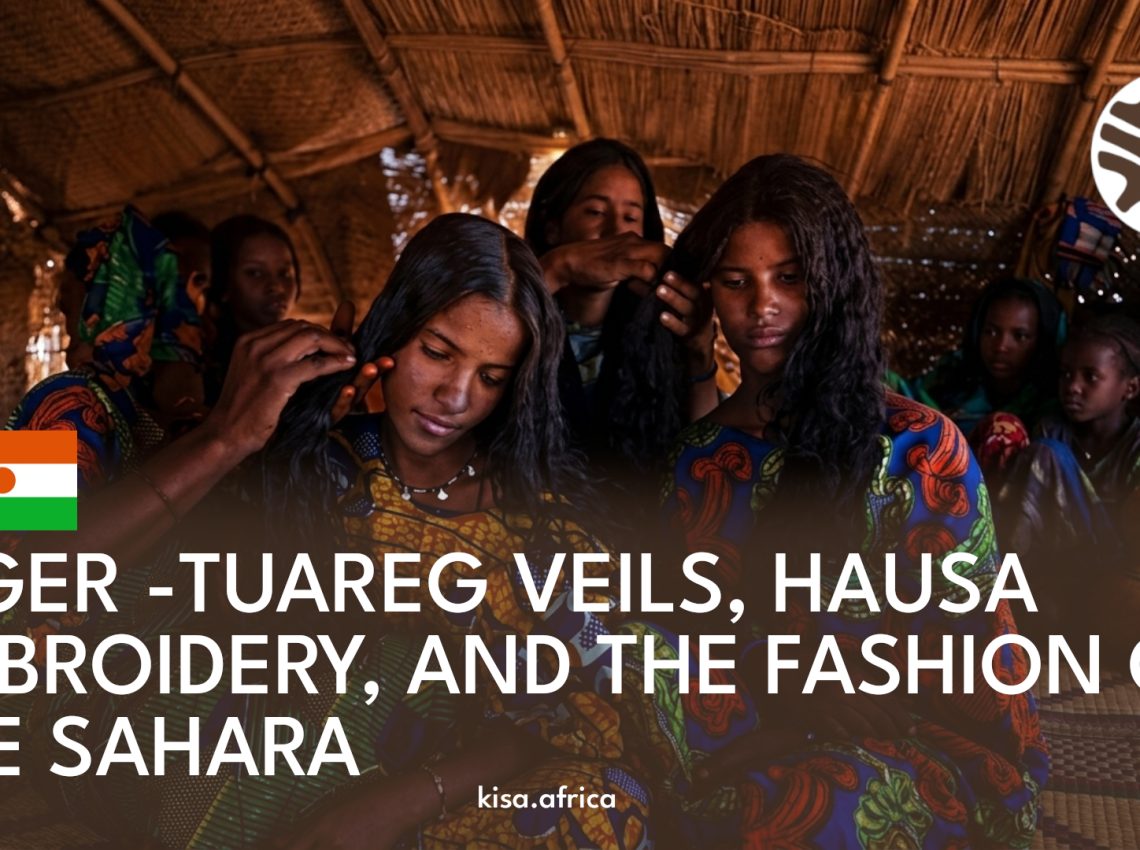
NIGER -TUAREG VEILS, HAUSA EMBROIDERY, AND THE FASHION OF THE SAHARA
The fashion traditions of Niger emerged from centuries of interaction among Saharan nomads, Islamic scholarship, trans-Saharan trade networks, and Sahelian kingdoms. Niger’s clothing culture reflects the heritage of Tuareg, Hausa, Fulani, Zarma, Kanuri, and other communities whose lifestyles were shaped by desert climates, caravan trade, pastoralism, and long-distance cultural exchange across West and North Africa.
Because much of Niger lies within the Sahara and Sahel regions, clothing historically evolved as a form of environmental technology. Garments protected wearers from scorching heat, blowing sand, dehydration, and dramatic temperature shifts between day and night. At the same time, fashion communicated social status, maturity, ethnicity, spirituality, and honour.
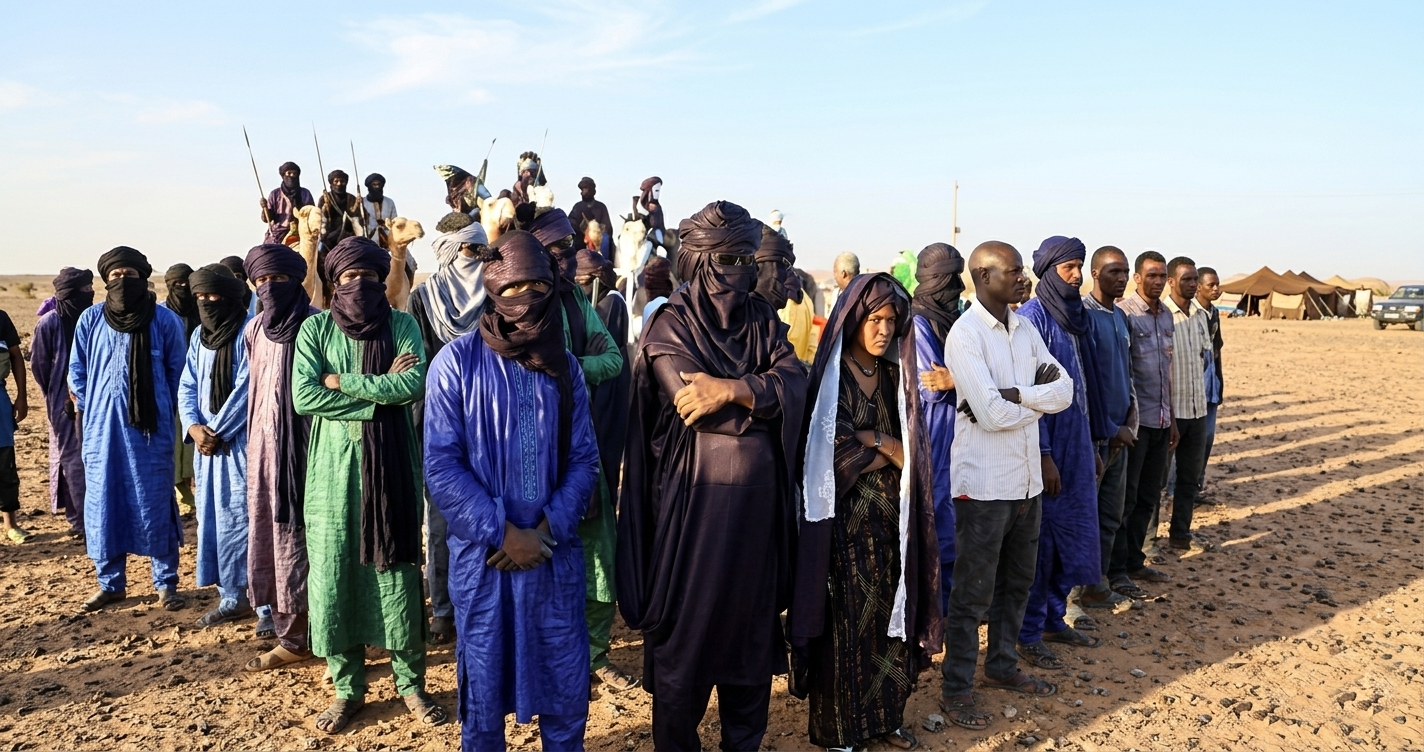
Among the most internationally recognized traditions in Niger are those of the Tuareg people.
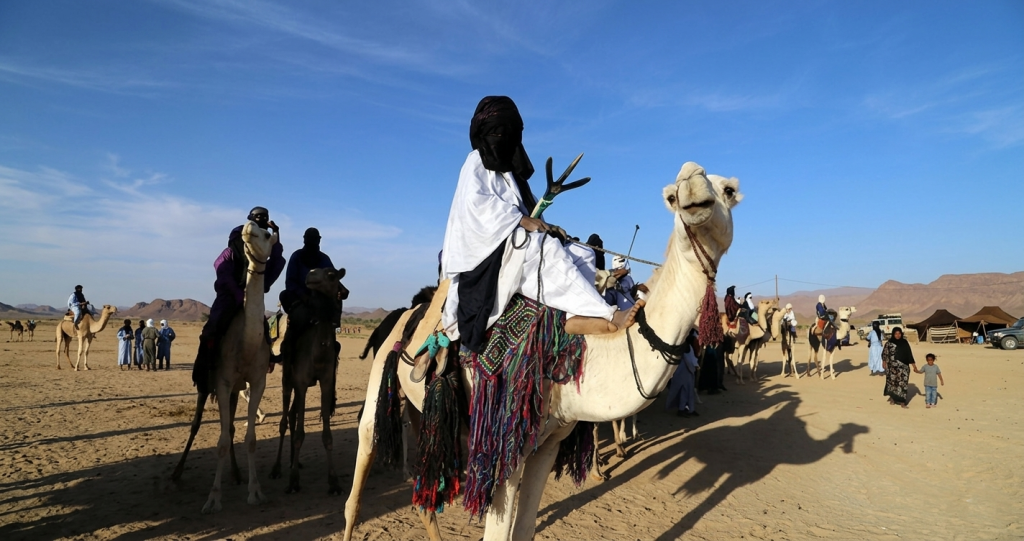
The Tuareg became famous for wearing indigo veils known as the tagelmust. Unlike many societies where women veil more prominently, Tuareg men traditionally cover much of their faces using these wrapped cloth veils.
The tagelmust serves several important functions simultaneously:
- Protection from sandstorms and desert winds
- Shielding against harsh sunlight
- Preservation of moisture while breathing
- Symbol of adulthood and dignity
- Marker of cultural identity
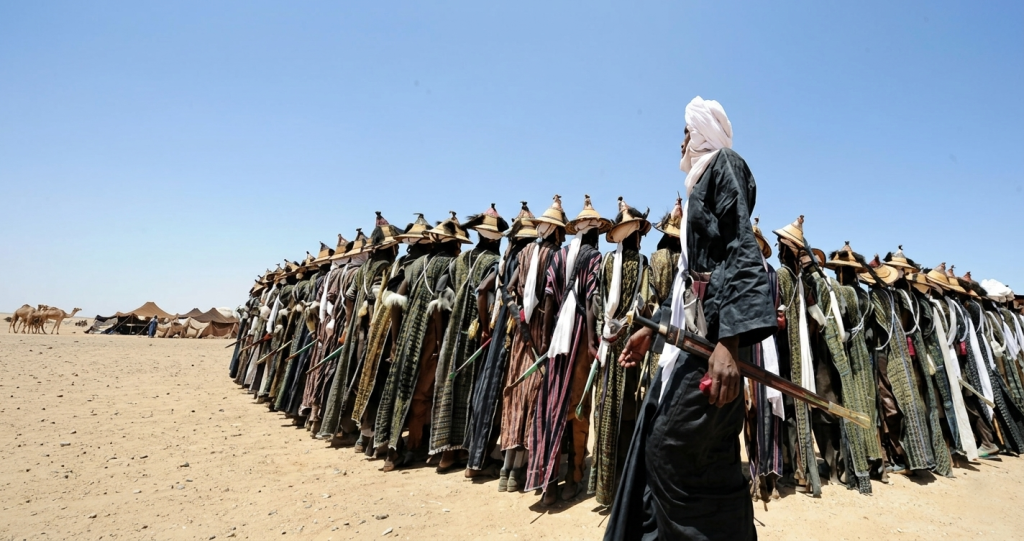
Young Tuareg men traditionally begin wearing the veil during adolescence as a sign of maturity and honour. In many Tuareg communities, appearing unveiled publicly as an adult man was historically considered inappropriate.
The veil also carried spiritual meaning. Some Tuareg traditions associated the mouth and breath with vulnerability, so covering the face symbolized restraint, discipline, and respect.
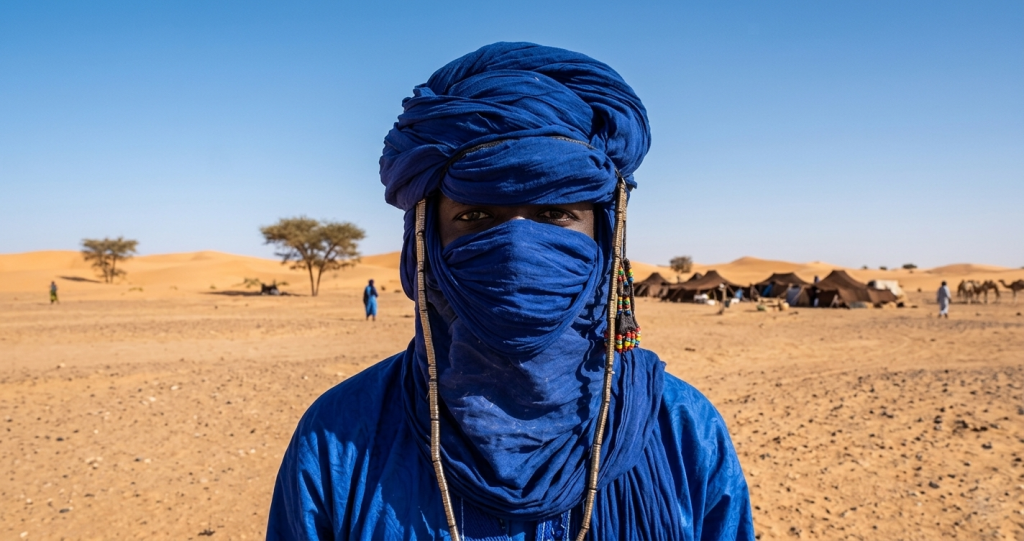
One of the most fascinating aspects of Tuareg fashion involves indigo dye.
Deep blue indigo fabrics became highly prestigious throughout Saharan societies because producing rich dye required specialized craftsmanship and labour-intensive techniques. Over time, the dye from Tuareg garments sometimes rubbed onto the skin, causing outsiders to nickname them the “Blue Men of the Sahara.”
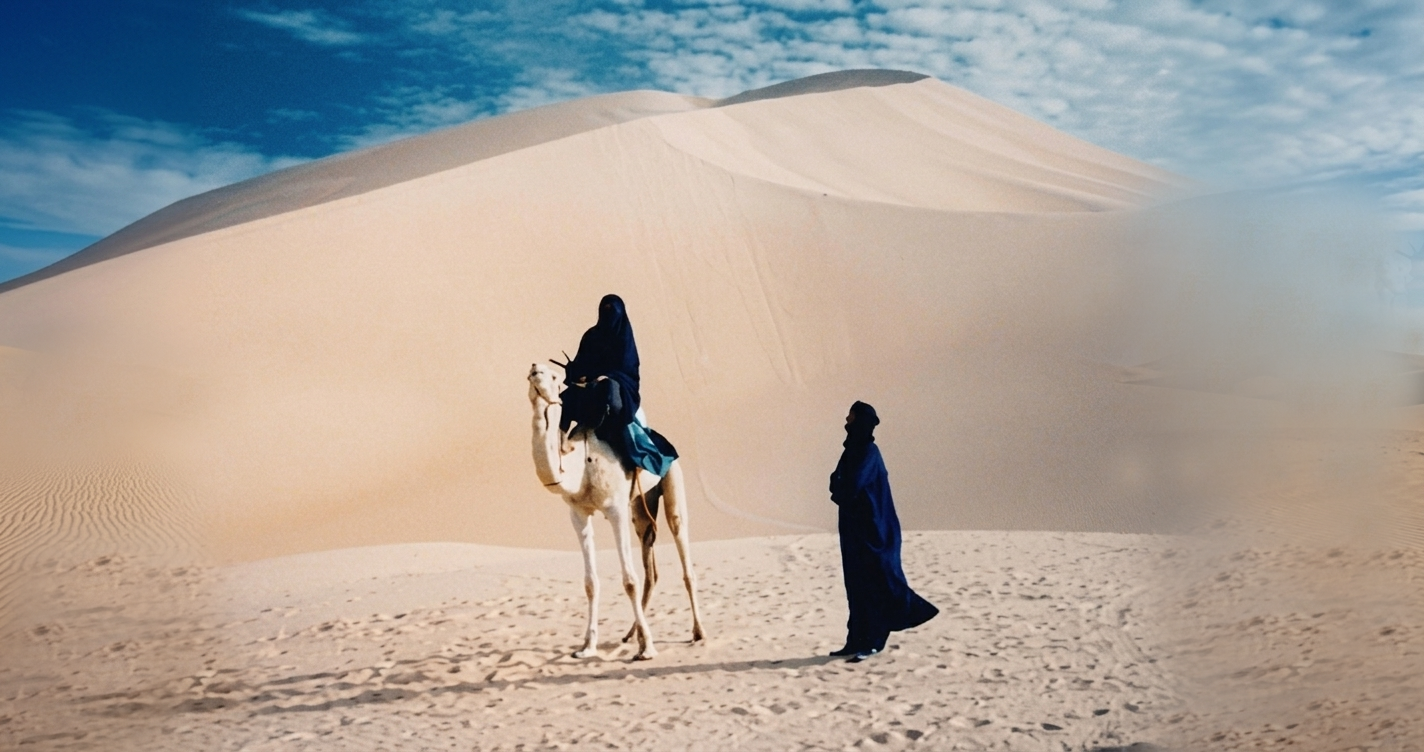
This phenomenon became one of the Sahara’s most famous visual identities.
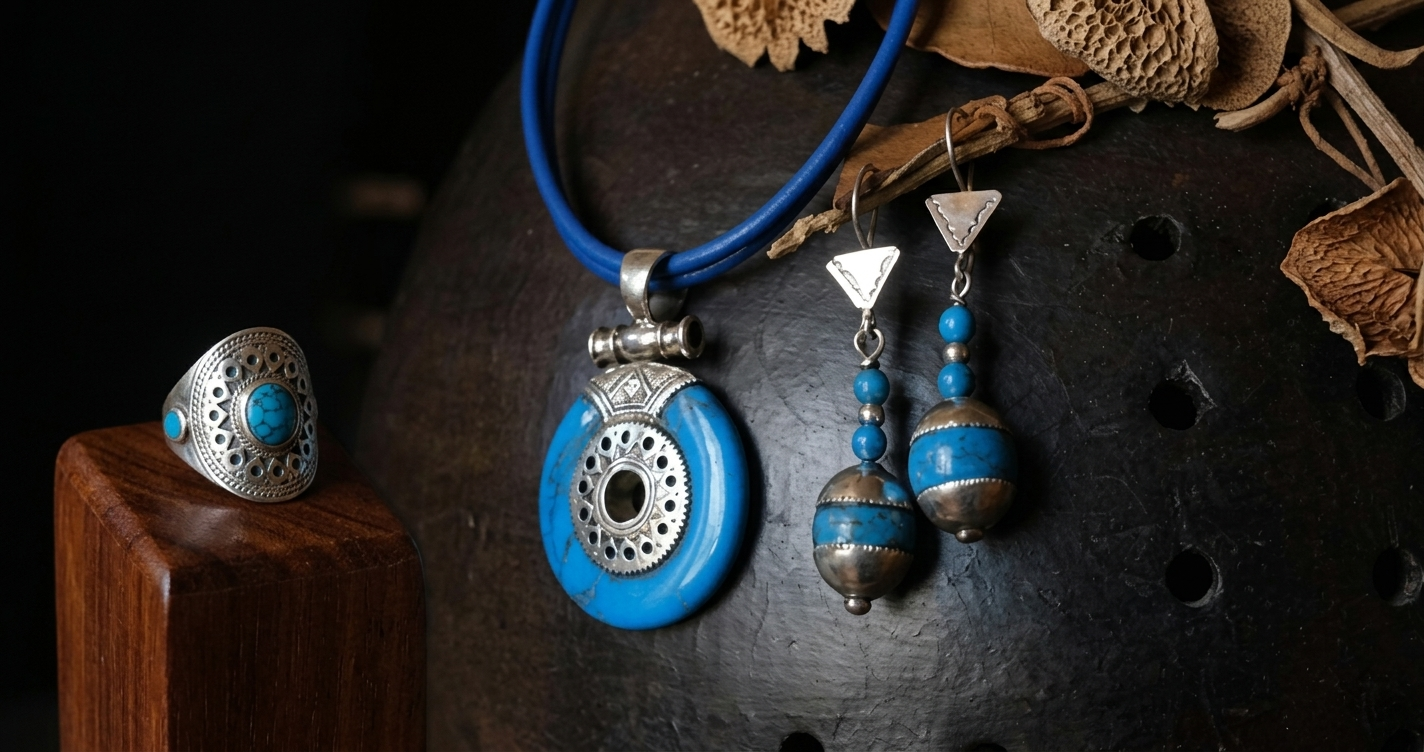
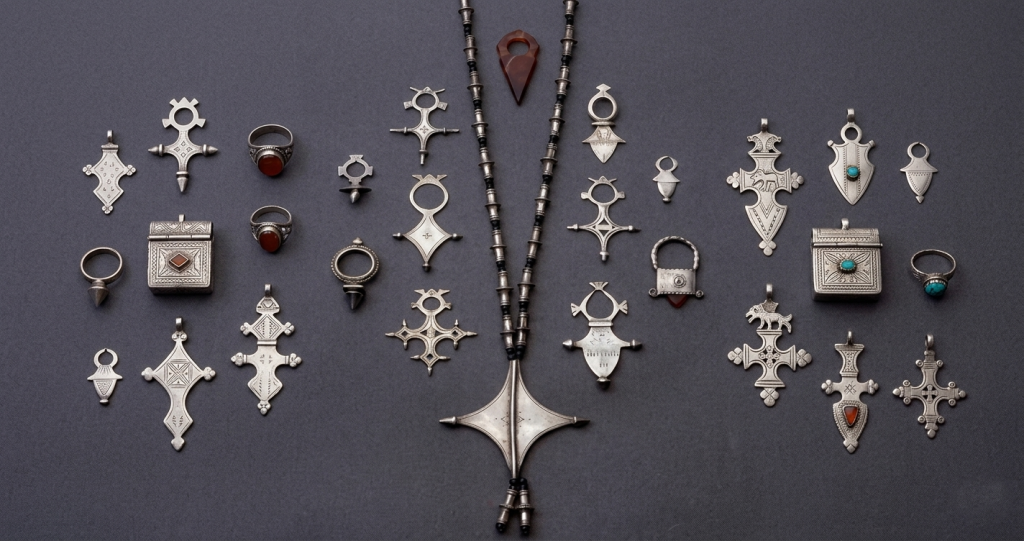
Tuareg jewellery also carried important cultural meaning.
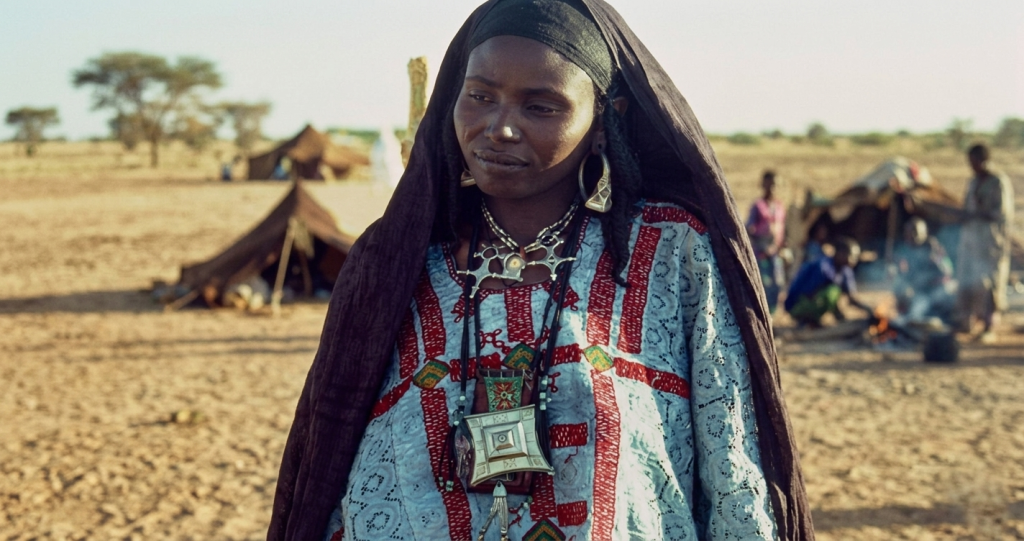
Silver jewellery, protective amulets, leather pouches, and symbolic pendants were often believed to provide spiritual protection during long desert journeys. Some famous Tuareg cross pendants represented regional identity and nomadic heritage.
Jewellery additionally functioned as portable wealth in nomadic societies where mobility was essential.
Niger also became deeply associated with Hausa embroidery traditions.
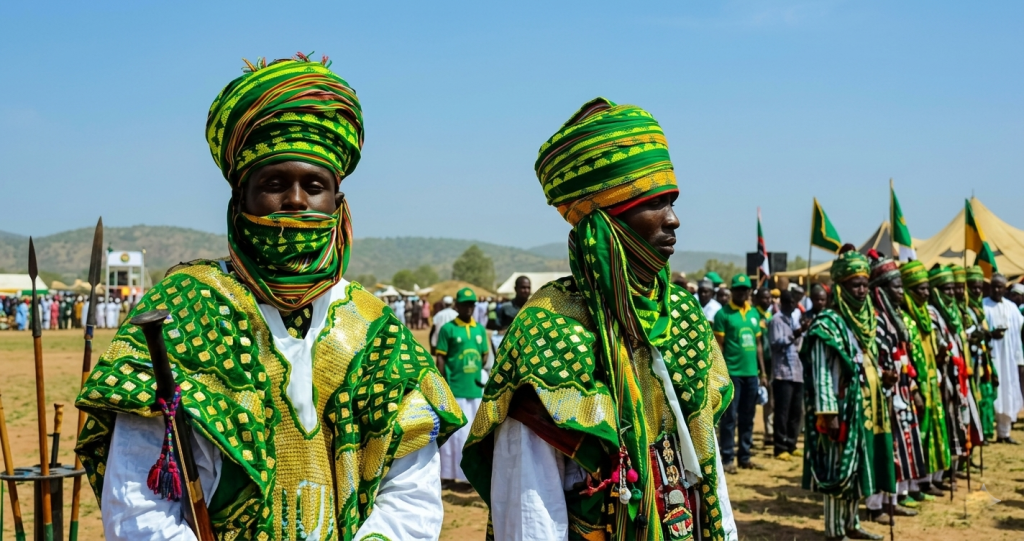
Hausa craftsmen developed some of West Africa’s most sophisticated embroidery techniques. Men’s flowing gowns, robes, and caps often featured highly intricate embroidery patterns stitched around the chest, neckline, sleeves, and hats.
These embroidered garments symbolized:
- Wealth
- Scholarship
- Prestige
- Religious learning
- Political influence
Islamic scholarship strongly shaped Hausa fashion because northern Niger historically formed part of broader Islamic intellectual networks connected to cities such as Kano, Timbuktu, and Agadez.
Embroidered robes therefore became associated not only with wealth but also with education and religious authority.
The Hausa cap itself evolved into an important artistic tradition. Embroidered caps required enormous precision and became symbols of masculine elegance throughout the Sahel.
Hair traditions in Niger varied across communities but often carried social and symbolic importance.
Among Fulani communities especially, women became known for highly elaborate braided hairstyles decorated with:
- Amber
- Beads
- Silver ornaments
- Coins
- Leather accessories
These hairstyles communicated beauty, ethnic belonging, age, and social status. Hairdressing often required many hours and functioned as a social activity through which oral traditions and cultural knowledge passed between generations.
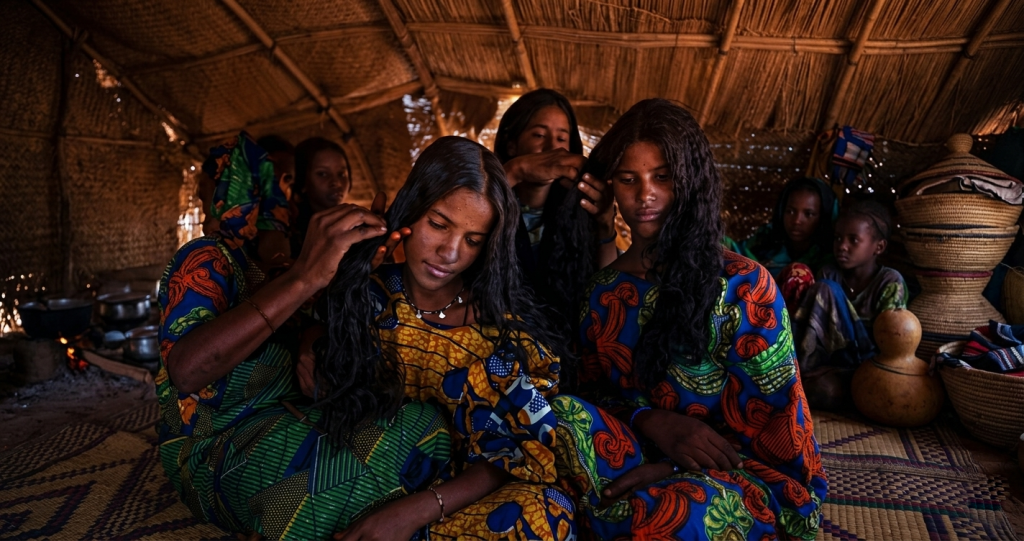
Hair oils made from shea butter and local plant products protected hair from the dry Sahelian climate.
Islamic influence profoundly shaped Nigerien clothing traditions over centuries.
Flowing robes, turbans, layered garments, and modest silhouettes became deeply rooted within Sahelian Islamic culture. Yet Nigerien fashion always retained distinctive local aesthetics through embroidery, indigo dyeing, jewellery traditions, and regional tailoring styles.
French colonialism later introduced European fabrics and tailoring methods, particularly within urban areas. However, traditional Sahelian garments remained remarkably resilient because they were both culturally meaningful and environmentally practical.
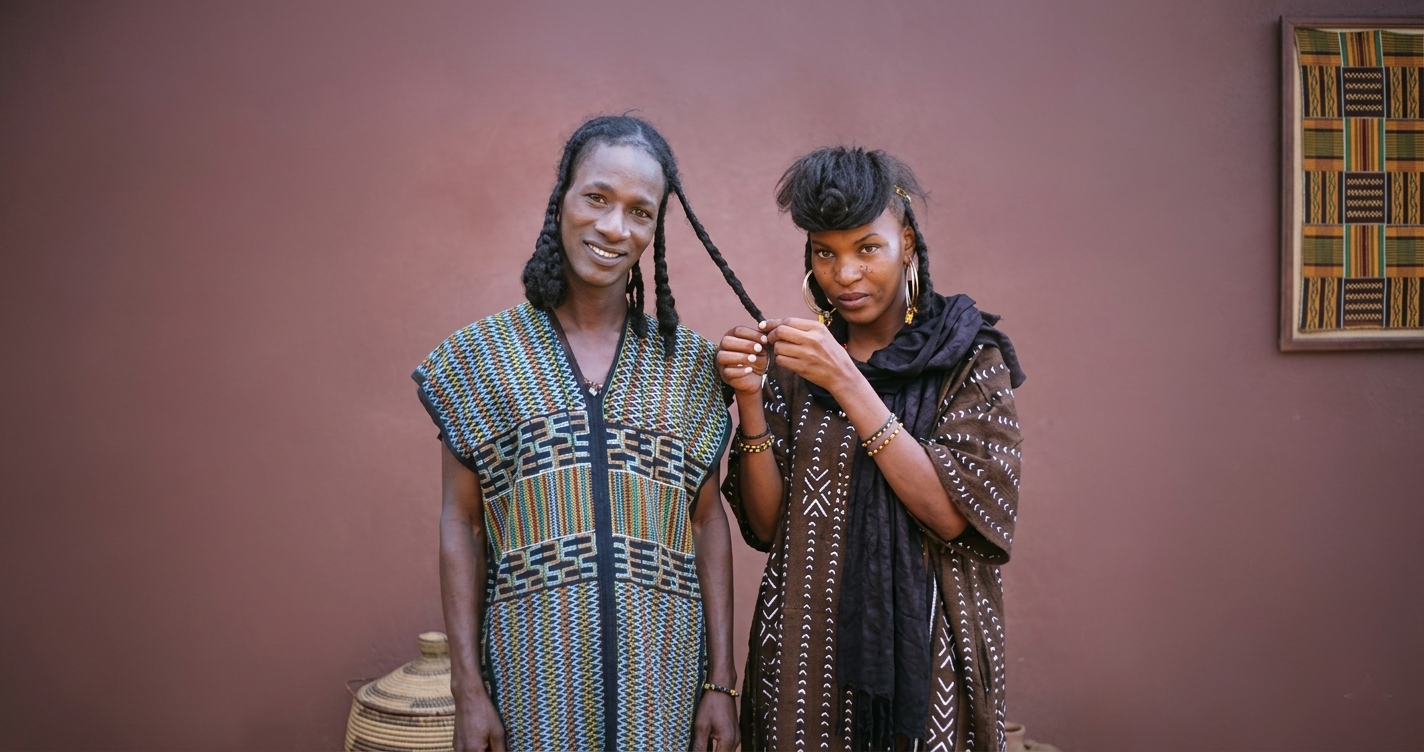
Modern Nigerien fashion now combines Afro-Sahelian traditions with contemporary global influences.
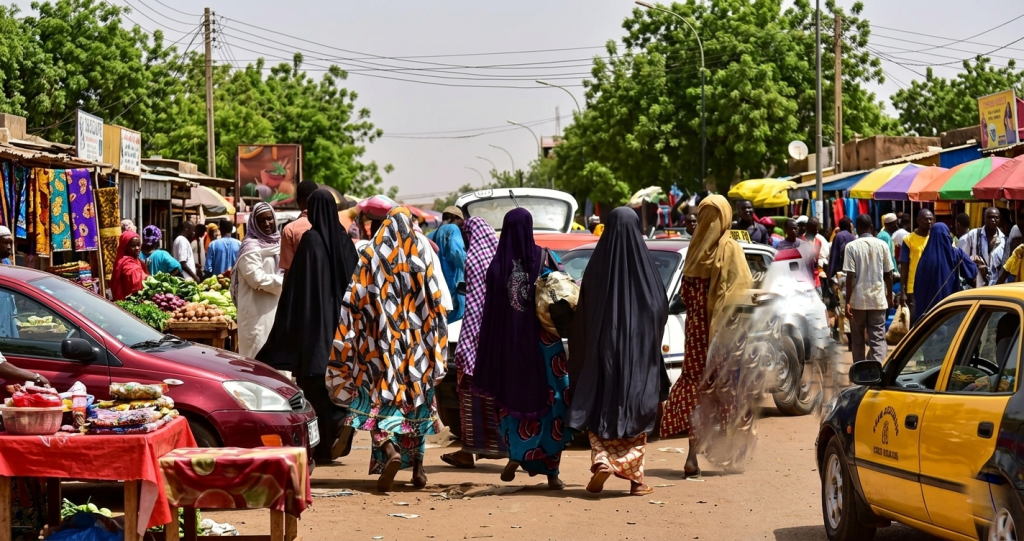
In the capital city, Niamey, younger generations increasingly blend traditional robes, embroidered garments, and headwraps with sneakers, denim, luxury fabrics, and modern tailoring.
Natural hair movements and Afro-modern fashion aesthetics are also becoming more visible among urban youth.
Designers increasingly reinterpret:
- Tuareg indigo aesthetics
- Hausa embroidery
- Fulani adornment traditions
- Sahelian silhouettes
- Islamic modest fashion
This allows Nigerien fashion to remain deeply connected to desert heritage while evolving within contemporary African fashion movements.
FASCINATING LESSER-KNOWN FACTS ABOUT NIGERIEN FASHION AND HAIR
- Tuareg men traditionally veil their faces rather than women.
- Indigo dye from Tuareg garments sometimes stained the skin blue.
- The tagelmust veil symbolized maturity, dignity, and spiritual restraint.
- Hausa embroidery became associated with scholarship and prestige.
- Tuareg jewellery often functioned as protective amulets.
- Fulani hairstyles frequently incorporated amber, beads, and silver ornaments.
- Desert clothing evolved scientifically to regulate body temperature and protect against sandstorms.
- Embroidered Hausa caps became symbols of masculine elegance across West Africa.
- Modern Nigerien fashion increasingly blends Afro-Sahelian traditions with contemporary tailoring.
SOURCES
Kriger, C. E. (2006). Cloth in West African History. Lanham, MD: AltaMira Press.
Perani, J., & Wolff, N. H. (1999). Cloth, Dress, and Art Patronage in Africa. Oxford, United Kingdom: Berg Publishers.
Eicher, J. B., & Ross, D. A. (1992). Dress and Identity. New York, NY: Fairchild Publications.
Brett, M., & Fentress, E. (1996). The Berbers. Oxford, United Kingdom: Blackwell Publishers.
Rovine, V. L. (2015). African Fashion, Global Style: Histories, Innovations, and Ideas You Can Wear. Bloomington, IN: Indiana University Press.
Spring, C., & Hudson, J. (1995). North African Textiles. Washington, DC: Smithsonian Institution Press.