

KISA AFRICA-BOTSWANA
BOTSWANA HAIR AND FASHION.
The traditional fashion and hair culture of Botswana provides an incredible insight into cultures that have evolved in one of the most adverse parts of Africa, The Kalahari Desert and the Okavango Delta. Botswana is the home of the Tswana people the majority ethnic group and other minority communities such as the glittering hairdo of the 19th century, the Herero dress (Victorian influenced) and the elaborate basketry of the delta region. The history of fashion of Botswana, is distinctly characterized by a stark contrast between pre-colonial and missionary eras, forming a hybrid aesthetic of animal-skin clothing and Victorian-era.
THE HISTORY OF HAIRSTYLES: THE SEBASTIAN OF HAIRSTYLES TRADITION (SEBILO).
One of the most interesting hair traditions in Southern Africa could be explained by reference to the ancient Specularite mines of the Tsodilo Hills World Heritage site in northwest Botswana. Tsodilo has many rock paintings, Stone Age rock shelters, at least twenty-one prehistoric Specularite mines that have been mined over the centuries. Specularite or Sebilo in Setswana: Sebelio is a bluish-grey hematite which forms a glittering, micaceous powder or glitter-like when crushed or ground.
Archaeological and historical studies that were preserved by Lawrence H. Robbins (2016) suggest that the members of the Tswana, San, and Khoi communities would combine this glittering powder with grease and spread it on their hair, bending it into thin threads. The Sebilo gave an appearance of metallic glitter that was the most sought-after cosmetic item. This was not just a decorative practice, the Specularite alone being a very profitable trade commodity, the possession of the Tsodilo mines being strictly controlled, with the village of Nqoma being the main source of control. In the early 19th century, historical accounts of open access mining (1812) and Tswana-managed mining (1813) of such locations as Blinkklipkop in South Africa make it clear that the sparkling resource was economically and culturally important.
One little known fact that shocks most individuals is that the practice dates to the prehistoric era; the Specularite mines at Tsodilo prehistoric, archaeological evidence dates the mining occured back to hundreds, possibly thousands of years ago. When the travellers and missionaries of the 19th century wrote of Tswana, San, and Khoi women sporting Sebiloglittered hair in the form of thin threads, they were describing a practice that had been in existence thousands of years.
THE THIHUKEKA: MBUKUSHU HEADDRESS OF THE WOMAN.
As the Tswana preferred using Specularite powder, the Hambukushu, Mbukushu people of the Okavango Delta invented another type of hair tradition. The Smithsonian National Museum of African Art says that the Mbukushu are Bantu-speaking people who constitute a part of the greater Kavango (Okavango) group which makes up less than 10% of the Namibia population. They are thought to have arrived in the Kavango region of Angola and Botswana in the mid-late 18th century, and their origins can be dated to the Kwando River region of Angola and the Middle Zambezi River Valley (Zambia and Zimbabwe).
The hair headdress or wig of a woman of the Mbukushu, called the Thihukeka, also dates to around 1960, and is composed of several strands of the braided plant fibre in this case it is the terminalia service tree known as Moshosho which is dyed with soot. These strands are overlaid and into them are hung coils of great white trade beads, and the result is a long tapering tube of beads, hanging down the back.
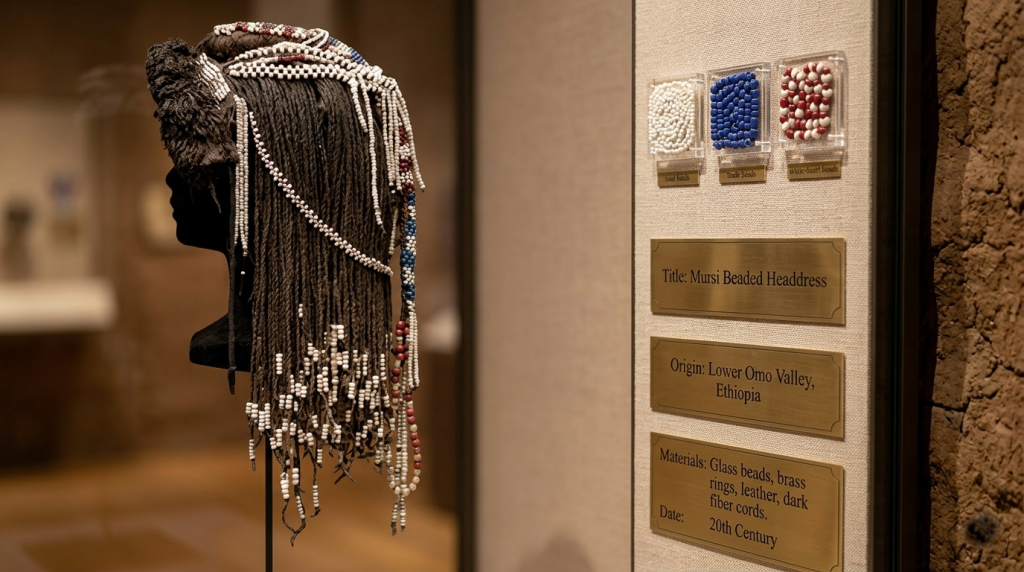
The Traditional vs. the Unconventional Method. Mbukushu women had their traditional hair in the form of long tresses of twisted fibre, which is ornamented with decorative patterns of glass beads, thus forming the appearance of long straight hair, which is the desired appearance of Mbukushu women. The head was then rubbed with a compound of sweetsmelling grass, finely crushed pieces of wood, of a certain tree, and animal fat to make the hairstyle to look natural. Then the hair was twisted with very long tresses of sisal. Glass beads, cowrie shells, old military coats buttons and shell beads were used to adorn the hair. Most commonly, synthetic ornaments and glass beads are used nowadays.
The Thihukeka wig is a more convenient way of wearing this customary hairstyle especially during a ceremony as the original hairstyle has since become extinct except for the east of Namibia. The wig provides the convenience to the Mbukushu women of keeping their hair short in their day to day lives and the freedom to wear the fancy style during special events.
Wig Construction Details (Smithsonian Collection): The wig in the collection of the midlate 20th century is made of a leather base, long pieces of tresses twisted in the Z-shape, a thick band around the forehead, and a raised fibre crest. There is a panel of yellow and white glass beads on the crest, in connecting triangular designs, tapering to a beaded tassel. The strands of decorative glass beads surround the forehead and the back of head. The back of the headdress is ornamented with three bead panels shaped in the form of a rectangle and have chevron patterns with alternating blue and white patterns and with alternating black and white patterns. The surrounding of the forehead band by dark colour indicates that it was covered with greasy material and might also have been covered with red ochre.
THE TSWANA ANIMAL-SKIN GARMENTS: FUR-WOVEN SOCIAL STATUS.
Prior to the coming of missionaries in mid-19th century, Tswana clothing was prepared using the entire skin and fur of the local animals. This pre-colonial fashion system served as an accurate visual language of expressing social status, age, gender and social class.
Men’s Traditional Attire
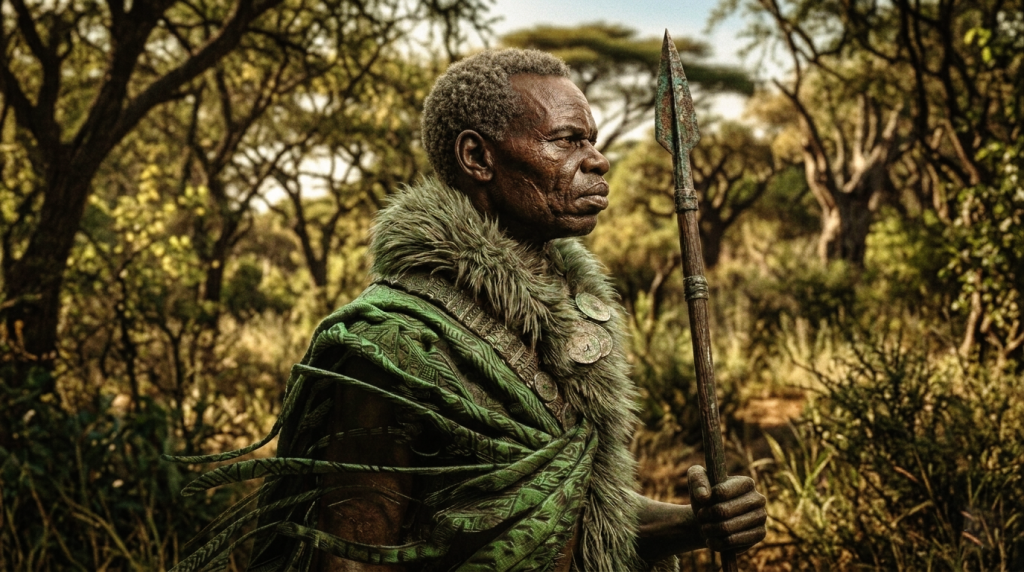
- Tshega: A loin-skin of men.
- Kaross: This is a blanket or a rug that is made of animal skin that covers the upper part of the body.
-A cap, sandals, and (only among warriors) a belt of animal tails.
Ornaments were copper wire necklaces, bead strings and armlets.
Women’s Traditional Attire
- Khiba: This is an apron worn around the front.
- Mosese: A back jacket.
- Kaross upper body covering.
- Thari: A special cloth that is worn by carrying babies on the back.
Lots of ornaments: bracelets, earrings, necklaces, rings.
Children’s Attire
Kids were dressed differently; toddlers were frequently naked; boys of older age had a tiny skin flap on the front; girls had a bunch of strings that were created of the skin or bast. When children grew up, girls were made to wear Mosese and Khiba, and boys were made to wear Tshega.
The socialization that is inherent in these clothes is impressive. The Tswana poorer people had less clothing which consisted of antelope skin. The rich Tswana wore coats of 15 to 18 furred animals like wild cats, jackals and hares sewn together.
THE AFRICAN IDENTITY, VICTORIAN ORIGINS: THE HERERO LONG DRESS.
The most surprising part of the Botswana fashion history is, perhaps, the Herero long dress.
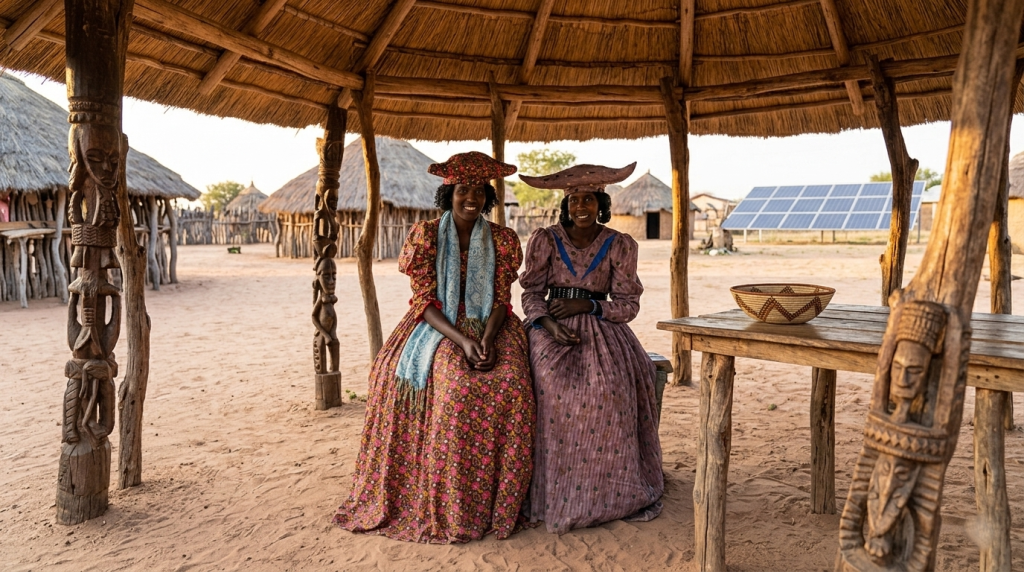
Hildi Hendrickson (1994) in an academic study of African Studies published in African Studies states that the long dress of the Ovaherero of Namibia and Botswana has a lot more to it than just the fashion.
Historical Development: The long dress design, construction and the historical development were not only determined by the German missionaries but also by other Africans in the process of adoption of the dress during the 19th century. This calls into question the mere story of European colonial imposition, Africans themselves contributed to the choice, alteration and expansion of this dress style.
Symbolic Meanings: The dress is discovered to remind the change of women into marriage and motherhood and to remind the duties of adulthood and how women had to comply with them. Although it is physically binding and difficult to build and sustain, the dress glorifies women as creators of precious, unchangeable social contacts. It portrays women as symbols of Herero society, traditionalism, and history in an enlarged and plural socio-political world.
The horned headdress of Herero women is well known and made of rolled cloth, and it takes the shape of horns of cows directly referring to the fact that Herero are cattle herders. The voluminous Herero dress is floor-length, and it covers most of the body, which is an indication that she is a married woman and she cannot reveal her body to anybody except her husband. It is one of the most vivid instances of how a colonial garment can be absolutely indigenized and restored as the source of cultural pride.
THE SAN: THE ANCIENT ART OF OSTRICH EGGSHELL BEADS.
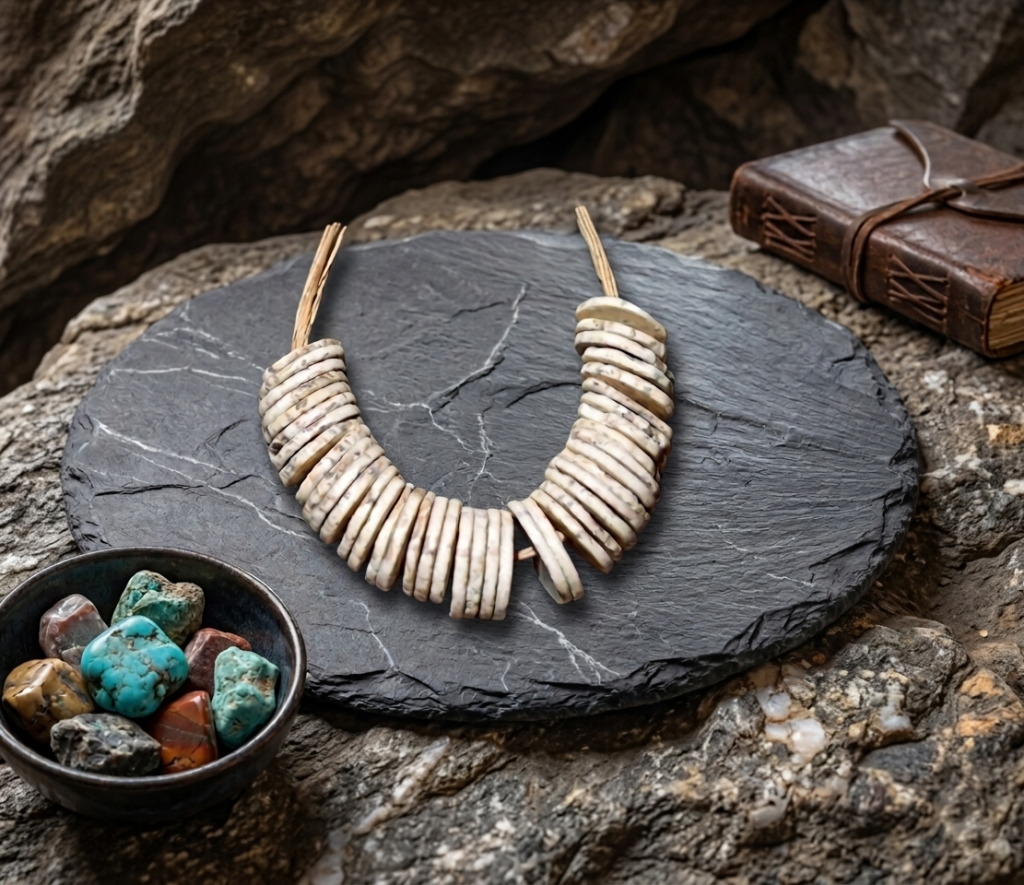
The Tswana used copper and glass beads whereas the San (Bushman) people of the Kalahari have created a bead-making tradition. San women use ostrich eggshells that have hatchlings to make beads a practice that has remained over the years and a way of life to the hunters and gatherers.
CONTEMPORARY SOCIAL AND CULTURAL SURVIVAL.
One of the saddest elements of the Botswana fashion practices is that the pressure is exerted on them nowadays. As the 21 st -century Tswana woman is graceful inside and she is proud of her appearance, the animal-skin clothing became a rarity in the Gaborone streets. Nevertheless, there exists a resurgence of the contemporary movement.
Such designers as GaTsh Fros (their names combine Gaone and Tsholo and reference their favourite Afro hairstyles) are influencing the future of the fashion industry in Botswana. They are inspired by the Mogagolwane blanket the Tswana cultural representation that is issued to an individual during significant life events. As Tsholo Dikobe describes, their designs start with Botswana. They cannot start to narrate our fashion story without first recognizing this Mogagolwane blanket that most people consider to be a cultural token and make up a significant section of their identity as Batswana.
GaTsh Fros is the future generation of Batswana designers after winning the Innovative Designer of the Year award in the Africa London Fashion Week in 2014, and is seen to be interpreting the past, present and future of Botswana into fashion, with a touch of nostalgia to a new generation.
SOURCES
Museum of International Folk Art. Thihukeka (Woman’s coiffure headdress). Collection of the International Folk Art Foundation.
http://collection.internationalfolkart.org/objects/25156/thihukeka–womans–coiffureheaddress
https://music.si.edu/object/nmafa_2004–4–1 – Smithsonian National Museum of African Art. Wig (Mbukushu artist). Object No. 2004-4-1. Mid-late 20th century.
Virginia Museum of Fine Arts. Mbukushi Wig. Object No. 2013.733. ca. 1970- https://www.vmfa.museum/artworks/mbukushi–wig–62625 https://en.wikipedia.org/wiki/Herero_people https://en.wikipedia.org/wiki/San_peoples https://en.wikipedia.org/wiki/Ostrich_eggshell_beads