
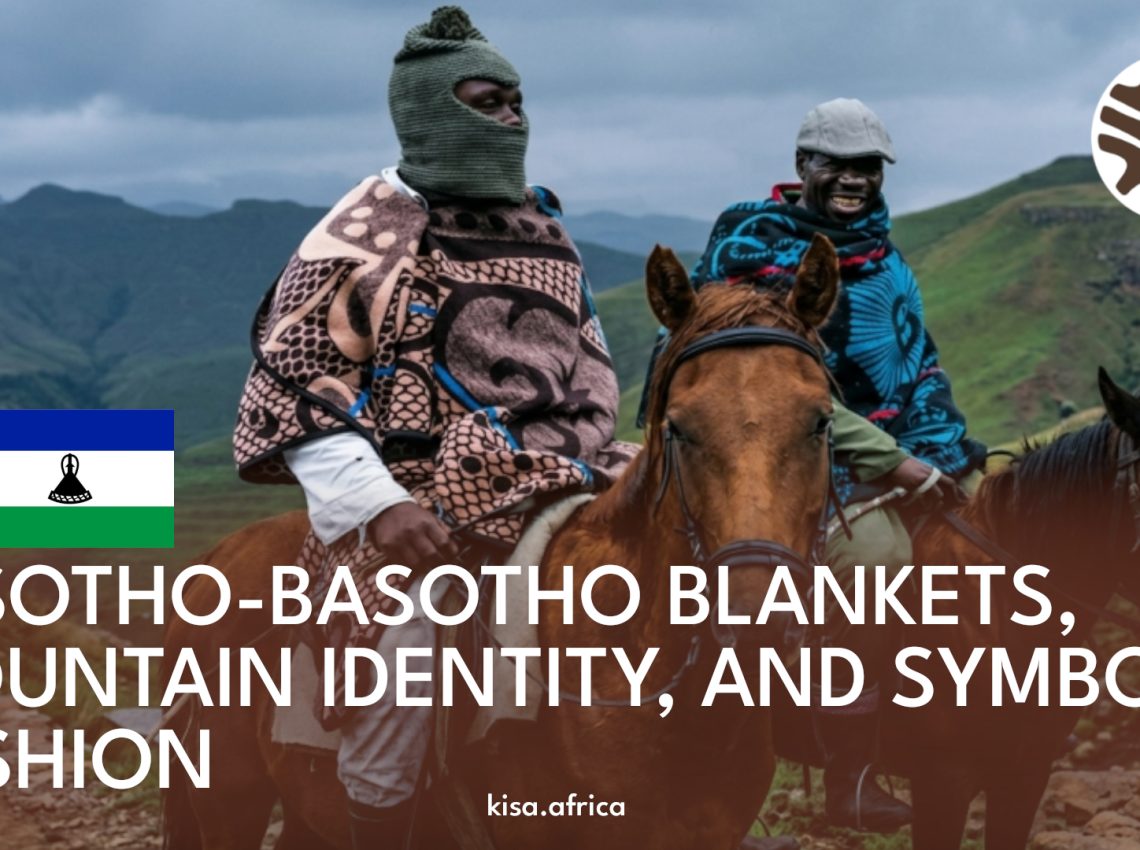
LESOTHO-BASOTHO BLANKETS, MOUNTAIN IDENTITY, AND SYMBOLIC FASHION
The fashion traditions of Lesotho are among the most visually distinctive in Africa because they developed within a high-altitude mountain environment where clothing needed to provide warmth, mobility, and symbolic meaning at the same time. Fashion in Lesotho is deeply tied to Basotho identity, communal belonging, royal history, and adaptation to the country’s cold climate. More than simply garments, traditional clothing became an expression of survival, dignity, spirituality, and nationhood.
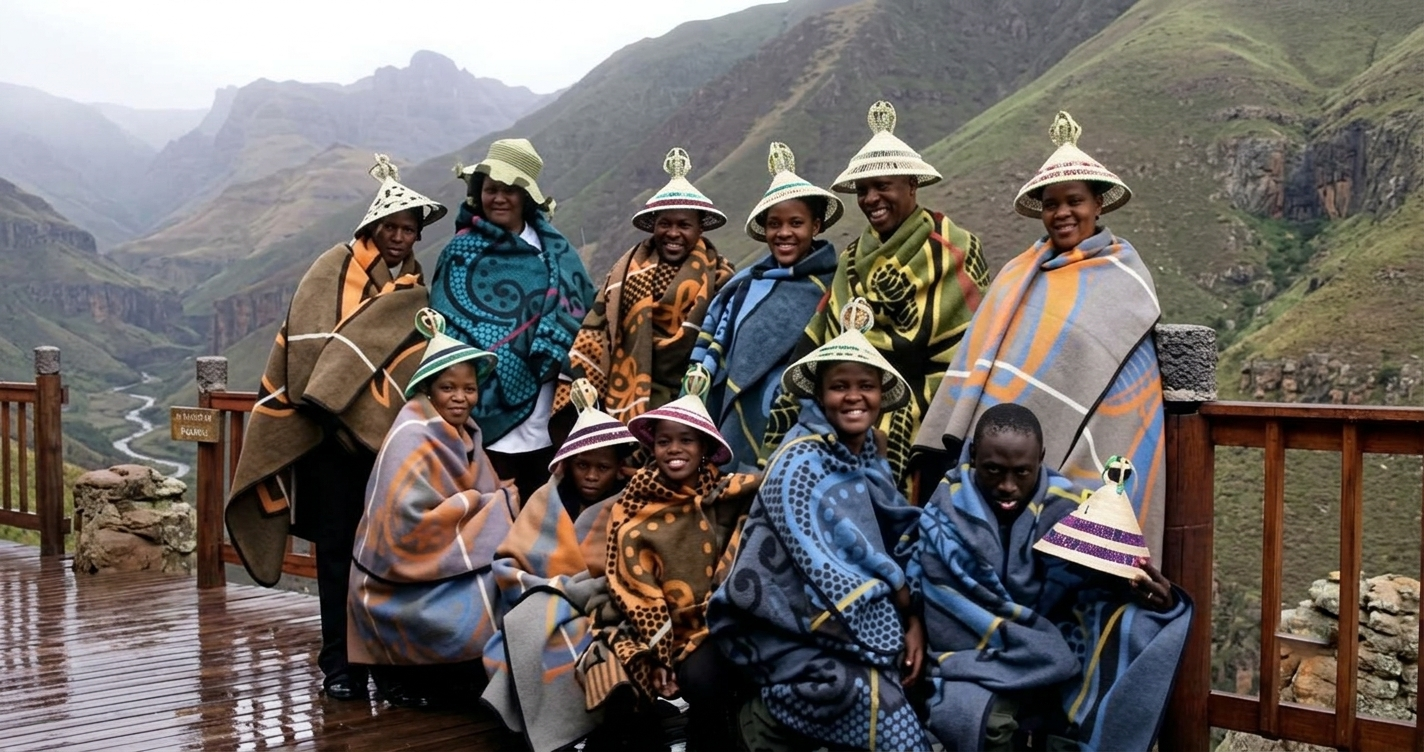
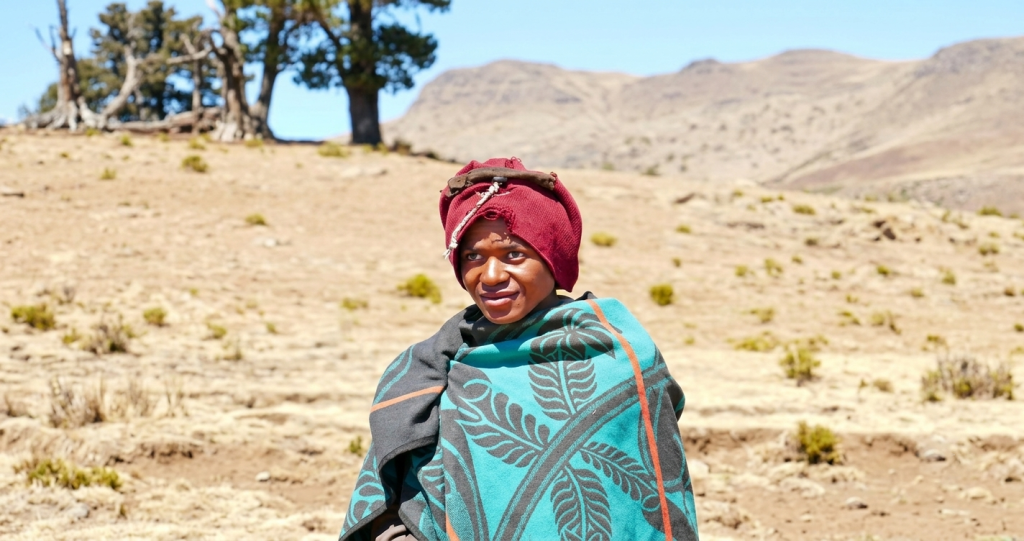
The most iconic symbol of Lesotho’s fashion heritage is the Basotho blanket, one of the most recognizable textile traditions on the African continent.
The history of the Basotho blanket is closely connected to Moshoeshoe I, the founder and first king of the Basotho nation during the 19th century. According to historical accounts, Moshoeshoe I received a wool blanket as a gift from European traders or missionaries and found it warmer and more practical than the animal-skin cloaks traditionally worn at the time. He reportedly adopted the blanket enthusiastically, and over time it became integrated into Basotho culture.
What began as a practical adaptation eventually evolved into a profound cultural symbol.
Basotho blankets became markers of identity, adulthood, ceremony, and social belonging. Today, blankets remain central to Basotho life and are worn with immense cultural pride.
Unlike ordinary blankets used only for warmth, Basotho blankets carry symbolic meaning through their patterns, colours, and designs. Certain blanket motifs historically represented milestones such as marriage, fertility, adulthood, or royal affiliation. Some blankets were associated with initiation ceremonies, while others became linked to weddings or significant life transitions.
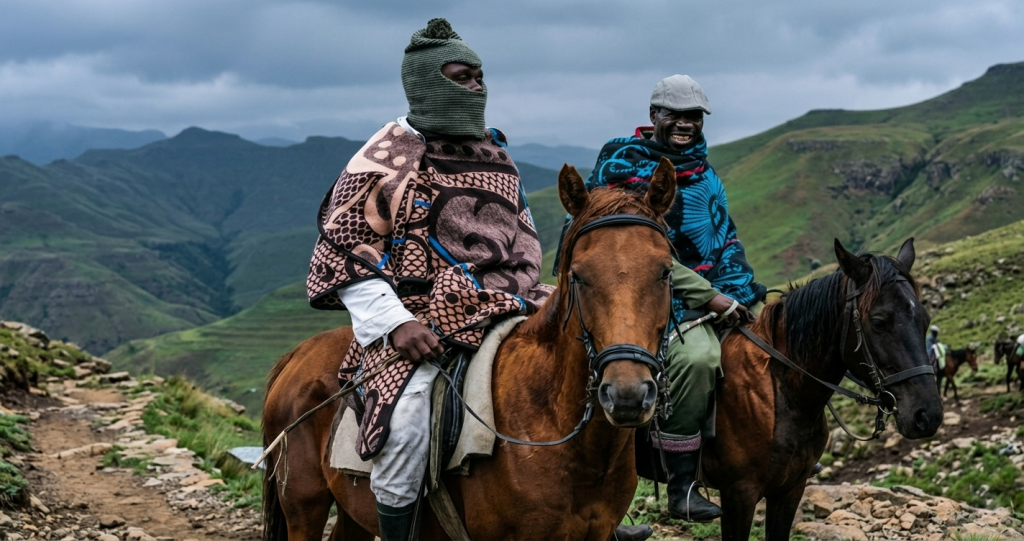
Many Basotho blankets contain elaborate geometric patterns, corn motifs, shields, crowns, animals, or symbolic imagery tied to Basotho history and values. The corn motif, for example, often symbolizes prosperity and fertility because maize became an essential food crop within the region.
One fascinating aspect of Basotho blanket culture is that blankets are often worn during highly formal and ceremonial occasions despite appearing casual to outsiders unfamiliar with the tradition. A blanket can function almost like a royal robe, ceremonial uniform, or national emblem depending on context.
Because Lesotho lies in a mountainous region with cold winters and high elevations, wrapping blankets around the body also remained highly practical. Basotho horse riders and herders commonly wore blankets while traveling through rugged terrain.
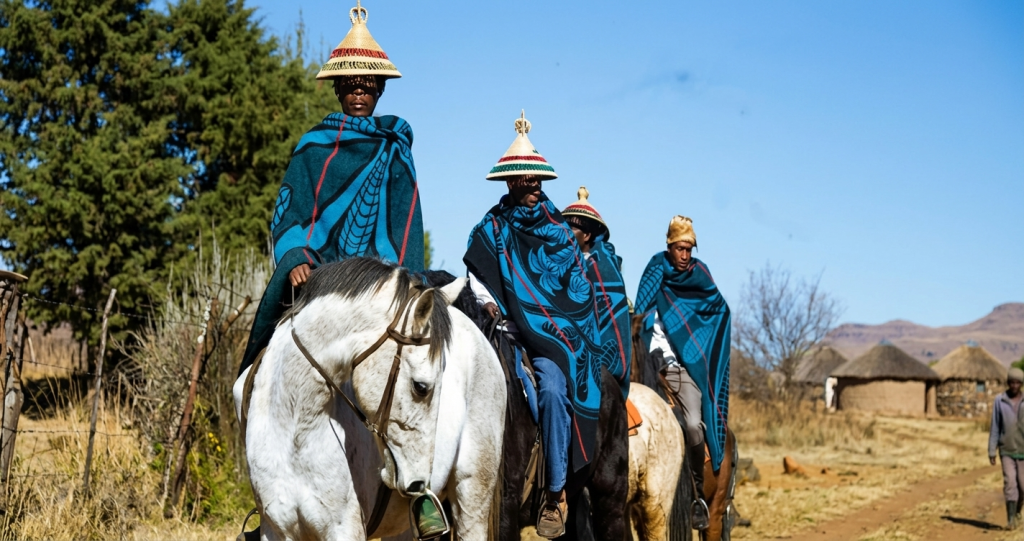
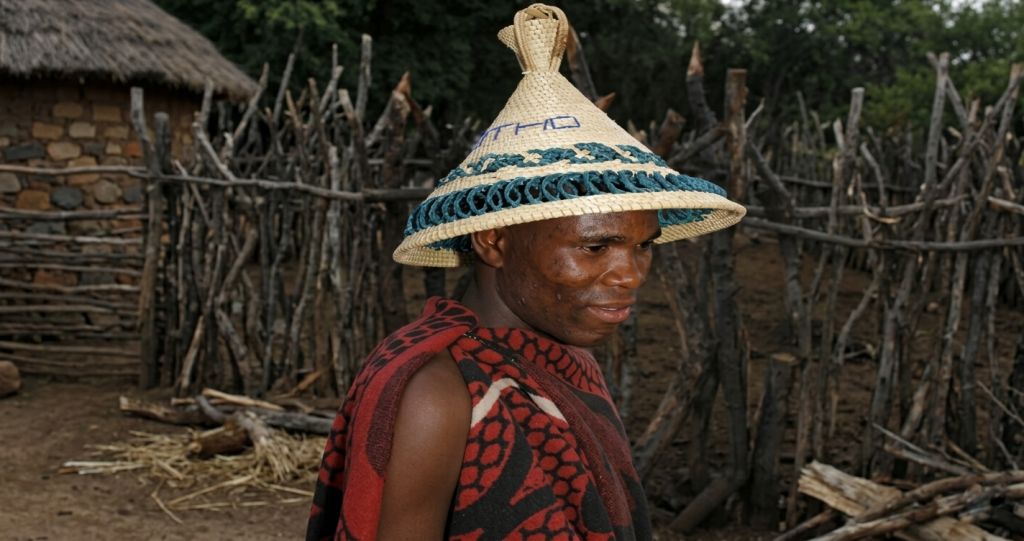
Horse culture itself became deeply associated with Basotho identity. Riders wearing heavy wool blankets and traditional conical hats known as mokorotlo created one of Southern Africa’s most iconic visual traditions. The mokorotlo hat later became a national symbol appearing on Lesotho’s national imagery and cultural branding.
The interaction between climate and fashion is especially important in Lesotho. Unlike many African fashion systems shaped primarily by tropical heat, Basotho clothing traditions evolved around cold mountain weather. Wool garments, layered wrapping styles, and thick textiles became necessary for daily life. This environmental adaptation helped produce one of Africa’s most unique textile cultures.
Traditional hairstyles in Lesotho also carried important social meaning.
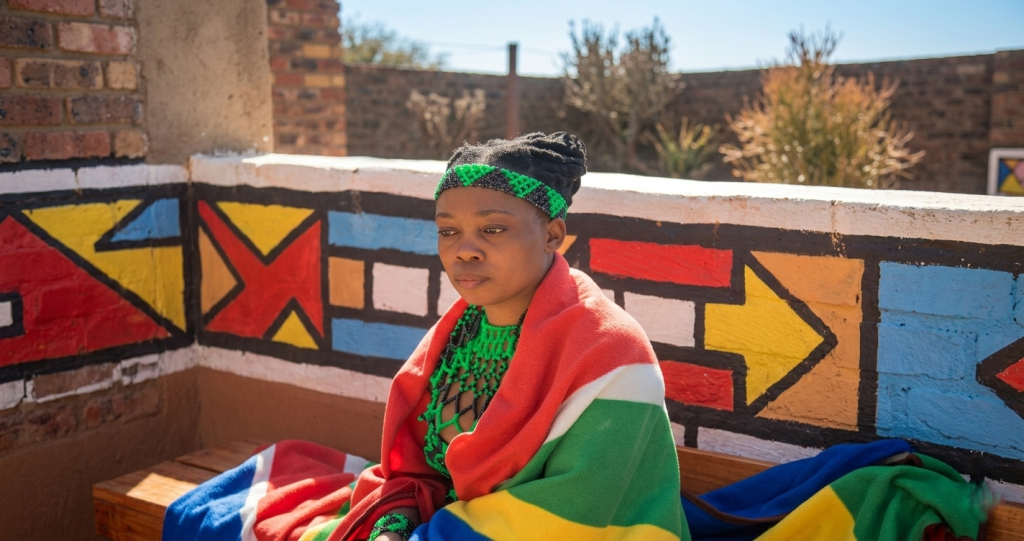
Historically, Basotho hairstyles varied according to age, gender, and social position. Head shaving, sculpted hair forms, braiding, and carefully arranged styles could communicate life stage, maturity, or participation in ceremonies. Some hairstyles marked transitions into adulthood or reflected marital status.
Hair grooming was often connected to communal practices where women gathered to braid, style, and care for one another’s hair while exchanging stories and cultural teachings. As in many African societies, hairstyling functioned not merely as beauty practice but also as social bonding and cultural education.
Colonial influence introduced European tailoring, missionary dress standards, Christian modesty norms, and imported textiles into Basotho society during the 19th and 20th centuries. Western-style jackets, dresses, shirts, and uniforms gradually entered urban life and formal institutions.
However, Basotho blanket traditions remained resilient partly because they were so closely tied to national identity and environmental practicality. Rather than disappearing, blankets adapted into modern cultural life and eventually became internationally recognized symbols of Lesotho.
Modern fashion in Lesotho increasingly combines heritage with innovation.
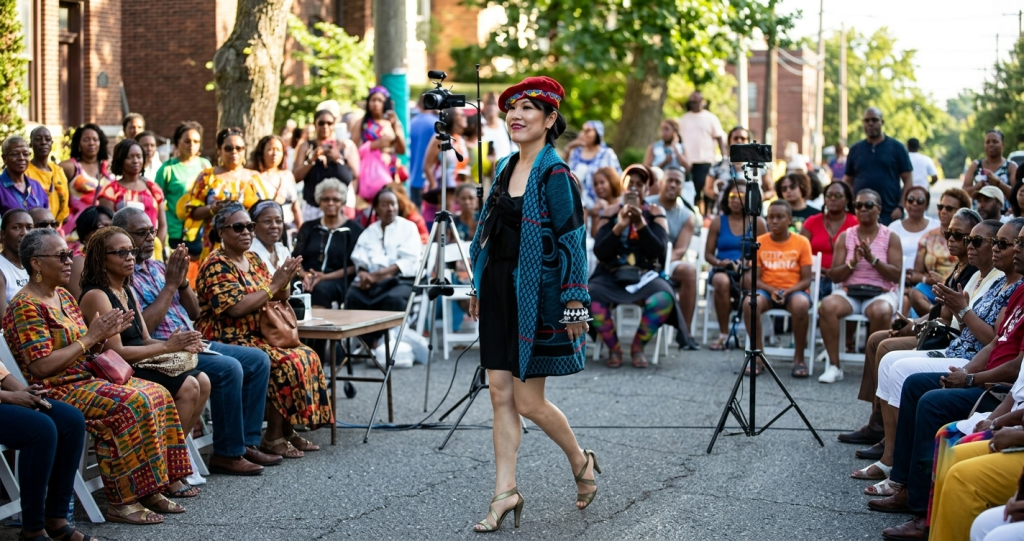
Contemporary designers reinterpret Basotho motifs, blanket patterns, and wool textiles for modern audiences using coats, capes, dresses, suits, and luxury fashion collections inspired by traditional designs. International fashion industries have increasingly recognized the Basotho blanket as both a cultural artifact and a source of design inspiration.
At the same time, Basotho blankets remain part of everyday life in rural and urban areas alike. People still wear them during ceremonies, festivals, weddings, funerals, horseback travel, and even daily activities in colder regions.
Another remarkable aspect of Lesotho’s fashion culture is how strongly clothing continues functioning as national symbolism. In many countries, traditional dress became mostly ceremonial or touristic. In Lesotho, however, the Basotho blanket remains deeply alive as both practical clothing and cultural identity.
FASCINATING LESSER-KNOWN FACTS ABOUT BASOTHO FASHION AND HAIR
- The Basotho blanket tradition grew after King Moshoeshoe I adopted wool blankets in the 19th century.
- Certain blanket designs historically symbolized marriage, adulthood, fertility, or royal status.
- Basotho blankets are considered highly formal garments despite looking casual to outsiders.
- Lesotho’s cold mountain climate strongly shaped wool-based clothing traditions.
- The mokorotlo conical hat became a national symbol of Lesotho.
- Horse culture helped shape iconic Basotho visual identity.
- Hairstyles historically communicated age, gender, and ceremonial status.
- Modern designers increasingly reinterpret Basotho motifs for luxury and international fashion.
- Basotho blankets remain widely worn in daily life, not just during ceremonies.
SOURCES
Coplan, D. B. (1994). In the Time of Cannibals: The Word Music of South Africa’s Basotho Migrants. Chicago, IL: University of Chicago Press.
Eicher, J. B., & Ross, D. A. (1992). Dress and Identity. New York, NY: Fairchild Publications.
Murray, C. (1981). Families Divided: The Impact of Migrant Labour in Lesotho. Cambridge, United Kingdom: Cambridge University Press.
Quinlan, T., & Quinlan, M. (2007). Modernization and Cultural Transformation in Lesotho. Maseru, Lesotho: Morija Museum & Archives.
Picton, J., & Mack, J. (1989). African Textiles. London, England: British Museum Press.
Arthur, L. B. (2000). Religion, Dress and the Body. Oxford, United Kingdom: Berg.