
MAURITIUS-CREOLE ELEGANCE, INDIAN OCEAN FUSION, AND SEGA DANCE FASHION
The fashion history of Mauritius is one of the most multicultural and globally interconnected in Africa. Located in the Indian Ocean, east of Madagascar, Mauritius developed through centuries of migration, maritime trade, colonial rule, slavery, indentured labor systems, and cultural exchange involving African, Indian, Chinese, French, and Creole populations. Because of this extraordinary mixture of influences, Mauritian fashion evolved into a unique fusion unlike the clothing traditions of most mainland African countries.
Rather than being shaped by a single dominant ethnic aesthetic, Mauritian fashion reflects layered cultural histories that merged African heritage, South Asian textiles, European tailoring, Chinese commercial influence, and tropical island practicality.
Fashion in Mauritius historically communicated religion, ancestry, class, celebration, and community identity while also adapting to humid coastal climates and island life.
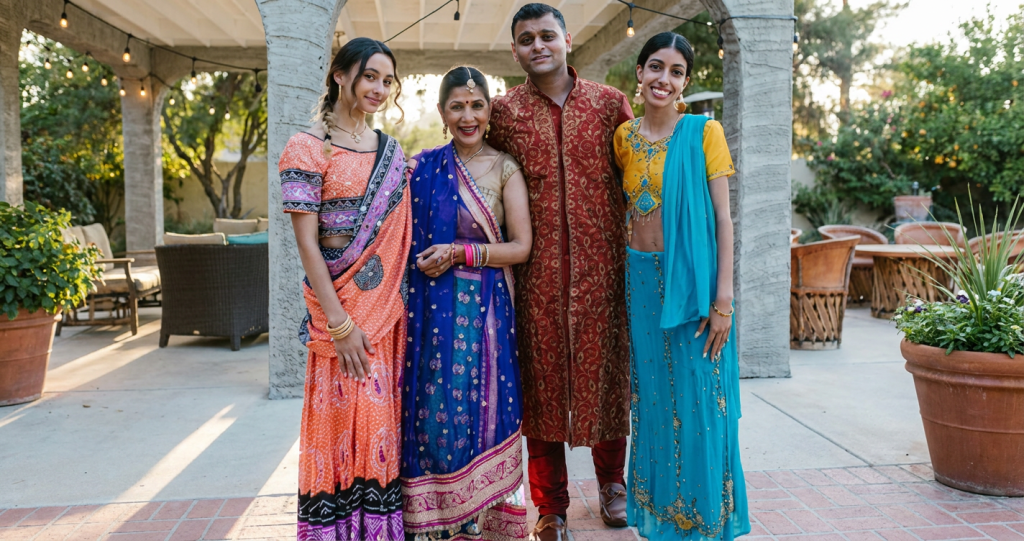
One of the most fascinating aspects of Mauritian fashion is how different communities preserved distinct dress traditions while simultaneously influencing one another over generations.
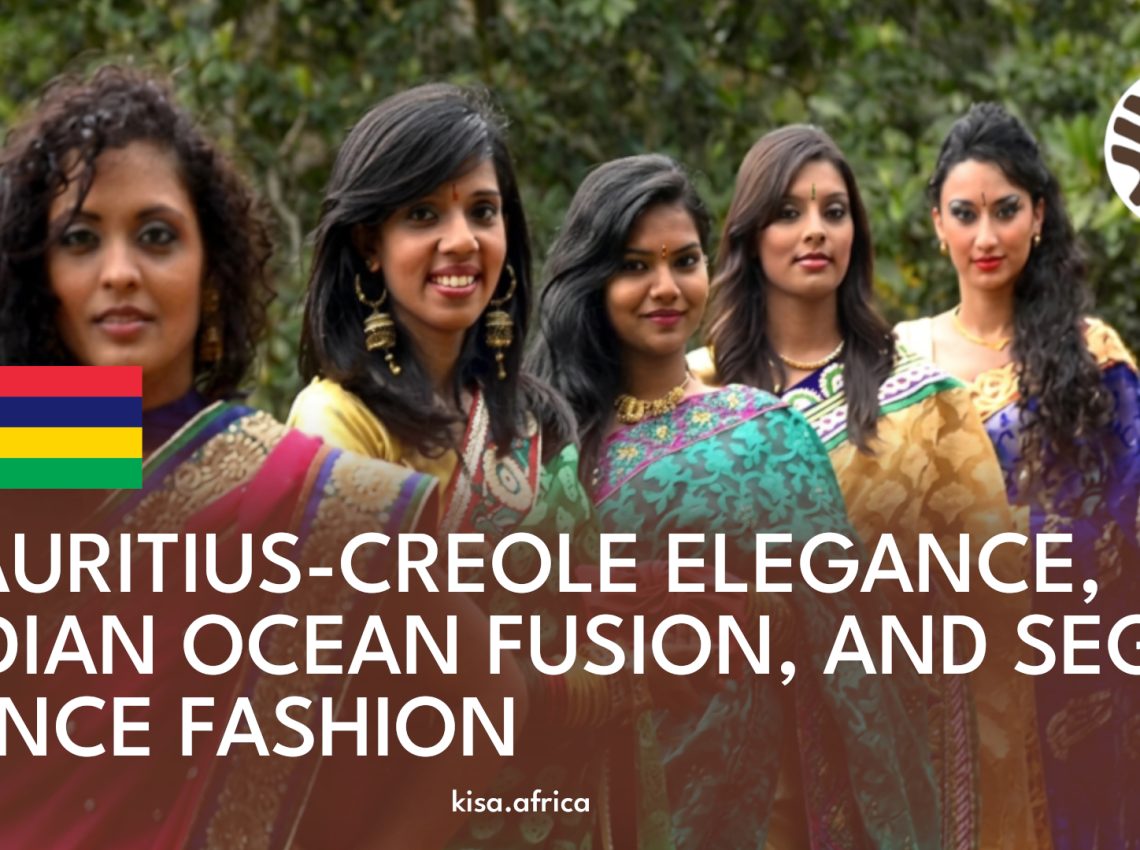
Indo-Mauritian communities, descended largely from Indian indentured labourers brought during the colonial era, maintained strong South Asian clothing traditions. Women historically wore saris, salwar kameez, embroidered shawls, gold jewellery, and ceremonial garments influenced by Indian regional styles.
These garments were adapted gradually to island climates using lighter fabrics, tropical colours, and local tailoring preferences. Wedding fashion became especially elaborate within Hindu and Muslim Mauritian communities, contributing to Mauritius developing one of the Indian Ocean’s most visually rich ceremonial fashion cultures.
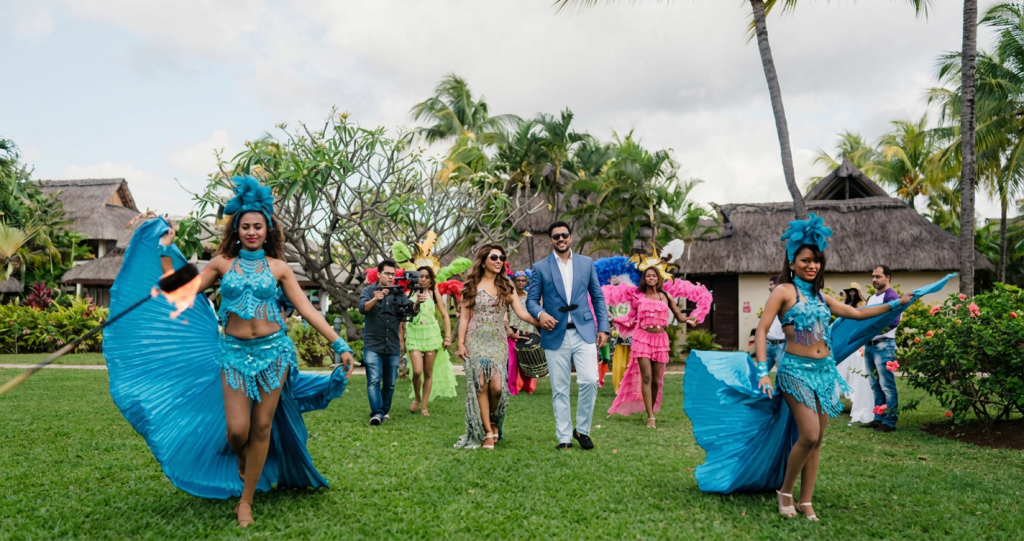
At the same time, Creole communities shaped by African ancestry, European colonialism, and island cultural blending developed styles incorporating head wrapping traditions, flowing tropical fabrics, lace details, bright colours, and European-inspired tailoring adapted for warm weather.
This merging of African and European aesthetics created a distinctive Creole elegance associated with island life, music, dance, and church traditions.
French and British colonialism strongly influenced Mauritian formal wear.
French rule introduced lacework, corseted dresses, embroidery techniques, hats, gloves, and European tailoring traditions, while British colonial administration reinforced formal dress codes, uniforms, and Victorian influences.
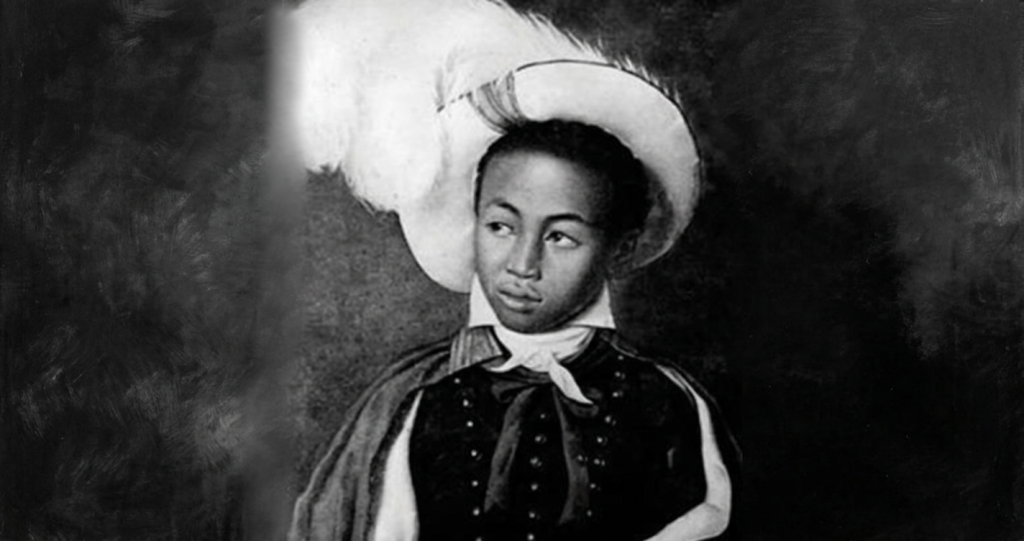
However, these imported styles did not remain purely European. Mauritians adapted them creatively using breathable fabrics suited for tropical climates. Lightweight cotton, linen, and colourful textiles replaced heavier European materials, creating island-specific interpretations of colonial fashion.
Church fashion also became culturally important among Christian communities, especially within Creole populations. Sunday church attire often emphasized elegance, polished tailoring, hats, jewellery, and carefully styled hair.
Hair culture in Mauritius reflects the island’s multicultural identity as well.
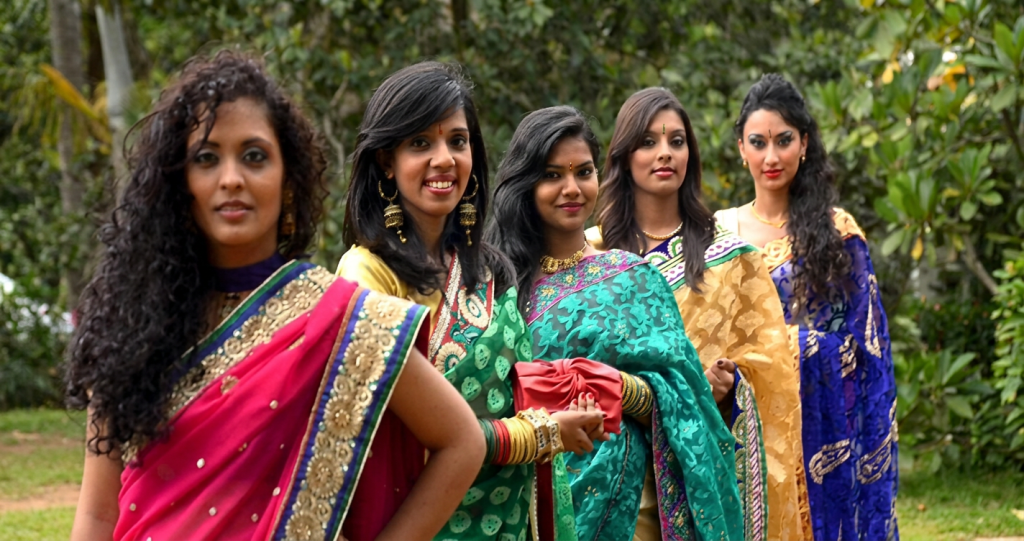
Because Mauritius contains African-descended, Indian-descended, Chinese-descended, mixed-heritage, and multicultural populations, beauty traditions became highly diverse. Hair practices historically included:
- Natural curls
- Braiding traditions
- Straightened styles
- Oiled ceremonial hair
- Wrapped hairstyles
- Decorative accessories
Coconut oil became one of the most important traditional hair-care ingredients because of its abundance and effectiveness in humid tropical conditions. Herbal oils and plant-based treatments were widely used to moisturize hair, protect against sun exposure, and maintain scalp health.
Hairdressing also became deeply social. Styling sessions frequently functioned as spaces for storytelling, intergenerational teaching, and communal bonding, particularly among women.
One of the most internationally recognizable expressions of Mauritian fashion culture is linked to Sega dance traditions.
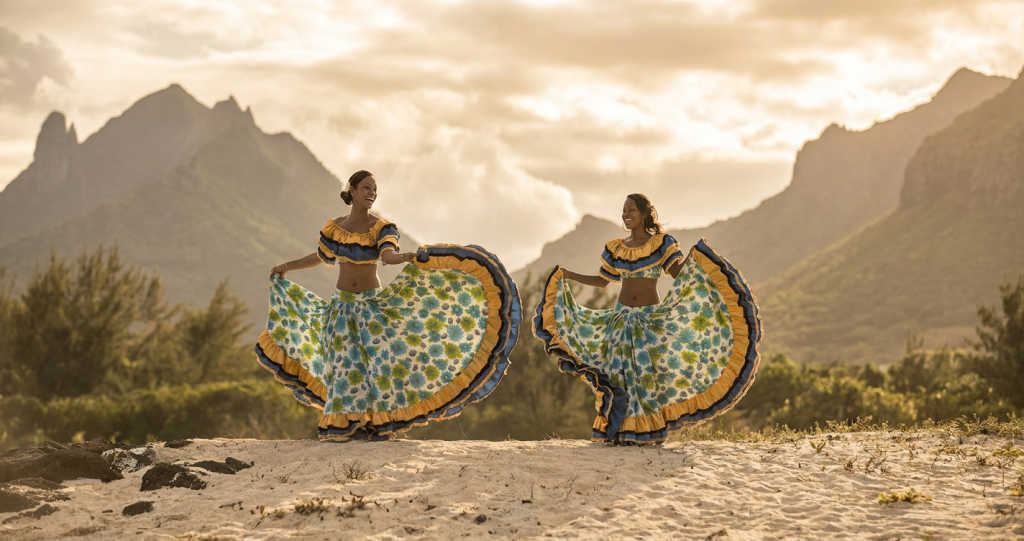
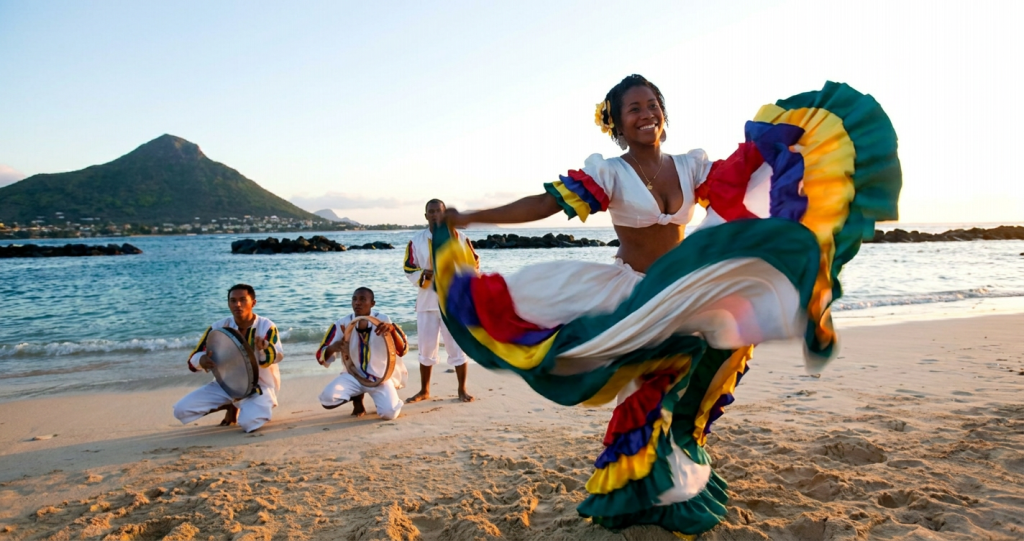
Sega is a musical and dance tradition deeply associated with Creole identity and the history of enslaved African populations brought to the island during colonial rule. Sega performances became forms of cultural survival, emotional expression, storytelling, and celebration.
Sega dancers traditionally wear brightly coloured flowing skirts designed specifically to amplify spinning movement during dance performances. The dramatic circular motion of the skirts creates visually striking performances emphasizing rhythm, freedom, and joy.
The movement of the fabric itself became part of the artistic performance. This relationship between dance and garment design makes Sega attire especially important within Mauritian fashion history.
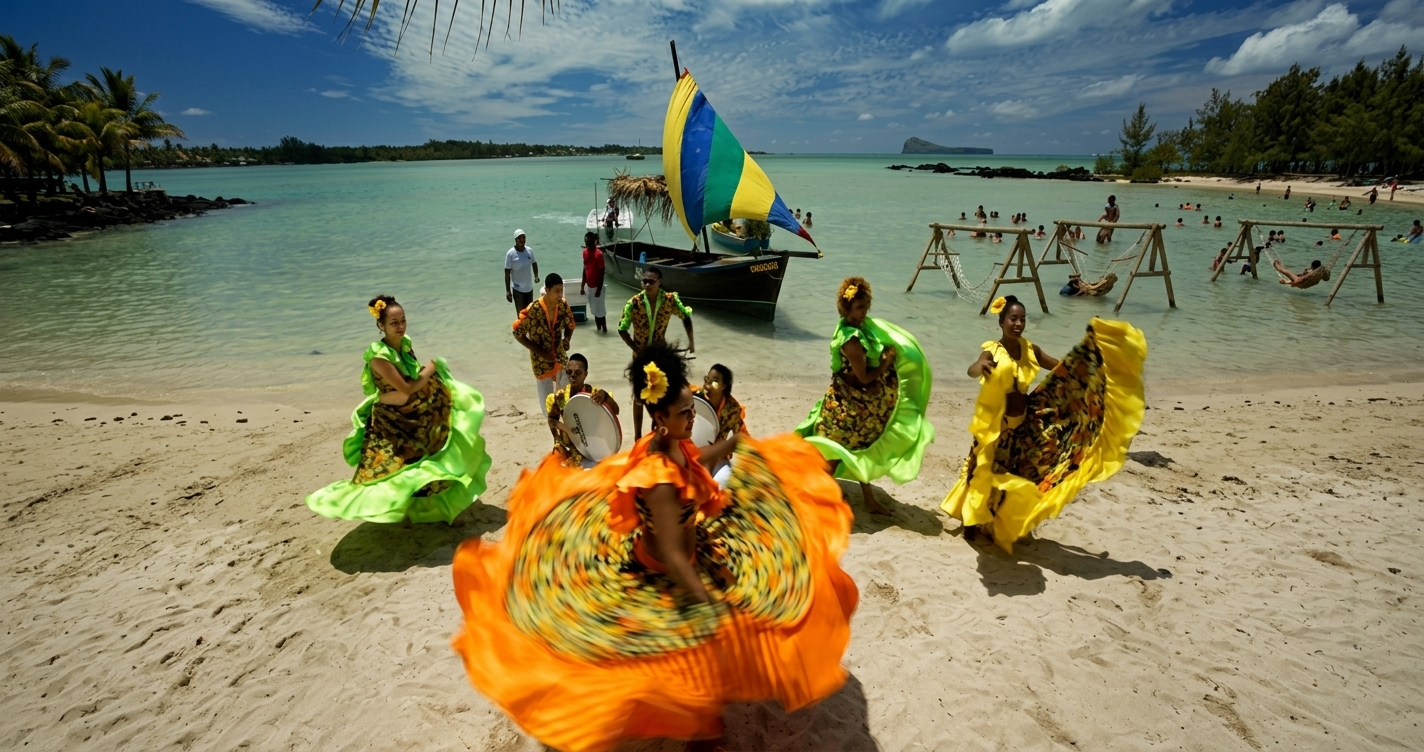
The origins of Sega also reflect the resilience of enslaved peoples who preserved African derived rhythmic traditions despite colonial oppression. Over time, Sega evolved into one of Mauritius’s most important national cultural symbols.
Chinese influence also entered Mauritian fashion culture through migration and commerce. Chinese Mauritian communities contributed tailoring traditions, silk fabrics, embroidery aesthetics, and business networks connected to textile trade.
Because Mauritius sits along Indian Ocean trade routes, imported fabrics, jewellery, perfumes, and luxury materials circulated through the island for centuries. This helped expose Mauritian communities to global fashion influences much earlier than many isolated regions.
Modern Mauritius fashion remains extraordinarily diverse.
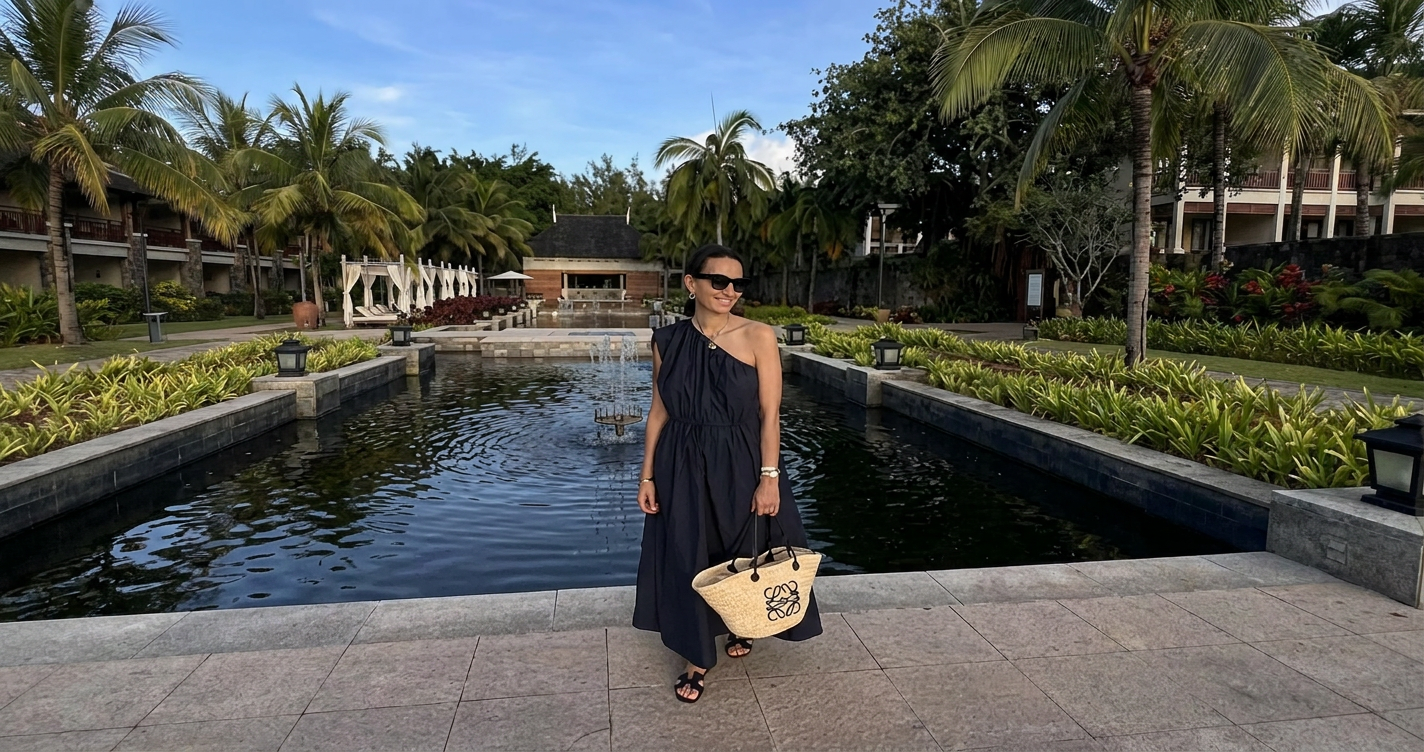
Contemporary Mauritian designers blend Afro-Indian aesthetics, tropical resort fashion, modest wear, European tailoring, beachwear, couture, and multicultural textiles into modern collections reflecting the island’s cosmopolitan identity.
Tourism also influenced modern Mauritian style by encouraging resort fashion, luxury beachwear, linen tailoring, and tropical elegance associated with island lifestyles.
At the same time, traditional wedding attire, Sega costumes, sari traditions, church fashion, and Creole aesthetics remain culturally important during festivals and ceremonies.
Mauritius therefore represents one of Africa’s clearest examples of fashion shaped through centuries of migration and cultural fusion rather than a single dominant ethnic tradition.
FASCINATING LESSER-KNOWN FACTS ABOUT MAURITIAN FASHION AND HAIR
- Mauritius possesses one of Africa’s most multicultural fashion histories.
- Sega dance skirts were specifically designed to enhance spinning dance movement.
- Mauritian wedding fashion became highly elaborate because multiple religious traditions coexist on the island.
- Coconut oil historically played a major role in hair care traditions.
- Creole fashion blended African head wrapping with European tailoring.
- Indian indentured labour communities preserved sari and salwar traditions while adapting them to tropical climates.
- French and British colonial dress styles were modified using lighter island fabrics.
- Mauritian fashion reflects African, Indian, Chinese, and European influences simultaneously.
- Resort fashion and tourism later shaped modern island aesthetics.
SOURCES
Boswell, R. (2006). Le Malaise Créole: Ethnic Identity in Mauritius. New York, NY: Berghahn Books.
Eriksen, T. H. (1998). Common Denominators: Ethnicity, Nation-Building and Compromise in Mauritius. Oxford, United Kingdom: Berg Publishers.
Eicher, J. B., & Ross, D. A. (1992). Dress and Identity. New York, NY: Fairchild Publications.
Alladin, I. (1993). Economic miracle in the Indian Ocean: Can Mauritius show the way? The Journal of Modern African Studies, 31(4), 633–656.
Richards, A. (2012). Creole identity and performance traditions in Mauritius. African Arts, 45(3), 22–35.
Rovine, V. L. (2015). African Fashion, Global Style: Histories, Innovations, and Ideas You Can Wear. Bloomington, IN: Indiana University Press.