
NAMIBIA- HIMBA OCHRE HAIR, HERERO DRESSES, AND FASHION BORN FROM SURVIVAL
The fashion traditions of Namibia are among the most visually distinctive and symbolically rich in Africa. Namibia’s clothing and beauty culture developed through the interaction of desert environments, pastoral traditions, colonial history, spirituality, and ethnic identity among groups such as the Himba, Herero, Nama, Ovambo, Damara, and San peoples.
Because much of Namibia consists of arid desert and semi-desert landscapes, fashion evolved not only for decoration but also for environmental survival. Clothing, hairstyles, body adornment, and beauty rituals became deeply connected to climate adaptation, social identity, spirituality, and resistance to colonial disruption.
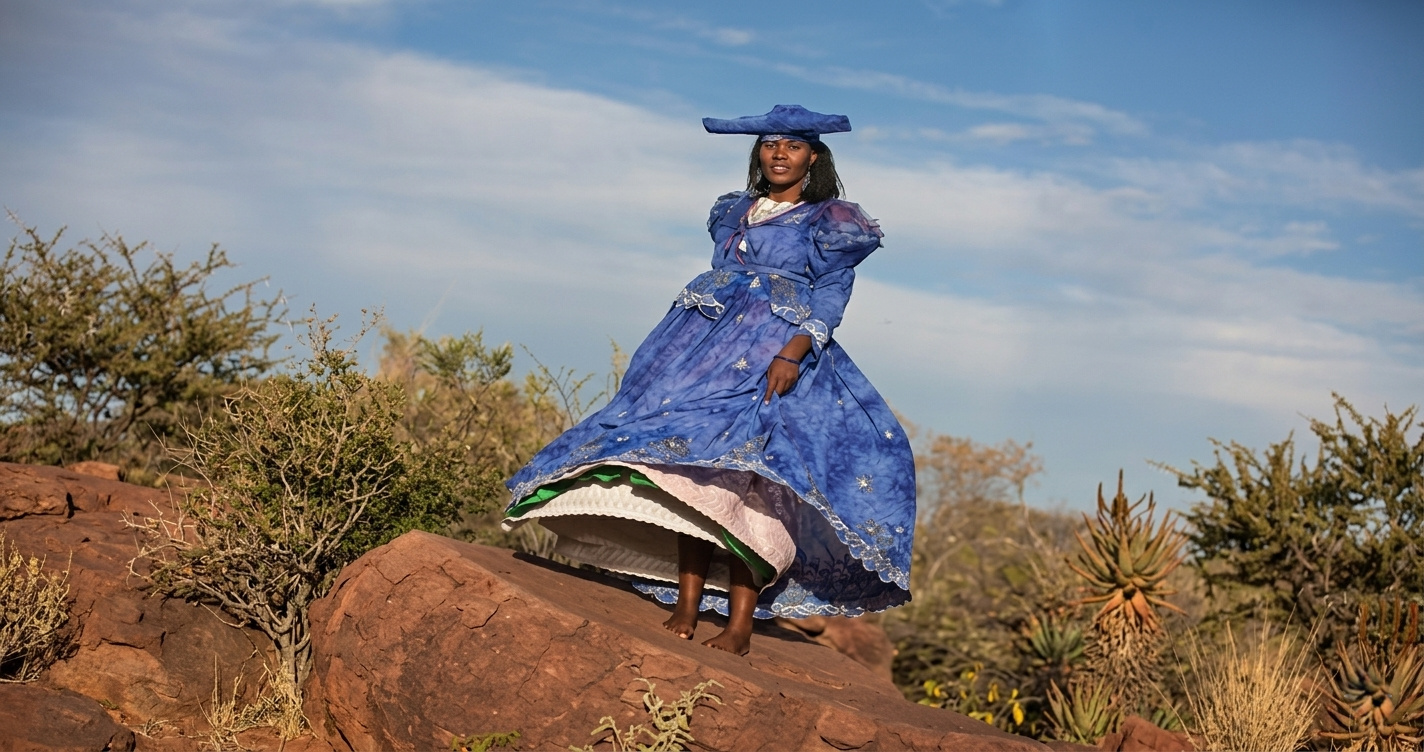
Among Namibia’s most internationally recognized traditions are those of the Himba people.
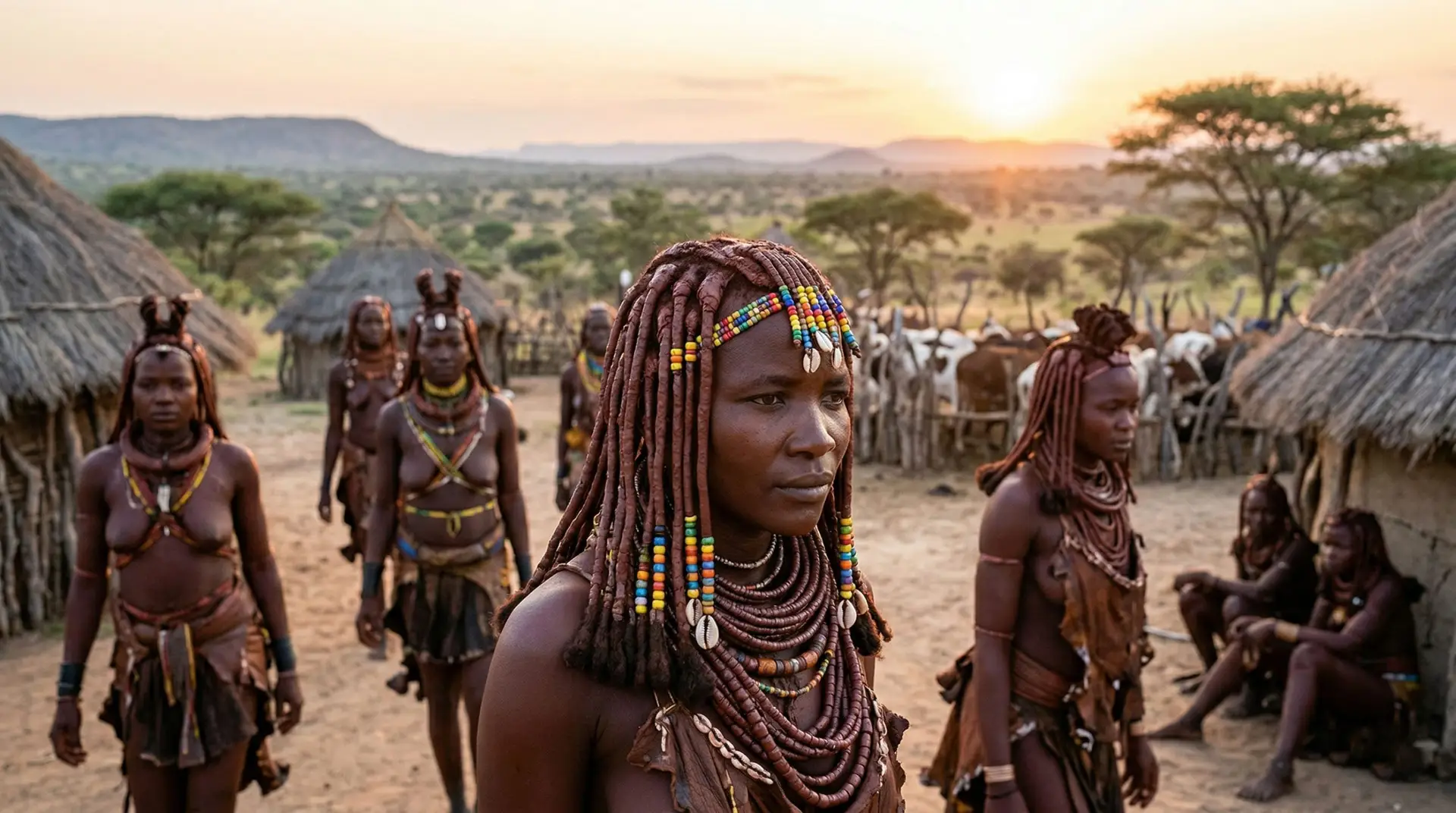
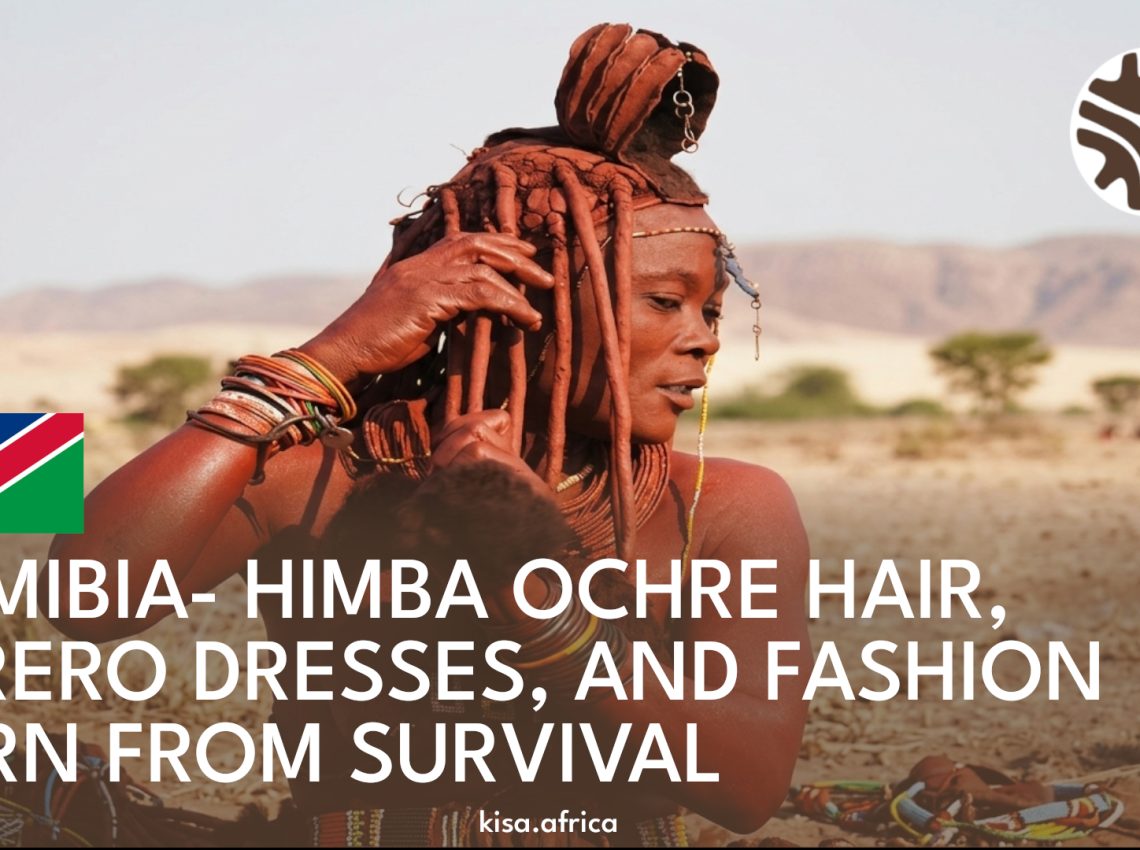
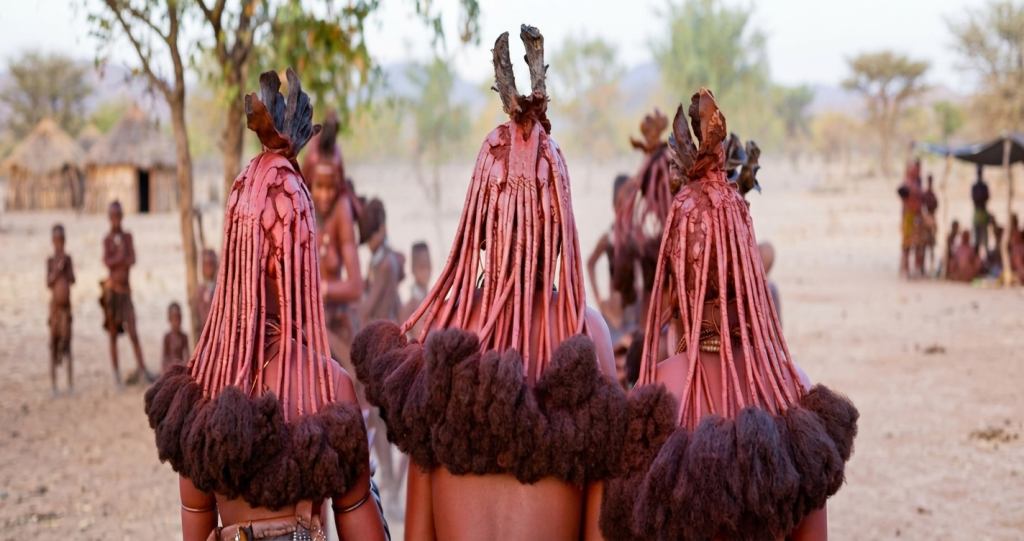
The Himba became globally famous for their striking red-ochre hairstyles and skin treatments. Himba women coat both their hair and skin with otjize, a mixture made primarily from butterfat and red ochre pigment.
This practice serves several interconnected purposes:
- Protection against harsh desert sun and dryness
- Skin and hair conditioning
- Spiritual symbolism
- Beauty enhancement
- Cultural identity preservation
The red coloration created by otjize has become one of the most recognizable beauty traditions anywhere in the world. The mixture helps protect the skin from extreme heat and dryness while also functioning aesthetically and spiritually.
For the Himba, beauty is not separated from environment or spirituality. Hair and skin treatments reflect harmony with ancestral customs and desert life.
Hairstyles among Himba communities communicate highly specific social information.
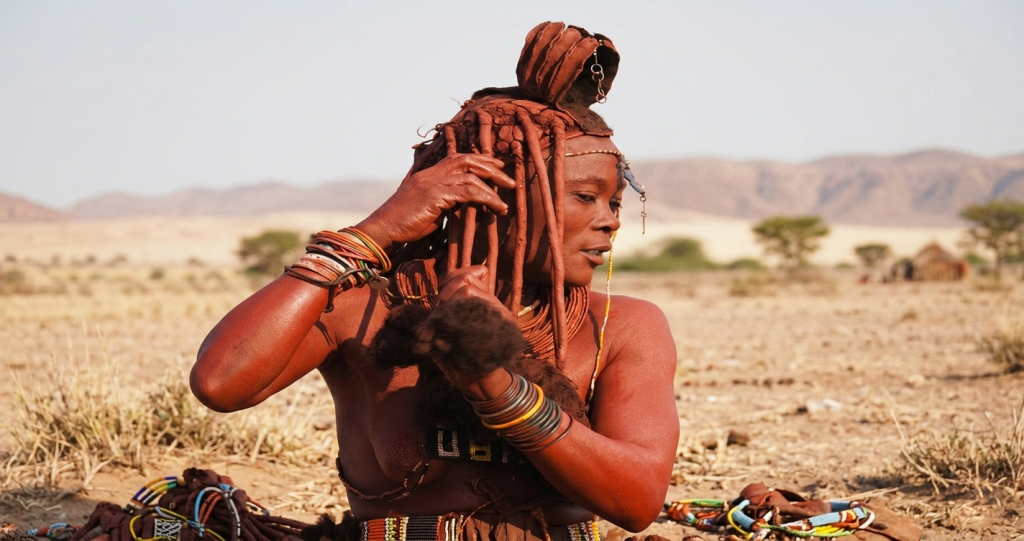
Young girls traditionally wear different braid configurations than adolescent girls or married women. Hair therefore functions almost like a visual language communicating:
- Age
- Marital status
- Readiness for adulthood
- Social identity
Some hairstyles require years of maintenance and careful shaping using ochre, extensions, and animal hair. Jewellery and leather adornments may also accompany hairstyles, further emphasizing status and identity.
One particularly fascinating aspect of Himba beauty culture is the use of aromatic smoke baths.
Because water is scarce in desert regions, some Himba communities historically relied on smoke cleansing rather than regular water bathing. Women would heat aromatic herbs and resins over coals, allowing fragrant smoke to cleanse the body and scent the skin and hair.
This demonstrates how beauty traditions evolved creatively in response to environmental conditions rather than simply imitating external ideals.
Namibia’s fashion history also reflects profound colonial influence, particularly among the Herero people.
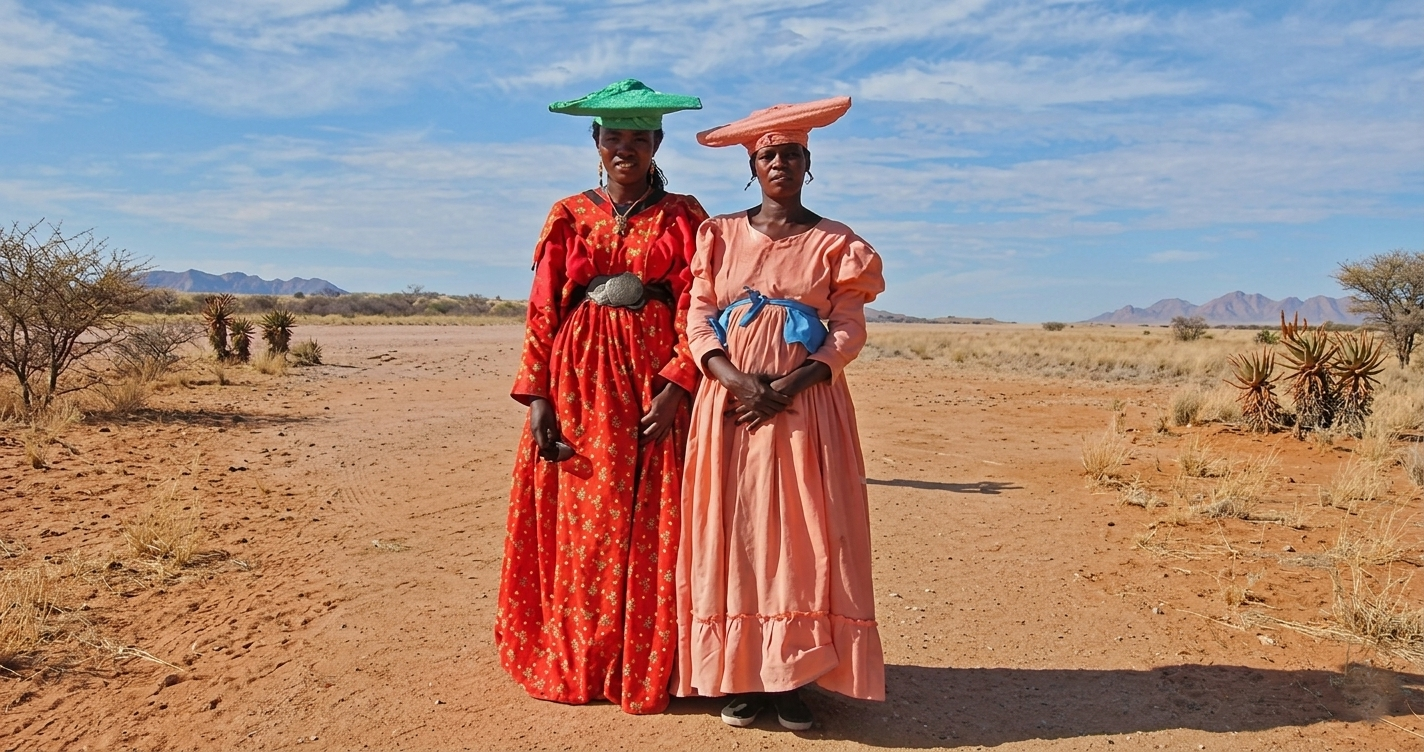
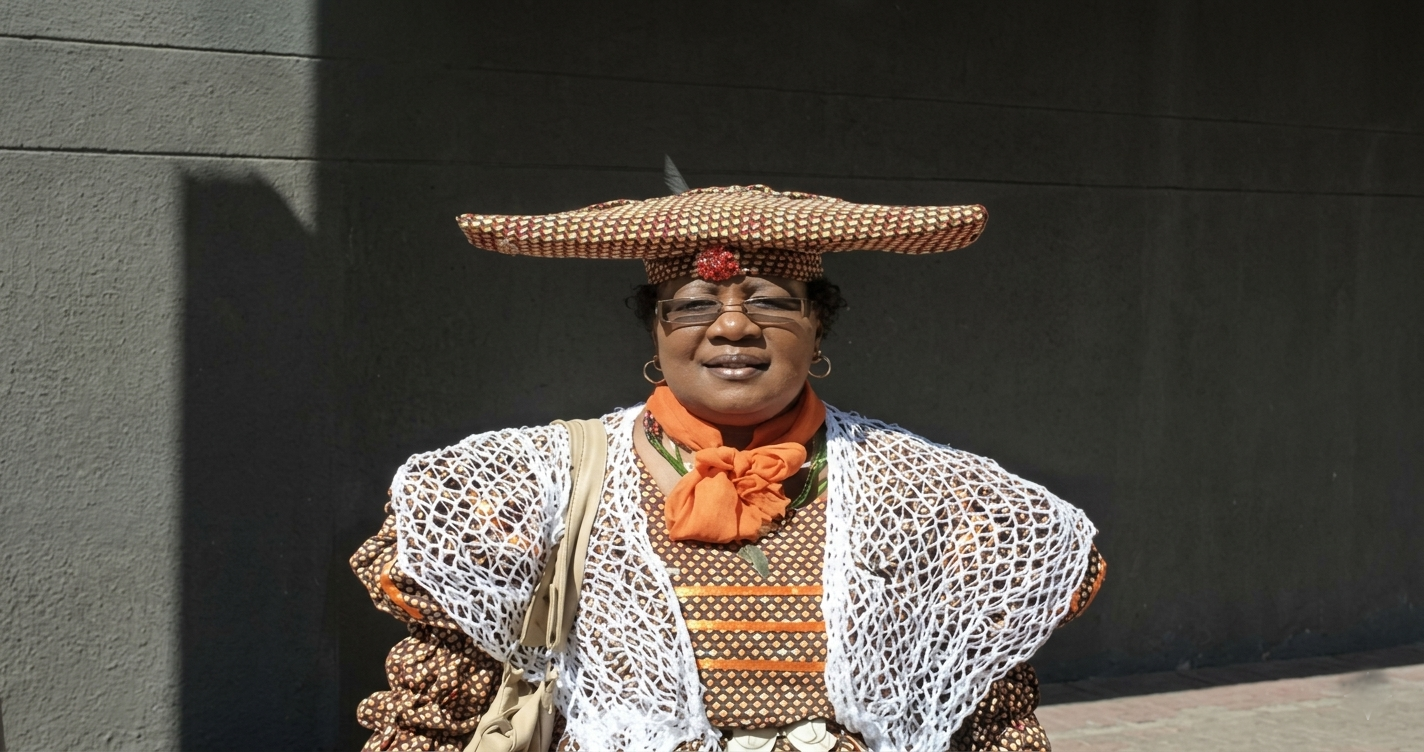
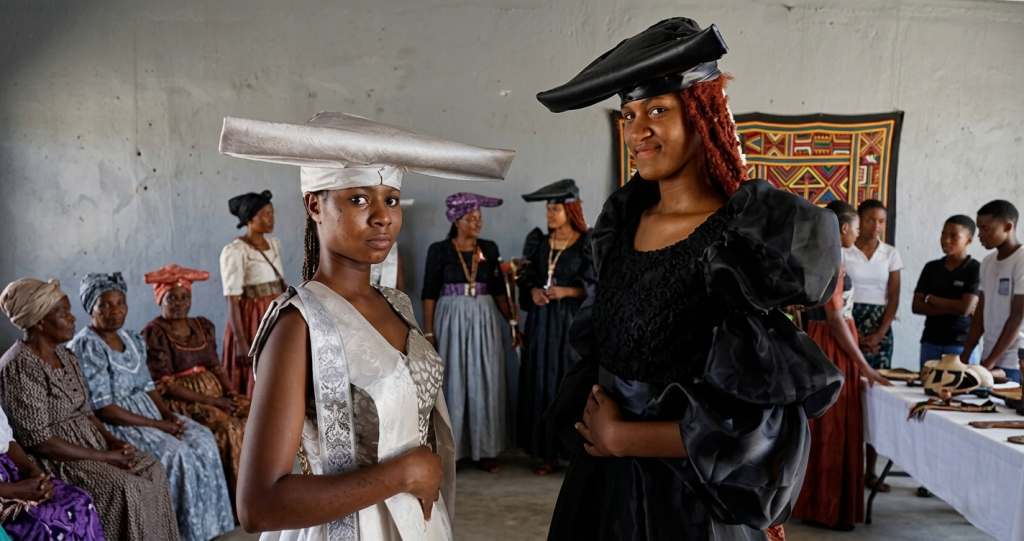
Herero women became internationally known for wearing elaborate Victorian-inspired dresses introduced during German colonial rule in the late 19th century.
At first glance, these garments may appear entirely European. However, Herero communities transformed colonial clothing into something uniquely their own. Over generations, the dresses evolved into powerful symbols of cultural identity, resilience, and survival.
The dresses typically feature:
- Large voluminous skirts
- Long sleeves
- Bright patterned fabrics
- Elaborate tailoring
- Distinctive horn-shaped headdresses
The horn-shaped headdress symbolizes cattle horns, reflecting the deep importance of cattle within Herero culture, economy, and spirituality.
What makes Herero fashion especially significant is its connection to colonial violence and survival.
During German colonial rule, the Herero and Nama peoples experienced one of the first genocides of the 20th century. Following these atrocities, Herero communities preserved and transformed Victorian dress into a visible symbol of endurance and cultural continuity.
Thus, what outsiders may interpret simply as “colonial fashion” became a form of resistance and identity preservation.
Fashion in Namibia therefore often carries historical memory embedded directly into garments themselves.
The Nama and San peoples also contributed important traditions to Namibian aesthetics.
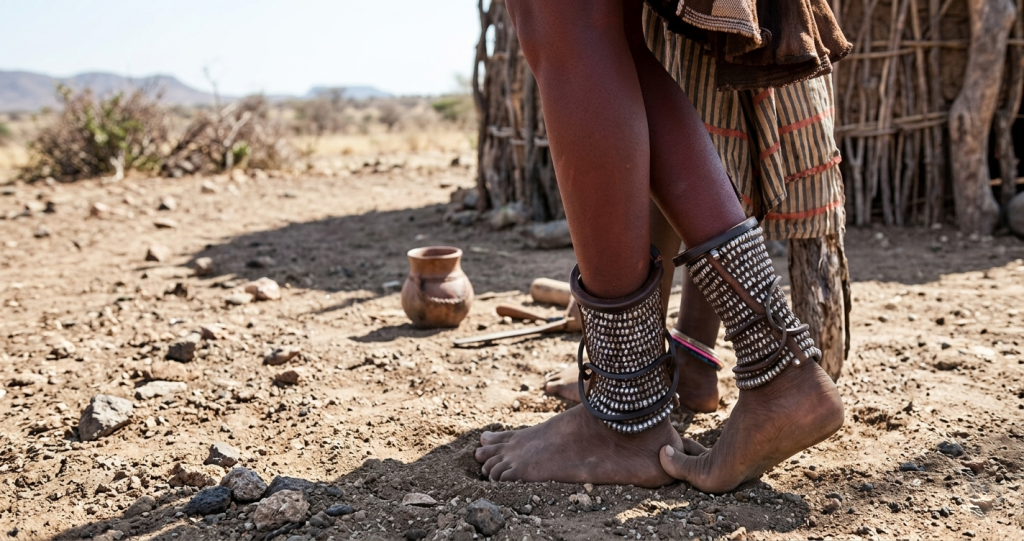
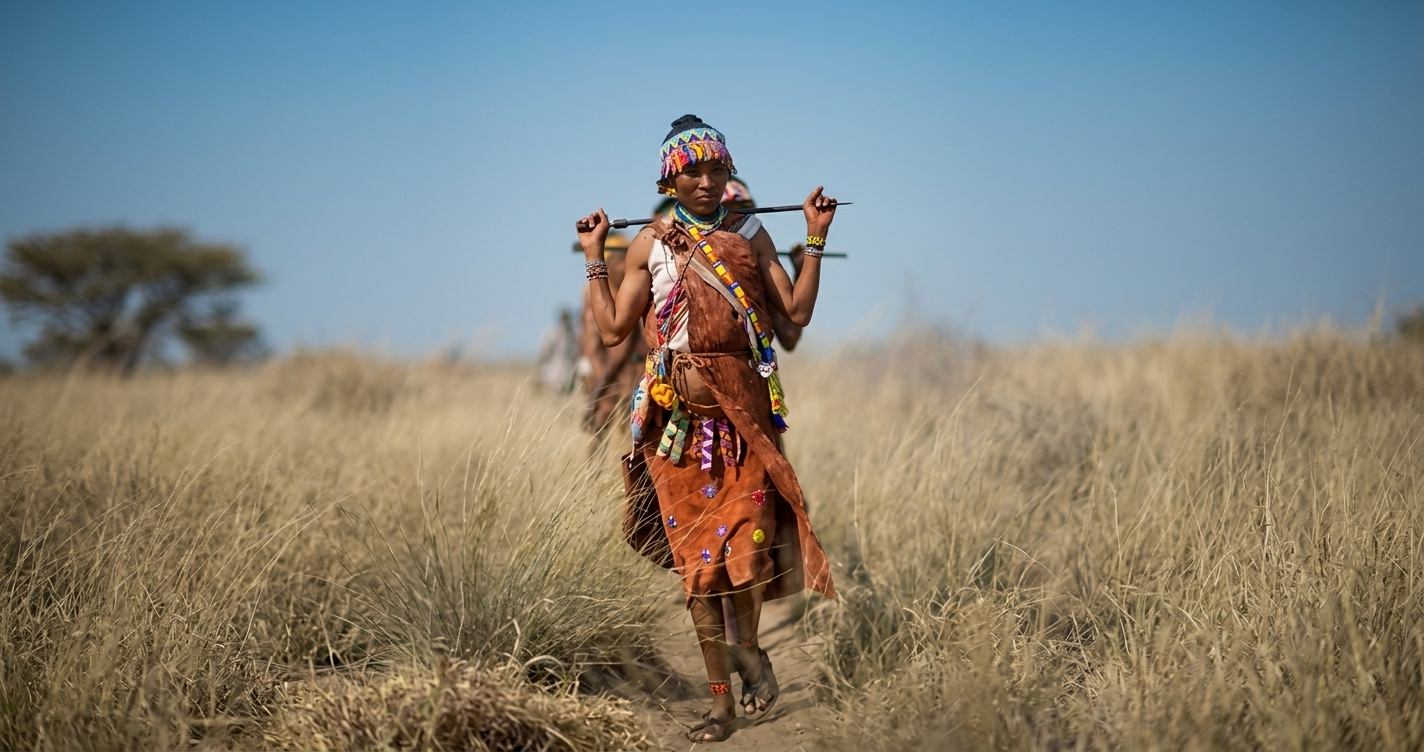
These communities historically used leather garments, beadwork, shells, and practical clothing adapted for mobility and arid conditions. Animal skins, ostrich shell beads, and handcrafted ornaments played major roles in adornment systems.
Among many southern African communities, beads carried social and spiritual significance connected to protection, trade, identity, and ritual life.
German colonialism also introduced European tailoring, missionary dress codes, and imported textiles into Namibian urban centres. Yet indigenous traditions remained highly resilient, especially in ceremonial and rural contexts.
Modern Namibia now combines traditional aesthetics with contemporary African fashion innovation.
Contemporary Namibian designers increasingly reinterpret indigenous textiles, leatherwork, beadwork, and symbolic forms for modern fashion audiences.
Natural hair movements have also grown significantly, encouraging the celebration of African hair textures and traditional beauty knowledge.
Eco-fashion and sustainability are especially important within Namibia because many traditional practices historically relied on locally sourced natural materials and climate conscious design.
Modern designers often draw inspiration from:
- Himba ochre aesthetics
- Herero silhouettes
- Nama beadwork
- Desert colour palettes
- Sustainable craftsmanship
Namibian fashion therefore represents a remarkable fusion of environmental adaptation, ancestral identity, colonial history, and modern creativity.
FASCINATING LESSER-KNOWN FACTS ABOUT NAMIBIAN FASHION AND HAIR
- Himba women use otjize a butterfat and red ochre mixture for beauty, protection, and spirituality.
- Himba hairstyles visually communicate age and marital status.
- Aromatic smoke baths developed as an alternative cleansing system in desert conditions.
- Herero dresses transformed colonial Victorian clothing into symbols of resistance and survival.
- The Herero headdress symbolizes cattle horns and pastoral identity.
- Namibia’s fashion traditions evolved specifically for harsh desert climates.
- Indigenous beadwork traditions carried social and spiritual meaning.
- Modern Namibian fashion increasingly emphasizes sustainability and eco-fashion.
- Traditional Namibian beauty culture blends practicality with symbolic identity.
SOURCES
Gewald, J.-B. (1999). Herero Heroes: A Socio-Political History of the Herero of Namibia, 1890–1923. Athens, OH: Ohio University Press.
Eicher, J. B., & Ross, D. A. (1992). Dress and Identity. New York, NY: Fairchild Publications.
Krutak, L. (2012). Spiritual Skin: Magical Tattoos and Scarification. London, England: Edition Reuss.
Rovine, V. L. (2015). African Fashion, Global Style: Histories, Innovations, and Ideas You Can Wear. Bloomington, IN: Indiana University Press.
Sylvain, R. (2002). “Land, water, and truth”: San identity and global indigenism. American Anthropologist, 104(4), 1074–1085.
Arnoldi, M. J. (1995). African Material Culture. Bloomington, IN: Indiana University Press.