
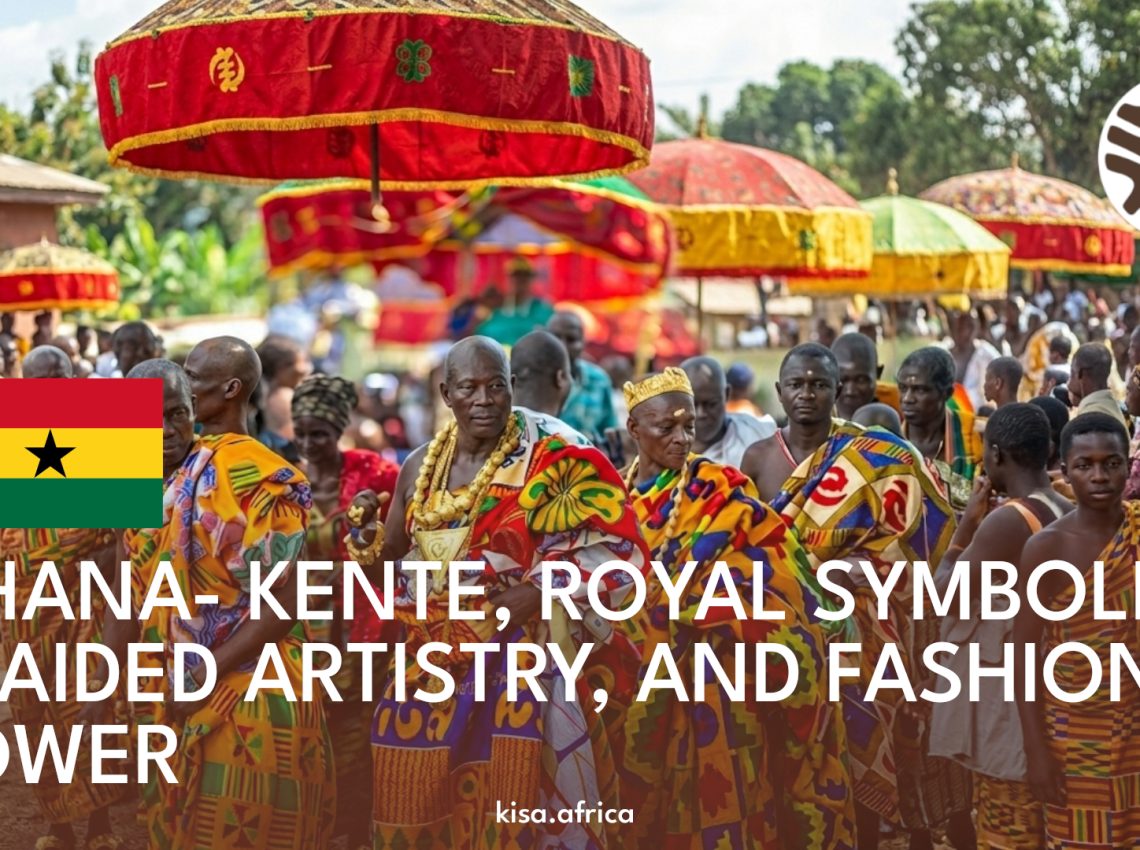
GHANA- KENTE, ROYAL SYMBOLISM, BRAIDED ARTISTRY, AND FASHION POWER
The fashion history of Ghana represents one of Africa’s most influential and intellectually sophisticated textile traditions. Across centuries, clothing among Akan, Ashanti, Ewe, Ga, Dagomba, and other Ghanaian societies functioned as a language of power, spirituality, ancestry, morality, and political identity. In Ghana, textiles were never simply decorative materials; they carried encoded philosophical meanings, historical memory, and social status.
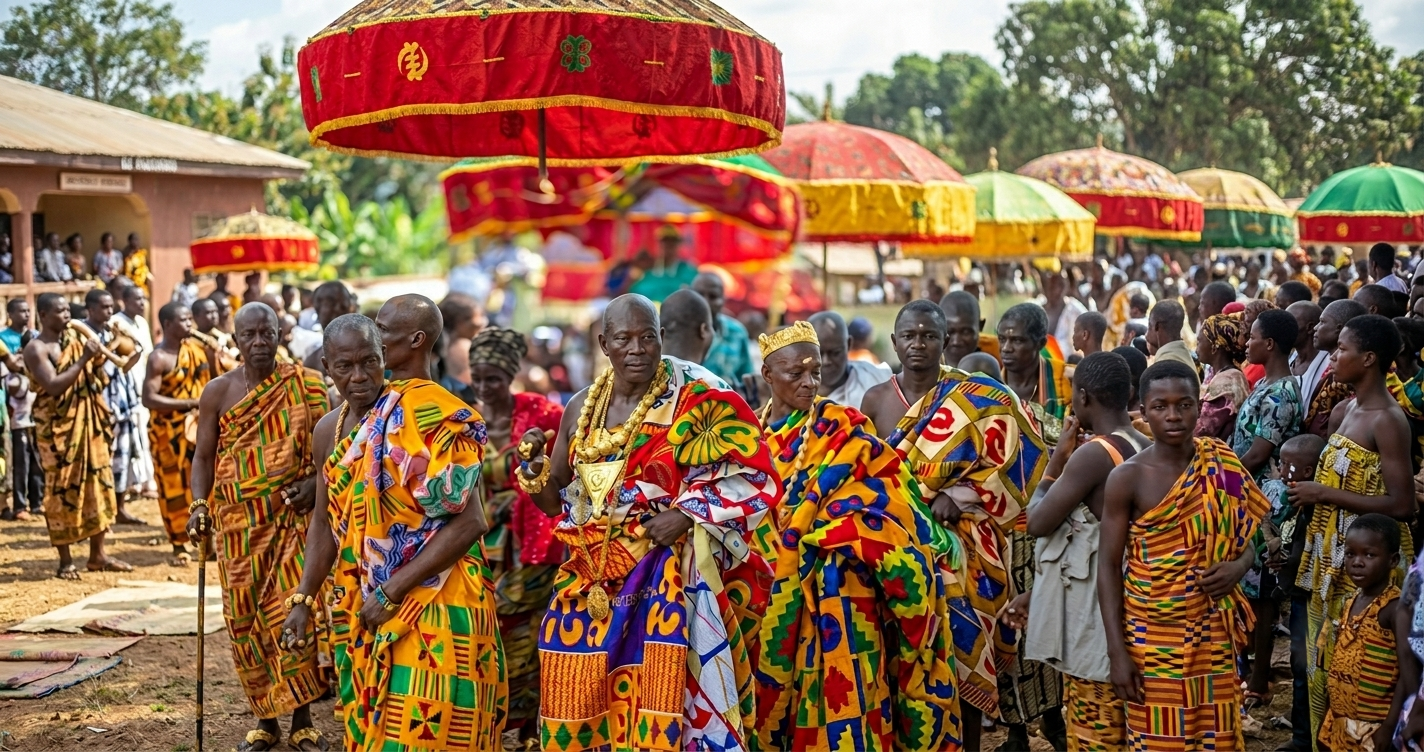
Among Ghana’s greatest cultural contributions to world fashion is kente cloth, one of the most recognized African textiles globally. Kente originated primarily among the Ashanti and Ewe peoples and became deeply associated with royalty, sacred authority, and ceremonial prestige.
According to a famous Ashanti oral tradition, two hunters observed a spider weaving its intricate web and became inspired to imitate its patterns using thread and weaving techniques. Whether symbolic or historical, this story reveals an important cultural idea: weaving was viewed as an artistic skill connected to intelligence, observation, patience, and creativity.
Kente weaving traditionally involved narrow-strip looms where weavers produced long bands of cloth that were later sewn together into larger garments. Creating authentic kente required extensive training and technical expertise. Historically, weaving knowledge was often guarded carefully and passed down through specialized family lineages.
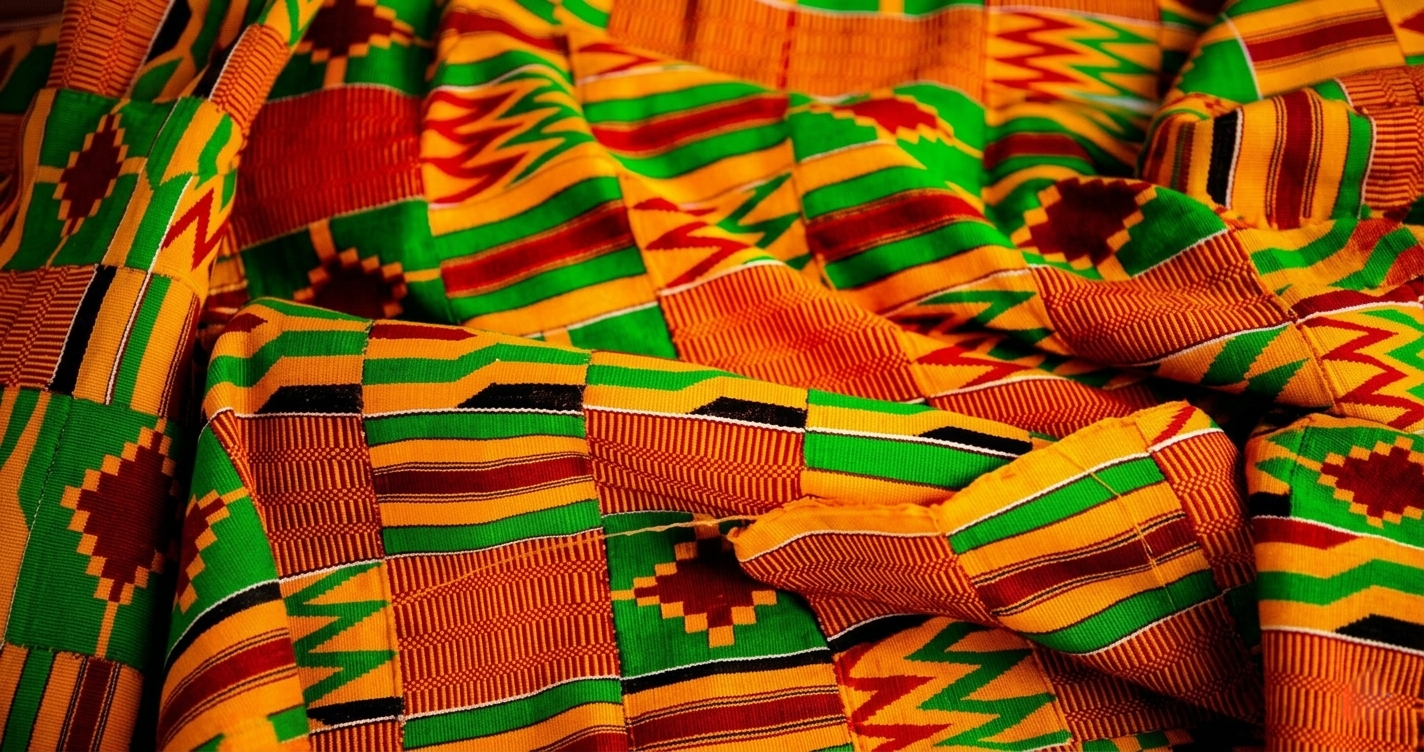
One of the most remarkable aspects of kente is that its colours and patterns communicate specific meanings. Kente functions almost like a visual philosophical system or woven proverb language. Different combinations of shapes, lines, and colours can express political wisdom, moral lessons, historical memory, emotional states, or social values.
For example:
- Gold often symbolizes royalty, prosperity, and spiritual wealth.
- Blue commonly represents harmony, peace, and love.
- Green reflects renewal, fertility, agriculture, and growth.
- Black symbolizes maturity, ancestral wisdom, and spiritual power.
- Red may represent sacrifice, political struggle, mourning, or strength.
Some kente patterns historically carried names connected to proverbs, historical events, or royal teachings. In this sense, wearing certain cloths communicated intellectual and cultural messages understood within the community.
Historically, kente was reserved primarily for royalty, nobility, spiritual leaders, and sacred ceremonies. Ashanti kings, known as Asantehene’s, wore elaborate kente garments during state rituals, political gatherings, and festivals. Clothing therefore became an expression of governance and authority.
The Ashanti Empire itself helped elevate textile culture into a major political symbol. Royal courts encouraged artistic specialization, gold craftsmanship, bead production, and weaving traditions that reinforced state identity. Kente became associated not only with beauty but with civilization, leadership, and continuity of ancestral heritage.
Hair traditions across Ghanaian societies were equally important and highly sophisticated.

Among Akan communities especially, hairstyles communicated information about age, fertility, spirituality, social rank, and readiness for marriage. Braided hairstyles were treated as artistic achievements requiring patience, creativity, and social skill. Complex geometric braid patterns demonstrated both aesthetic refinement and cultural belonging.
Hairdressing also functioned as an important social institution. Women gathered for lengthy hairstyling sessions where oral traditions, family histories, advice, songs, and community values were shared across generations. Hairstyling therefore became intertwined with education, storytelling, and social bonding.
Natural hair care traditions relied on shea butter, palm oil, herbal infusions, and locally sourced botanical treatments suited to West Africa’s climate. Certain hairstyles were associated with rites of passage, mourning rituals, festivals, or spiritual ceremonies.
One fascinating but lesser-known aspect of Ghanaian fashion culture involves funeral clothing traditions. Funerals in Ghana are major social and cultural events where fashion carries deep symbolic meaning.
Black-and-red clothing combinations are commonly worn during funerals and mourning periods. Red may symbolize grief, intensity of loss, or political/spiritual significance, while black represents ancestral connection, maturity, and remembrance. Funeral attire can be highly coordinated and visually elaborate, reflecting respect for the deceased and communal solidarity.
Colonialism under British rule introduced significant changes to Ghanaian fashion. European tailoring, Victorian modesty ideals, Christian missionary dress codes, and imported textiles became increasingly common in urban areas. Suits, dresses, blouses, and Western-style tailoring entered elite and educated society.
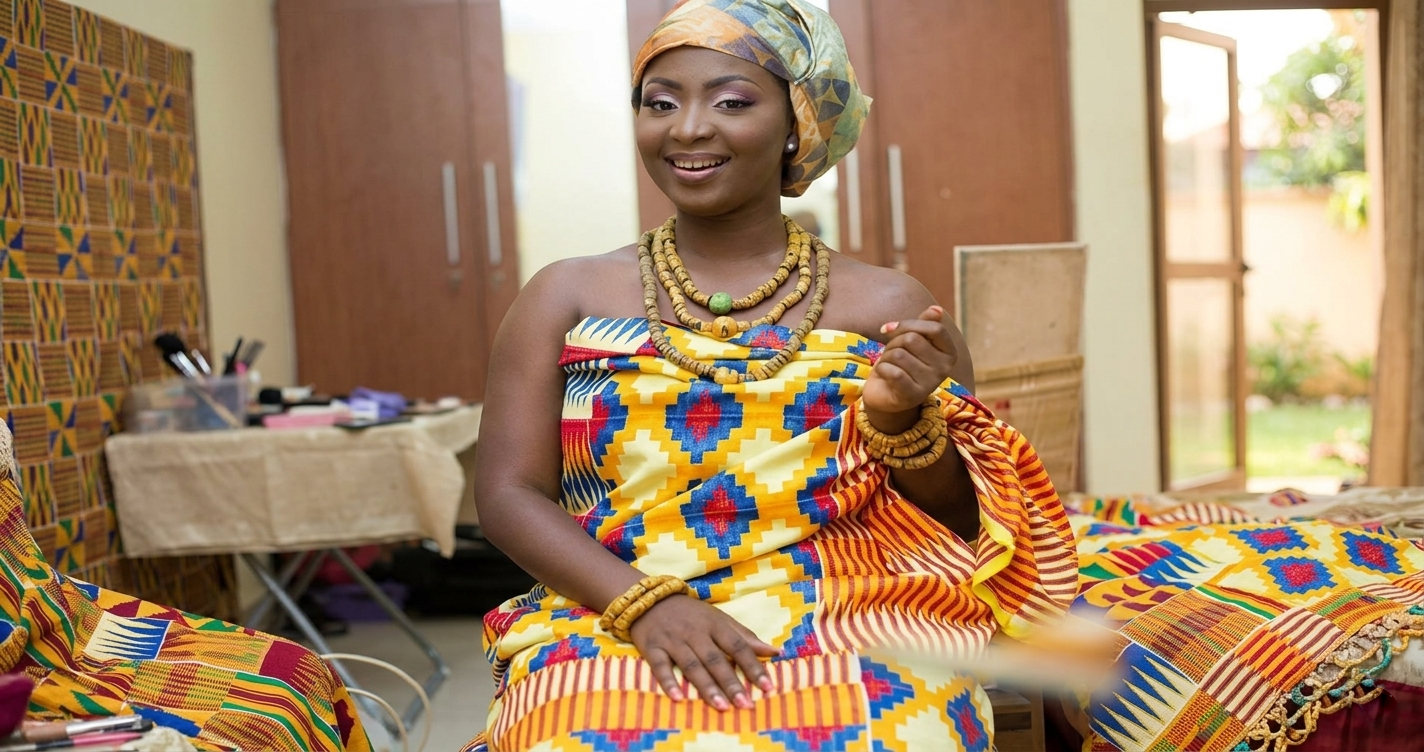
However, Ghanaians did not simply imitate European fashion. Instead, they transformed imported influences into distinctly African styles by incorporating local textiles, embroidery, silhouettes, and cultural symbolism. Tailored garments made from African fabrics became especially important expressions of modern African identity during the colonial and independence periods.
Modern Ghana is now considered one of Africa’s leading fashion centres.
In cities such as Accra, designers blend kente, Ankara prints, luxury tailoring, streetwear, and global Afro-modern aesthetics into internationally recognized fashion movements. Ghanaian fashion designers have become influential figures in contemporary African fashion, combining heritage textiles with modern silhouettes and sustainable production methods.
Youth culture in Ghana also plays a major role in shaping modern style. Sneakers, denim, luxury accessories, Afrobeats aesthetics, and natural hairstyles coexist with traditional prints and ceremonial garments. Diaspora communities have further globalized Ghanaian fashion, especially kente cloth, which now appears in graduations, weddings, political events, and Pan-African celebrations around the world.
Another fascinating aspect of Ghanaian textile culture is that kente cloth became an international symbol of African pride and Black identity during the 20th century, especially within Pan-African and African diaspora movements. The cloth’s visual power and philosophical meanings helped transform it into a global emblem of cultural resilience and heritage.
FASCINATING LESSER-KNOWN FACTS ABOUT GHANAIAN FASHION AND HAIR
- Kente patterns function almost like woven proverbs carrying philosophical and political messages.
- The famous origin story of kente involves hunters inspired by a spider’s web.
- Certain kente patterns were historically reserved for royalty and sacred ceremonies.
- Funeral clothing traditions use black and red to symbolize mourning, ancestry, and remembrance.
- Hairstyles communicated fertility, maturity, spirituality, and social rank.
- Braiding sessions acted as important spaces for storytelling and intergenerational education.
- Ghana transformed European tailoring into uniquely African fashion identities during colonialism.
- Modern Ghana is one of Africa’s most influential fashion hubs.
- Kente cloth became a global symbol of Pan-African identity and Black cultural pride.
SOURCES
Ross, D. H. (1998). Wrapped in Pride: Ghanaian Kente and African American Identity. Los Angeles, CA: UCLA Fowler Museum of Cultural History.
Picton, J., & Mack, J. (1989). African Textiles. London, England: British Museum Press.
Eicher, J. B. (1976). Dress and Ethnicity: Change Across Space and Time. Oxford, United Kingdom: Berg Publishers.
Rattray, R. S. (1927). Religion and Art in Ashanti. Oxford, United Kingdom: Clarendon Press.
Kriger, C. E. (2006). Cloth in West African History. Lanham, MD: AltaMira Press.
Arthur, L. B. (2000). Religion, Dress and the Body. Oxford, United Kingdom: Berg.